
Lightning twice halts Demons–Tigers pre‑season hit‑out in Ballarat, Melbourne well ahead when play is called
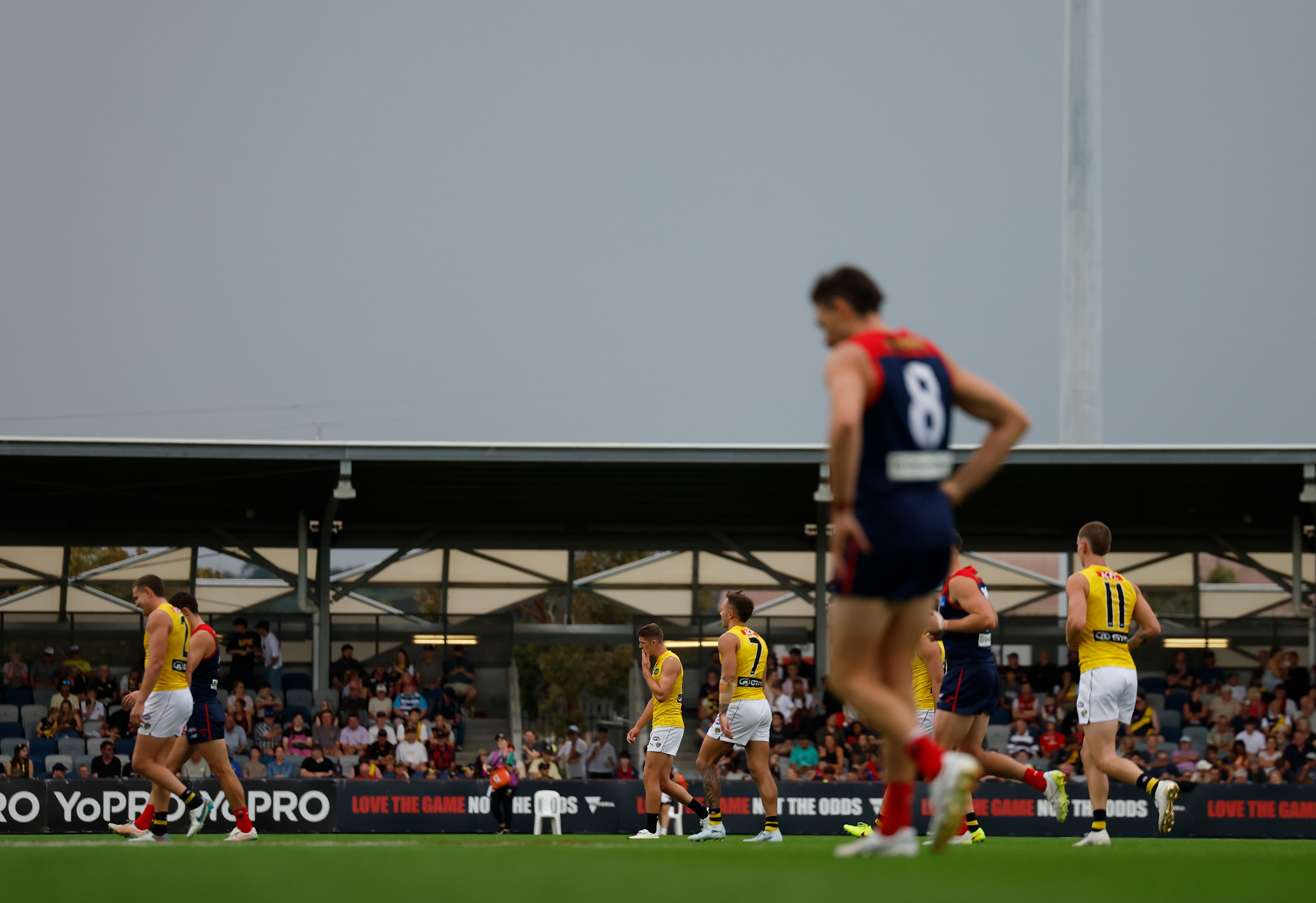
Players leave the field during a lightning delay during the AAMI Community Series game between Melbourne and Richmond on February 27, 2026. Picture: AFL Photos
Melbourne’s practice match against Richmond in Ballarat, regional Victoria, was cancelled on February 27 after two lightning stoppages, the second coming with 14 minutes left in the third quarter. The Demons led 12.6 (78) to 6.7 (43) when officials ended the AAMI Community Series contest, which was run under the AFL’s lightning and extreme weather safety guidelines and broader competition regulations.
Storm disruption after frenetic opening
The game was interrupted twice: a first delay at 4:15pm and a second at 6:15pm, exactly two hours apart, after lightning was detected in the vicinity of Mars Stadium. Despite the storm activity and repeated checks by match officials, no rain fell. A whirlwind first quarter stretched to roughly 68 minutes and produced 10 goals between the sides, setting an end‑to‑end tempo that both teams struggled to fully control and forcing coaches to continually recalibrate rotations.
Melbourne’s method translates to scoreboard pressure
Melbourne repeatedly broke into space and converted cleanly, piling on 12 goals in a little over a half of football as its transition game held up under pre‑season scrutiny. Jacob van Rooyen kicked three in the first half and covered the ground with purpose, thriving off the Demons’ quick ball movement and aggressive forward press. Caleb Windsor again impressed through the middle for a second straight week, while Trent Rivers provided drive and composure across lines, shifting seamlessly between rebound and midfield support.
Max Gawn handled his first outing under the new ruck rules with authority, winning 21 hitouts to Toby Nankervis’ 15 and at times spiking the ball forward of congestion to keep Melbourne moving. His ability to direct the ball into open space rather than solely to a stationary onballer offered an early glimpse of how clubs may look to exploit the amended stoppage framework.
Richmond finds positives but structural questions remain
For Richmond, Tom Lynch’s return offered encouraging signs: two goals, hard contests and a sharper gait after injury‑affected years, all but confirming his status as a Round One focal point if he pulls up well. Jayden Short led all players with 20 disposals in the shortened match, supplying rebound from half‑back, and Sam Lalor’s work at the stoppages was notable for its clean hands and composure under pressure.
With Mykelti Lefau serving a club suspension for drink driving, the Tigers were light for a second ruck. The 195cm Campbell Gray shouldered the role against Gawn and Tom McDonald, showing athletic leap but learning on the job against seasoned opponents, exposing a depth issue the Tigers’ football department will need to address. Draftees Sam Grlj and Sam Cumming injected speed with ball in hand before Cumming’s day ended early through injury.
Selection picture before Round One
Latrelle Pickett added a goal and, while less damaging than against North Melbourne, remains on course for a potential Round One debut as a high‑pressure small forward. For Melbourne, Max Heath did not feature but could stay in the selection frame depending on the severity of Luker Kentfield’s knee issue and how the Demons choose to balance their tall stocks.
For Richmond, Grlj’s 11 disposals keep him pressing for a possible debut against Carlton, particularly if the Tigers seek an extra runner on the outside. Kane McAuliffe was among the Tigers’ best on a wing, though his spoil on Kentfield may attract Match Review Officer scrutiny, adding another layer of decision‑making for club selectors and list managers in the lead‑up to Round One.
Medical room
Melbourne forward Kentfield left the field within minutes of the opening bounce after an accidental knock to the back of the head and an awkward landing that hurt his knee. He was cleared of concussion under the league’s head‑injury protocols and sent to hospital for scans on the knee, with Melbourne to await imaging before making any call on his early‑season availability.
Richmond first‑year player Cumming, whose right shoulder was already strapped, will require scans after being withdrawn early. Both clubs will now feed medical assessments into their high‑performance planning, mindful of the AFL’s list management and injury‑substitution rules once the premiership season begins.
Ruck rules take centre stage
Pre‑season is where rule changes are stress‑tested in live conditions, and Gawn’s control of the stoppages under the new framework was a meaningful data point for Melbourne’s coaches. The revised ruck interpretations form part of the AFL Commission’s wider effort to keep the game flowing and reduce repeat ball‑ups, putting a premium on mobility and ground coverage for tall players.
For Richmond, the lack of a seasoned relief ruck placed added pressure on Nankervis across repeat contests, a structural consideration the Tigers will weigh as the season proper approaches. The coaching panel is likely to use this outing, and the GPS and stoppage data that flows from it, to inform list balance, contract calls and match‑day tactics in the opening month.
Fantasy snapshot
- Caleb Windsor (DEF, $565,000) registered 56 points during a dynamic midfield shift, reinforcing his appeal as an early‑season role changer.
- Jack Steele (MID, $1,006,000) led Melbourne with 62 points as a stabilising presence around the ball, translating his real‑world work rate into steady fantasy output.
- Trent Rivers (DEF, $865,000) produced 56 points in just 38% time on ground, an efficiency marker that will catch the eye of fantasy coaches.
- Sam Banks (DEF, $831,000) reached 50 points from 42% time on ground, suggesting further upside with a full four‑quarter role.
- Jayden Short (DEF, $913,000) amassed 79 points at the time of abandonment, underscoring his status as Richmond’s primary rebound option.
- Sam Grlj (DEF/MID, $322,000) showed promising patches on his way to 39 points; Cumming exited early with a shoulder issue and will need clearance before being considered.
Why the stoppage still matters
Even with the game curtailed, the night clarified selection levers and tactical trends ahead of the home‑and‑away season. Melbourne banked evidence of a faster ball‑movement profile, Windsor’s capacity to shoulder midfield minutes, and Gawn’s comfort under the revised ruck settings in a match governed by the same laws and medical protocols that will apply from Round One.
Richmond gleaned much‑needed match fitness for Lynch, high‑usage rebound through Short, and a live read on its ruck depth and contest work. The club will now fold those insights into internal list and selection meetings while awaiting medical and Match Review Officer outcomes that could affect Round One availability and, by extension, how its football program navigates the early fixture.
Match facts
- Venue: Mars Stadium, Ballarat
- Date: February 27, 2026
- Status: Cancelled due to lightning with 14:00 remaining in Q3 under match‑day safety protocols
- Score when play was called: Melbourne 12.6 (78) led Richmond 6.7 (43)
- Delays: First at 4:15pm; second at 6:15pm (no rain observed)
- First term: ~68 minutes; 10 combined goals
Goals
- Melbourne: van Rooyen 3, Langford, Gawn, Chandler, Sharp, Tholstrop, Laurie, Windsor, Fritsch, L. Pickett
- Richmond: Lynch 2, Rioli, Mansell, Hopper, Ralphsmith
Best
- Melbourne: Windsor, Gawn, Rivers, van Rooyen, K. Pickett, Steele
- Richmond: McAuliffe, Taranto, Lalor, Hopper, Rioli
Injuries
- Melbourne: Kentfield (knee)
- Richmond: Cumming (shoulder)
Worth a look
