
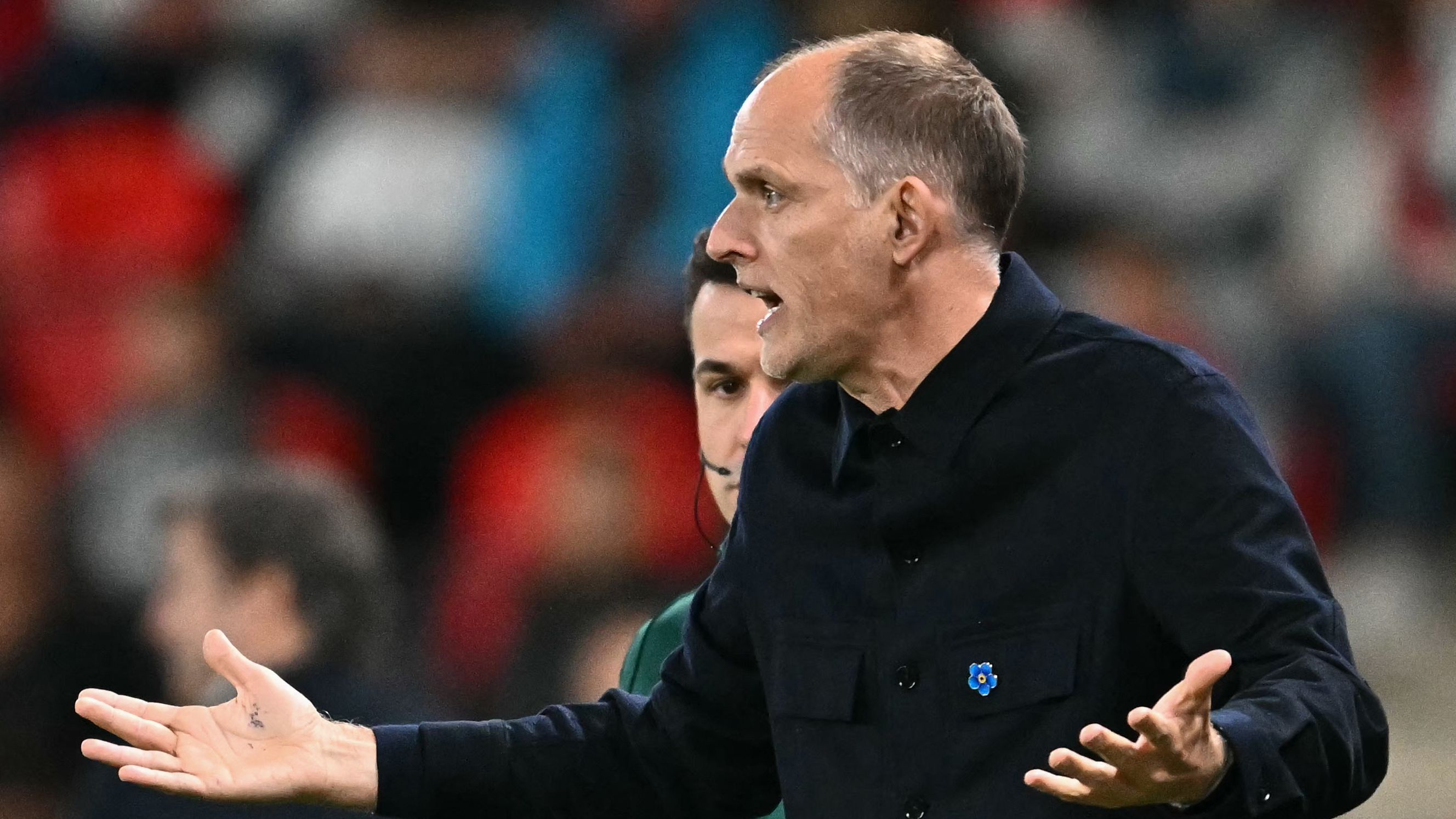
Tuchel Balances England Focus With Manchester City Turmoil as Bellingham Edges Toward Leadership Role
Thomas Tuchel has admitted he feels a “bad conscience” over not checking in with the Manchester City players in his England squad before kick-off against the Czech Republic, only hours after the Premier League confirmed a guilty verdict against the club over serious financial breaches.
The comments came after England secured a 2-0 win on Czech soil in the second round of the UEFA Nations League, a result that steadied Tuchel’s early campaign following a 3-2 defeat to Spain in the opening fixture.
England Win in Prague Amid Off-Field Shockwaves
The Nations League, organised by UEFA, is designed to provide competitive fixtures in place of traditional friendlies, with promotion, relegation and, in some cycles, pathways into major tournaments at stake. In that context, a 2-0 away victory in Prague represents an important response to the loss against Spain and keeps England on course in their group.
Elliot Anderson, Marc Guehi and Nico O’Reilly all travelled with the squad for the match in the Czech Republic. For the Manchester City contingent, the backdrop was extraordinary: a guilty verdict from the Premier League over serious financial breaches, with charges numbering more than 115.
Such a development would normally be expected to dominate conversation around those players, potentially affecting focus and mood. Yet Tuchel revealed after the final whistle that, in his own preparation, the situation had “not crossed his mind.” His approach underlined a classic international-management dilemma: whether to address club-level crises directly, or to insulate the national-team environment from off-field turbulence.
Tuchel’s ‘Bad Conscience’ Over City Players
Asked by BBC Radio 5 Live whether he had spoken to Guehi, Anderson and O’Reilly about the Premier League’s decision, Tuchel was candid about his priorities on matchday.
“I have a bad conscience now,” he admitted. “In truth I did not, because I am focused only on everything we have to deal with here and on preparing the team.”
His remarks offer a window into the pressure of international windows, where managers often have limited time with players and must balance tactical work, recovery and media obligations. In this case, Tuchel chose to concentrate entirely on England’s game plan and physical management rather than entering the complex territory of domestic governance and club sanctions.
The episode nevertheless illustrates how club-level regulatory decisions can cut straight into national-team dressing rooms. For City players, the verdict is more than background noise; it touches on their employers, their contracts and the long-term competitive environment they will return to after the international break.
Footage From the Stands Raises Questions
Supporters were left speculating about the mood within the camp when images emerged from the Fortuna Stadium showing Guehi and O’Reilly closely huddled over an audio recording on one of their mobile phones.
Nobody close to the team has confirmed what the players were listening to, or whether it related to the Premier League decision at all. The lack of clarity has not stopped debate, but it also underlines how quickly modern dressing rooms can be influenced by breaking news, push notifications and internal club communications, even in the relative bubble of an away international.
What is clear is that Manchester City chief executive Ferran Soriano addressed the situation directly on the club side, releasing a video to roughly 1,000 employees. In that internal message, he stressed the club’s innocence and described the case as a “conspiracy theory” within the Premier League. That type of strong language from a chief executive reflects the seriousness with which City view the charges and the verdict, and it frames the legal and reputational battle that will likely extend far beyond a single international break.
Premier League Sanctions and the Wider Governance Picture
The Premier League’s financial regulations, operating alongside domestic company law and broader football governance structures, are designed to preserve competitive balance and ensure transparent club finances. A guilty verdict on multiple serious financial breaches places Manchester City at the centre of a high-stakes regulatory confrontation within English football.
For the league as a whole, the case goes beyond one club’s punishment. It tests the robustness of the Premier League’s rulebook and disciplinary processes, and raises questions about how sanctions might affect title races, historical records and future commercial negotiations. For international managers like Tuchel, such disputes risk becoming an undercurrent every time they select players from clubs facing substantial legal or regulatory jeopardy.
Details of potential penalties, appeals processes or timelines are not part of Tuchel’s remit with England and were not addressed in his post-match comments. His focus, as he made clear, remained on performance in the Nations League rather than the long-term legal implications of the verdict.
Bellingham Wears the Armband and Steps Toward the Future
Amid the off-field turbulence, Tuchel’s decisions in Prague also pointed toward England’s medium-term future on the pitch. Jude Bellingham took the captain’s armband when he replaced Harry Kane 20 minutes from time, a symbolic moment that dovetailed with broader discussion about succession planning in the national side.
Tuchel did not shy away from the possibility that the change could be a preview of a more permanent shift in leadership. “If you are the captain at the end of these matches, you can certainly become the permanent captain,” he said.
He framed the gesture as both a reward and an affirmation of Bellingham’s standing within the group. “It’s a reward. It’s a good thing,” Tuchel added. “I think he enjoys being with us at the moment. That’s how I feel.”
For a player of Bellingham’s age and profile, being trusted with the armband, even for a short period, carries implications for future tournaments. In Nations League play and in qualification campaigns, the captaincy often reflects not just seniority but tactical importance, off-field influence and the manager’s view of who can set standards across multiple cycles.
Managing Bellingham’s Minutes and Fitness
Tuchel explained that he and his staff had discussed Bellingham’s role before the game, mindful of his limited minutes during a short run of club fixtures earlier in the season.
“Today we talked a little about his role, and we said maybe 30 minutes would be enough because he has not played during this short spell of matches this season. He has done it before, but not this season, so we did not want to be the first to try that,” Tuchel said.
That cautious approach underlines the delicate balance national-team coaches must strike when managing players who feature heavily for leading European clubs. Overloading a key midfielder in a condensed calendar risks repercussions both for the player’s health and for relations with his club.
Even in the short time Bellingham spent on the pitch, Tuchel felt the midfielder’s mentality came through clearly. “Even in this short time, you can see that he is confident and even happy to help from the bench,” the manager continued.
There was, however, a note of concern at full-time. Bellingham reported a minor injury at the end of the match. Tuchel confirmed the issue, stressing that England hoped it would not prove serious with two more fixtures immediately ahead.
“We hope it is not serious and that he will be available for selection,” he concluded.
Key Match and Schedule Details
- Competition: UEFA Nations League
- Fixture: Czech Republic vs England
- Venue: Fortuna Stadium, Prague
- Result: Czech Republic 0-2 England
- Previous England result in group: 3-2 defeat to Spain
England’s schedule in this international window continues with:
- Trip to Croatia on Saturday
- Home match against the Czech Republic next Tuesday
The management of Bellingham’s workload, his minor injury concern and the psychological state of the Manchester City players will all feed into Tuchel’s selection and rotation decisions across those fixtures. With Nations League groups providing pathways toward seeding advantages and, in some editions, qualification routes into major tournaments, these choices carry competitive significance beyond a single week of matches.
Club Turmoil, National Focus
Tuchel’s admission that he did not speak to Anderson, Guehi and O’Reilly about the Premier League verdict, despite feeling a “bad conscience,” captures the competing demands on modern international coaches. On one side lies an evolving regulatory landscape, in which club finances and league sanctions can shape careers and competitive balance. On the other lies the immediate requirement to prepare a team for high-level international competition.
For now, England’s response has been to compartmentalise. On the pitch, the 2-0 victory in Prague has restored momentum in the Nations League. Off it, the implications of the Premier League’s decision for Manchester City will continue to unfold, largely beyond Tuchel’s direct control but never entirely outside the awareness of the players he selects.
- Oilers Evaluate Roster Depth Amid Potential Player Move and Preseason Assessments
- Therapeutic Riding and Resilience: Lady June’s Enduring Bond with Horses and Community Impact
- Pro League Coaches Pick Tielemans, Godts and De Cat (archyde.com)
- Judge denies defense motion to declare Lindsay Clancy not guilty of murder (globallypulse.com)
