
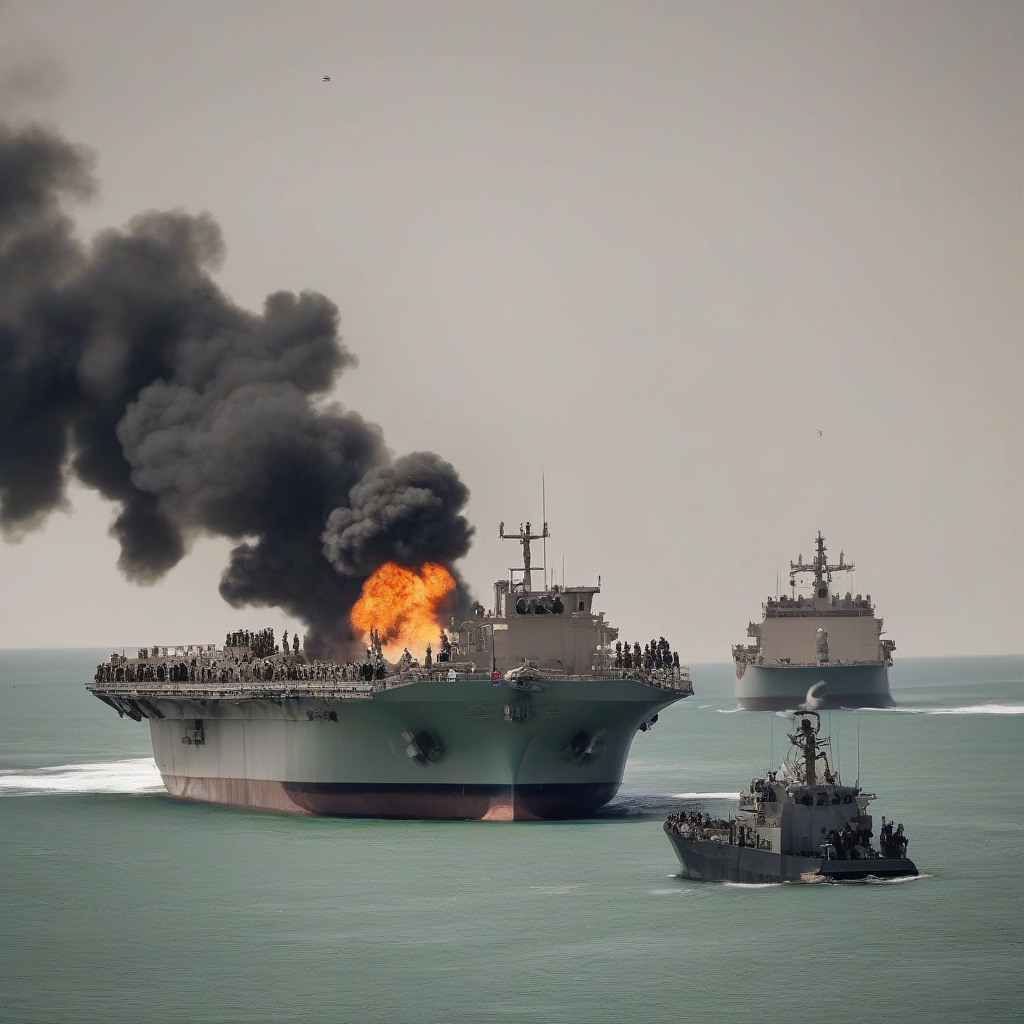
GULF REGION – US Central Command (Centcom) announced that American forces boarded the M/T Wen Yao in the Gulf of Oman on July 17, 2026, to enforce a renewed naval blockade of Iranian ports.
The boarding is part of a wider military escalation following the collapse of an interim deal intended to end the war between the United States and Iran. The blockade, which took effect at 8 p.m. GMT on July 15, 2026, has already resulted in the redirection of three commercial vessels and the disabling of an unladen oil tanker by US aircraft.
The surge in hostilities marks a transition toward infrastructure targeting, with the US expanding its airstrike campaign against Iranian bridges and military facilities, while Tehran has responded with missile and drone attacks against US-allied states in the Gulf.
Naval Blockade and Maritime Interdictions
Centcom confirmed the boarding of the M/T Wen Yao was conducted to “ensure full compliance with the ongoing US naval blockade.” This operation follows a series of aggressive interceptions in the Gulf of Oman and the Strait of Hormuz, one of the world’s most heavily trafficked maritime corridors for oil and gas shipments.
US defense officials say the blockade is being carried out under existing presidential war powers and in coordination with long-standing obligations under the UN Convention on the Law of the Sea, though Iran has accused Washington of using security justifications to wage “economic warfare” at sea.
Prior to the boarding on July 17, the US military reported the following maritime actions:
- July 14: A US aircraft fired upon and disabled an unladen oil tanker allegedly attempting to break the blockade.
- July 15-17: Three commercial vessels were “redirected” by US naval forces after, according to the Pentagon, attempting to run the blockade.
US officials describe the measure as a limited interdiction campaign focused on vessels believed to be carrying sanctioned or dual-use cargo into Iranian ports. The blockade targets Iran’s primary maritime trade routes, aiming to isolate the Islamic Republic’s ports and limit the movement of strategic goods, while raising fresh questions in foreign capitals over freedom of navigation and global energy security.
Expanded Airstrikes and Iranian Casualties
Concurrent with the naval operations, the US launched a series of airstrikes targeting Iranian infrastructure. These attacks align with previously stated threats by President Donald Trump to destroy critical Iranian assets if Tehran continued to target US personnel and partners.
Iranian state media reported that strikes on July 17 hit targets in several regions, including Tehran and Semnan province, the latter of which houses Iran’s space program and ballistic missile production facilities. Other affected provinces include:
- Hamedan
- Hormozgan
- Khuzestan
- Lorestan
- Markazi
- Sistan and Balochistan
- Qeshm island
In the port city of Bandar Abbas, the impact of the strikes resulted in both civilian and infrastructure casualties. State media reported seven people wounded in a strike on the Allah-Akbar Hill residential neighborhood and two wounded at the Bandar Abbas railway junction station. Just west of the city, witnesses reported that two bridges were struck, resulting in three deaths and nine injuries.
The Pentagon has not released a full battle damage assessment, but US officials insist the campaign is focused on military, logistical, and command-and-control nodes that enable Iran’s missile and drone operations. Human rights organizations have called for independent verification of casualty figures on both sides.
Retaliatory Strikes on Gulf States
Tehran has responded to the infrastructure attacks by targeting countries that host US military forces, broadening the confrontation beyond Iranian territory and heightening concerns in regional capitals about escalation beyond their control.
On July 18, 2026, Kuwait reported responding to missile and drone attacks, with air defense systems activated around facilities that host US troops. In Doha, Qatar, officials warned that the security threat level was “elevated” as residents reported hearing several blasts early Friday morning near areas that house foreign military installations.
In Bahrain, the interior ministry issued an urgent directive for citizens to take shelter. Iranian state media claimed the Islamic republic’s army targeted US helicopters and planes at a Bahraini airbase, describing the action as a response to “the enemy’s hostile action in targeting urban infrastructure and innocent people.” Gulf governments have not provided detailed public accounts of damage, but diplomats say the strikes have prompted new contingency planning with Washington over the protection of critical infrastructure.
Global Energy Risks and Proxy Threats
The escalation has drawn in regional proxies, specifically the Houthi movement in Yemen, further complicating efforts to contain the conflict geographically. According to Reuters, Iran has instructed the Houthis to prepare for the closure of the Red Sea oil route should the US target Iranian energy infrastructure.
Houthi leader Abdul Malik al-Houthi further threatened that Saudi oil and critical facilities could be targeted if Riyadh intervenes in Yemen. This threat follows a Saudi strike on Sana’a airport and subsequent retaliatory missile fire from the Houthis.
The instability has already disrupted maritime commerce. Lloyd’s List Intelligence reported that week-to-week cargo shipments through the Strait of Hormuz-the world’s most critical oil chokepoint-dropped by nearly 25% at the start of the month, amplifying fears of a supply shock in energy markets and adding pressure on consumer governments to activate strategic reserves.
Current industry responses include:
- Oil shippers disabling location-tracking devices to transit the strait covertly, despite insurance and legal risks.
- A significant number of vessels remaining stationary to avoid combat zones and potential misidentification by military forces.
- Increased reliance on pipelines, particularly routes that bypass the Strait, though capacity remains insufficient to offset the shipping decline.
Energy analysts note that any prolonged disruption could feed directly into domestic policy debates in major importing nations over fuel subsidies, inflation management, and emergency stockpile releases under the International Energy Agency framework.
Diplomatic Deadlock and Prisoner Dispute
Pakistan’s foreign ministry stated on July 17 that efforts to bring the US and Tehran back to the negotiating table are ongoing, though officials acknowledged that diplomacy is becoming “increasingly difficult” as casualty counts rise and domestic political rhetoric hardens on both sides. Islamabad has positioned itself as a channel for deconfliction messages rather than a formal mediator, diplomats say.
Amid the conflict, a dispute has emerged regarding the release of a US citizen, underscoring how individual detainee cases have become intertwined with broader strategic bargaining. President Trump stated on social media that Tehran had made a “goodwill gesture” by releasing an American citizen detained since 2024. Human rights lawyer Jared Genser identified the individual as Dena Karari, a US-Iranian citizen and nonprofit leader who had been charged with espionage.
However, the Iranian judiciary challenged this account via state media, asserting that no American prisoner had been released or exchanged. The conflicting claims have left Karari’s status unclear and prompted calls from advocacy groups for transparent confirmation of her whereabouts.
President Trump addressed the US audience on Thursday night, claiming the US was “winning big in Iran” and stating that “Americans will see the fruits of that labour very, very shortly.” Lawmakers from both parties have pressed the administration for briefings on the legal basis, scope, and objectives of the blockade and air campaign, referencing the executive’s role as commander in chief under the US constitutional framework set out in Article II of the Constitution.
Pakistan continues to facilitate communication channels between Washington and Tehran as the blockade remains in effect, but with both militaries escalating and regional allies increasingly drawn in, diplomats describe the window for a negotiated pause as narrowing by the day.
Worth a look
