
LIMA —
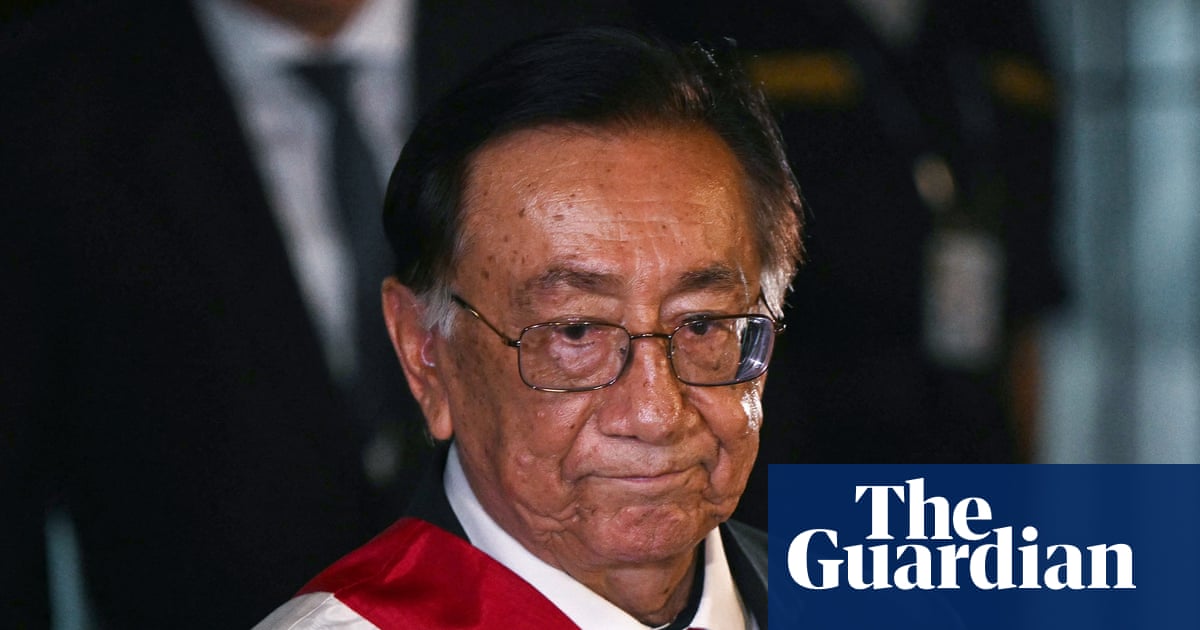
Peru’s Congress elected 83-year-old leftist lawmaker José María Balcázar as interim president on Wednesday, one day after legislators removed his predecessor, José Jerí, over undisclosed meetings with Chinese businessmen. Balcázar, a former judge affiliated with the Peru Libre party, prevailed in a congressional ballot over conservative rival María del Carmen Alva and will serve through July 28 while Peru races toward an April general election. (apnews.com)
The abrupt handover is the latest turn in a grinding cycle of presidential turnover that has unsettled one of Latin America’s most open economies and a leading global metals exporter. With voting set for April 12 and a likely June runoff, Peru’s political class faces a compressed timetable to organize a credible ballot even as public trust in institutions remains fragile. (andina.pe)
The vote and the constitutional mechanics
After Jerí’s ouster on Tuesday, lawmakers convened a marathon session that failed to produce an initial majority. In a second-round vote on Wednesday, Congress chose Balcázar over Alva, and he assumed the presidency by constitutional succession in his capacity as head of Congress. Article 115 of Peru’s 1993 Constitution places the congressional speaker next in line when the presidency falls vacant and the vice presidencies are unfilled, part of a succession scheme laid out in Peru’s current constitutional text.
International observers and domestic analysts alike view the episode as another example of how Peru’s broadly interpreted vacancy tools—especially the “permanent moral incapacity” provision—have tilted power toward Congress and normalized executive collapse. The legal scaffold for presidential removal sits principally in Articles 113 and 115 of the Constitution, a framework that has been repeatedly invoked since 2016 to unseat or force the resignation of sitting presidents, often without allegations of traditional criminal wrongdoing.
A polarizing record on child protection
Balcázar enters office shadowed by remarks he made in 2023 as the lone lawmaker to criticize—and vote against—a bill banning child marriage under 18. As congressional education committee chair, he argued such relationships were commonplace and could be “beneficial” for the minor, drawing a sharp rebuke from Peru’s women’s ministry for justifying “sexual violence against school-age children and adolescents, a painful and despicable situation that profoundly affects their overall wellbeing and fundamental rights.”
“From the age of 14 onwards, there should be no impediment; everyone has sexual relations, [male] teachers with pupils, female teachers with pupils, and between pupils too. That’s fine,”
he told reporters at the time; when pressed again on Thursday, he added: “I will not change my mind, I am firm in my convictions.” The comments place the new interim leader at odds with Peru’s recent legislative push to align child-protection rules with international standards that define any sexual relationship with a minor as a potential rights violation.
Allegations trailing the new interim leader
Beyond his statements on child marriage, Balcázar has been investigated over alleged misappropriation of funds during his tenure as dean of the Lambayeque bar association. The association expelled him in August 2022—a decision later ratified in December 2024—while related administrative and legal proceedings continue, according to bar officials and local press reports. Balcázar has denied wrongdoing and has framed the case as politically motivated.
He has also said previously that he would free former president Pedro Castillo, who is serving an 11-year, 5-month, 15-day sentence imposed by Peru’s Supreme Court for conspiracy to commit rebellion after his failed attempt to dissolve Congress in December 2022. Castillo’s term collapsed into chaos and deadly protests that set the stage for years of institutional strain. Any move by Balcázar to seek Castillo’s release—whether through pardon or legislation—would be fiercely contested and could test Peru’s separation of powers and the authority of its courts.
Jerí’s downfall and the China factor
Jerí, who took office in October 2025 after Dina Boluarte’s removal, was ousted four months into his tenure. Lawmakers cited his undisclosed meetings with Chinese businessman Zhihua “Johnny” Yang and other figures, triggering investigations into possible influence-peddling and conflicts of interest. The impeachment—approved 75–24—underscored sensitivities around Peru’s relationship with China, its largest trading partner, and came as Beijing-linked investments expand in energy, mining and logistics, including the $3.6 billion deepwater port at Chancay. Jerí denied wrongdoing, describing the meetings as cultural in nature.
That complex backdrop heightens the geopolitical stakes of Peru’s transition. China absorbs the largest share of Peruvian mineral exports, and Peru remains one of the world’s top copper producers; any deterioration in governance, permitting or security can ripple through global metals markets and complicate investment decisions by global mining houses that rely on predictable regulation and contract enforcement.
Institutions under strain
Balcázar is the eighth person to occupy Peru’s presidency in roughly a decade—a churn driven less by elections than by legislative maneuvers, abrupt resignations and interim handovers. The pattern has fed popular cynicism while complicating economic management and public security policy, with short-lived administrations struggling to design and implement multi-year reforms on issues ranging from tax compliance to policing and anti-corruption.
Peruvian law sets clear limits for transitional presidencies: when the presidency is vacated and the congressional leader assumes office, that official must steward the state until a new executive is sworn in after elections and is not expected to embark on major programmatic overhauls. In practice, however, repeated use of vacancy and censure powers has blurred the line between constitutional control and political brinkmanship, turning Congress into the dominant arena where executive tenures are cut short and policy agendas repeatedly reset.
Economy and the electoral calendar
Balcázar has pledged to ensure clean elections while maintaining macroeconomic and monetary continuity, a signal aimed at calming markets already buffeted by crime, protest risks and sliding approval ratings for successive leaders. Peru’s central bank remains formally independent, and the Finance Ministry has so far preserved a reputation for fiscal prudence, but investor confidence is increasingly tied to perceptions of minimum political stability.
The real test will be administrative: securing logistics, neutrality and security for voting in a country whose party system is more fragmented than at any point in recent memory. Peru’s National Jury of Elections calendar fixes nationwide voting for April 12, with a presidential runoff on June 7 if required. The Constitution states that the next president must take the oath on July 28, the country’s Independence Day, compressing the handover window for any transition and forcing electoral authorities, the outgoing interim government and the incoming administration to coordinate on an accelerated schedule.
Calls to stay within a narrow mandate
Civil society groups urged restraint from day one. “Out of respect for the stability of the country and in view of an exhausted citizenry, the new president’s mandate must be strictly limited to ensuring a transparent and orderly democratic transition and preventing a worsening of the institutional crisis we are currently experiencing,” said Álvaro Henzler of Transparencia Perú. The group and other watchdogs argue that any attempt by Balcázar to extend his influence beyond the transition—by reshaping electoral rules, intervening in judicial cases or testing the limits of decree powers—would deepen Peru’s legitimacy crisis.
Status: As of Thursday, February 19, 2026, José María Balcázar is serving as interim president under constitutional succession; the April 12 and June 7 election dates and the July 28 presidential inauguration remain in force, and the current institutional framework continues to assign Congress the central role in triggering and managing presidential transitions. (andina.pe)
Related reading
