
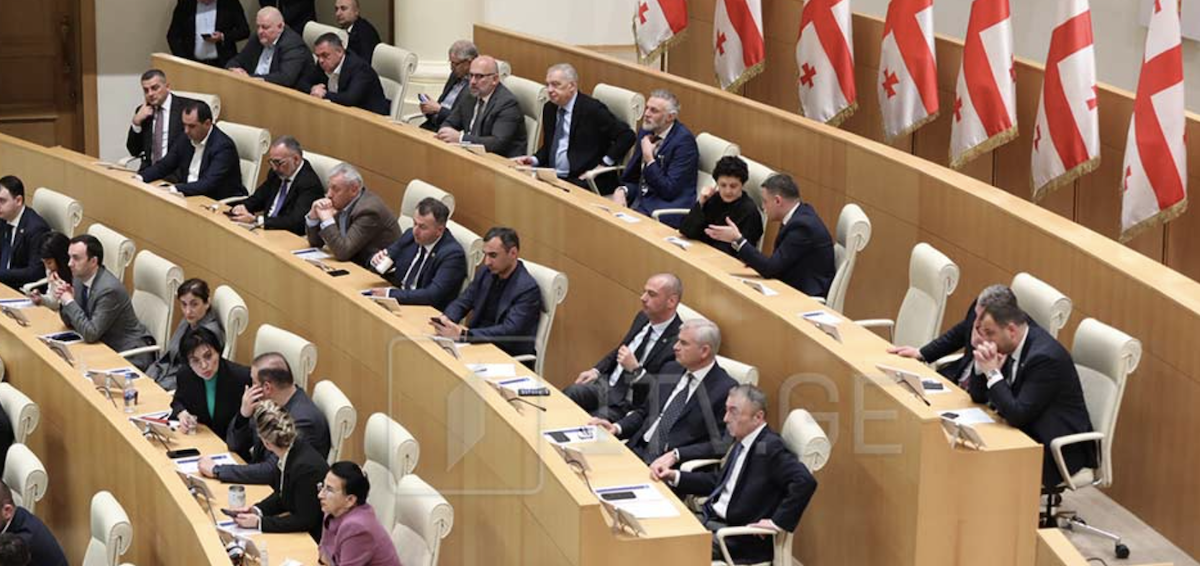
TBILISI – Georgia’s parliament is poised to revise controversial legislation governing foreign funding of non-governmental organizations, a move framed by officials as a clarification of existing rules but widely condemned by critics as a further erosion of democratic freedoms. The amendments, submitted this week, seek to exempt funds provided directly by diplomatic missions, consular offices, and international organizations from the scope of the “Law on Transparency of Foreign Influence,” colloquially dubbed the “foreign agents law.”
The revisions come after months of widespread protests and international pressure sparked by the initial passage of the law in May 2024. While proponents argue the law is necessary to ensure transparency and prevent undue foreign interference in Georgia’s internal affairs, opponents contend it is a tool to stifle civil society and obstruct the country’s path toward European integration. The initial law required organizations receiving more than 20% of their funding from foreign sources to register as “foreign agents,” subjecting them to increased scrutiny, public labelling and detailed reporting requirements under the oversight of the State Audit Service.
The proposed changes, however, do not address the core concerns surrounding the law’s broad definition of “foreign influence” and the potential for its misuse. The revised draft states that funds from diplomatic missions will not be considered grants “if they are spent…on activities arising from the political or public interests, approaches, or relations of a foreign government or foreign political party, and directly related to the activities of the diplomatic mission itself.” This distinction, critics argue, creates a loophole that allows the government to selectively target organizations critical of its policies while shielding those aligned with its interests, without altering the underlying enforcement architecture.
“It is advisable to clarify the entity providing the grant and not to consider as grants funds provided by diplomatic missions, consular offices, and international organizations accredited in Georgia,” reads the explanatory note accompanying the draft legislation. “The current version of the law does not apply to these relations anyway; however, to ensure a uniform interpretation of the law, the relevant clarification is considered appropriate.” Legal analysts note that by presenting the move as a technical clarification rather than a substantive retreat, the government preserves the core logic of the foreign agents regime.
The original law, and the current revisions, are part of a broader trend of increasingly restrictive legislation in Georgia that has raised alarm bells among international observers. In March 2024, a package of laws was approved that significantly broadened the definition of “grant,” encompassing both financial and non-financial support that could be used to influence Georgia’s domestic or foreign policy. Violations of the Law on Grants can result in criminal liability, including imprisonment of up to six years, and the framework is explicitly cross-referenced in the foreign influence statute, giving prosecutors wide latitude to treat routine NGO activities as grant-related offences. Individuals working for organizations predominantly funded from abroad are banned from membership in political parties for eight years, limiting their direct participation in formal politics and further blurring the line between transparency rules and political sanctions.
The Council of Europe has been particularly vocal in its criticism, warning that the legislation’s vague wording allows for broad interpretation and increases the risk of its use against dissent. Experts have pointed to newly added provisions to the Criminal Code expanding the concept of “extremism” as particularly concerning, noting that public calls for actions against the constitutional order could be criminalized even when they fall short of incitement to violence. Human rights lawyers caution that, taken together, the foreign influence law, the expanded grant regime and the extremism amendments form a mutually reinforcing toolkit that can be deployed against media outlets, watchdog groups and election monitors ahead of key votes.
Georgia’s trajectory has been a complex one since its independence from the Soviet Union in 1991. The country has undergone several periods of political upheaval, including the Rose Revolution in 2003 and the Russia-Georgia War in 2008. Despite aspirations for closer ties with the West, Georgia remains deeply entangled in Russia’s sphere of influence, with Russia maintaining a military presence in the breakaway regions of Abkhazia and South Ossetia. For many domestic critics, the foreign agents law is seen as mirroring similar legislation introduced in Russia, where the “foreign agent” label has been used to marginalize independent NGOs and media.
The current legislative crackdown is widely seen as a response to growing pro-Western sentiment and a desire by the ruling Georgian Dream party to consolidate its power. The party, founded by billionaire Bidzina Ivanishvili, has accused Western governments and NGOs of attempting to orchestrate a “second revolution” in Georgia. These accusations echo narratives frequently employed by the Kremlin to discredit pro-democracy movements in the region, and have deepened mistrust between the government and parts of the diplomatic and donor community that have long financed governance, election and rule-of-law projects in the country.
The timing of these legislative changes is also significant, occurring as Georgia seeks to accelerate its integration with the European Union. In December 2023, the EU granted Georgia candidate status, a major step forward in its bid to join the bloc. However, the EU has made it clear that progress on reforms, including strengthening the rule of law and protecting civil society, is crucial for continued advancement and for opening accession talks. Brussels has repeatedly tied further steps in the process to compliance with core obligations under the EU acquis, including guarantees for freedom of association and expression.
The proposed revisions to the Law on Grants are unlikely to satisfy the EU’s concerns. While the exemption for funds from diplomatic missions may address some of the most immediate criticisms from embassies and international organizations operating in Tbilisi, the law’s fundamental flaws – its broad definition of “foreign influence” and its potential for selective enforcement – remain unaddressed. The underlying statutory framework, which consolidates supervision of politically sensitive funding streams in a small number of state bodies, continues to give the executive considerable discretion over who is investigated and sanctioned.
The amendments are currently under consideration by the Georgian parliament and are expected to be voted on in the coming weeks. Lawmakers face a choice between modest technical adjustments and a more substantive recalibration that would bring the legislation closer to European standards on transparency and association. Civil society organizations have vowed to continue their protests and advocacy efforts to push for a complete repeal of the law, arguing that it poses an existential threat to Georgia’s democratic future and its European path. For now, the law remains in effect, and the State Audit Service continues to exercise increased oversight over the issuance and receipt of grants, leaving NGOs, independent media and advocacy groups operating under heightened legal and political uncertainty.
Worth a look
- Global Food Security Alliances: How Climate-Resilient Agricultural Corridors Are Stabilizing Wheat and Rice Supplies
- Cross-Border Renewable Energy Grids: North Sea and Mediterranean Subsea Cable Networks Enter Phase Two
- Tens of thousands expected in Paris for student protests – RTE.ie (archyde.com)
- Spanish election: Pedro Sanchez calls snap election for 29 November after housing protests (globallypulse.com)
