
Turning a Martian liability into load‑bearing strength
For years, perchlorates in Martian soil were treated as a red flag for human activity, chiefly because they are toxic oxidizing salts that complicate both human health and life‑detection experiments. New lab results point the other way: when incorporated into a biocementation process, these same salts can help produce stronger, more resilient bricks from Martian regolith simulant. The work, led by researchers collaborating across India and the United States, reframes a ubiquitous Martian contaminant as a construction ally for in‑situ resource utilization (ISRU) and early habitat build‑outs.
The study used a Bangalore‑isolated strain of Sporosarcina pasteurii—well known for ureolysis‑driven mineral precipitation—to turn a slurry of simulant into solid masonry. Perchlorates were intentionally added to reflect real Martian conditions often omitted from Earth tests because of handling hazards. The result: bricks with higher compressive strength than comparable mixes that left perchlorates out, a finding that will feed directly into mission architecture studies at space agencies and private operators planning long‑duration surface stays.
Inside the experiment: what was varied and why it matters
Researchers compared multiple mixes to isolate the roles of biology and binders in the presence of perchlorates. Outcomes, not raw numbers, tell the story:
- Water only: disintegrated rapidly.
- Bacteria + water: weaker than water alone under handling, indicating microbes without nutrients or binders are insufficient.
- Bacteria + guar gum: substantial strength gain; the plant‑derived gum functioned as both binder and microbial feedstock.
- Bacteria + guar gum + perchlorate: strongest performance, more than double the bacteria + gum variant.
- Nickel chloride catalyst: mixed impact; not required for the top‑performing blend and would complicate supply on Mars.
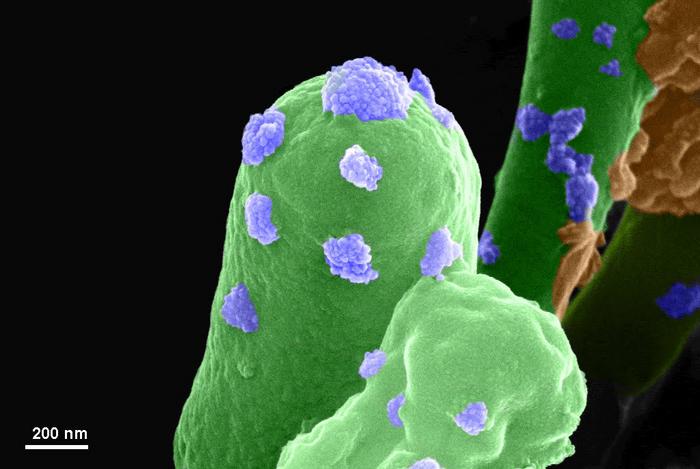
Perchlorate’s counterintuitive benefit likely relates to microbial stress responses and structure formation. The team observed an extracellular matrix with “microbridges” between cells and mineral grains that appears to densify and toughen the cured material. That mechanism now needs targeted validation and scaling studies, particularly under Mars‑analog temperatures and pressures, before spaceflight programs can treat it as an engineering input rather than an intriguing lab effect.
Architecture for off‑world biocementation at mission scale
Bringing this out of the lab requires a predictable, closed‑loop production stack that meshes with habitat systems and EVA workflows, as well as with the risk‑management cultures of agencies such as NASA and the European Space Agency. A practical baseline design would include:
- Feedstock handling: abrasion‑resistant augers and sifters delivering sieved regolith to a wetted mixer; dust isolation compatible with suit ports and airlock practices.
- Bioreactor loop: temperature‑controlled vessel for Sporosarcina pasteurii; automated dosing of urea and nutrients; inline monitoring of pH, ammonium, and calcium/carbonate availability.
- Additives management: meter‑scale blending of guar gum and perchlorate‑bearing fines; recipe control with data logging for batch traceability.
- Molding and curing: low‑temperature curing racks with humidity retention; options for vibration/compaction to reduce voids in partial gravity.
- Water recovery: condenser and membrane separation reclaiming process water; brine management to prevent salt accumulation in closed habitats.
- Quality assurance: nondestructive testing (mass, porosity, acoustic velocity); periodic destructive compressive tests on witness samples, tied into mission assurance standards.
- Post‑cure sterilization: heat or UV treatment if bricks must exit containment without live microbes, to meet planetary protection rules.
In practice, any such system would sit inside a broader logistics and governance envelope: who certifies that biocemented structures are safe as primary habitat shells, how construction interacts with planned landing sites, and how far a mission may go in modifying the local environment while still complying with exploration treaties.
ISRU supply picture: what must be carried versus made
Because every kilogram launched from Earth has a policy and budget trail attached, the ISRU balance sheet here matters as much to program managers and legislators as it does to engineers. The study’s process assumptions translate into the following supply picture:
| Component | Martian availability | Import need | Operational notes |
|---|---|---|---|
| Regolith | Abundant, site‑dependent grain size | No | Sieving and dust control are critical for crew health and equipment longevity. |
| Perchlorates | Widespread in near‑surface soils | No | Hazardous to crew; keep inside sealed processing lines and under strict exposure limits. |
| Water | Accessible as ice at many latitudes | Minimal if extraction active | High‑value; must be recycled with >90% recovery in curing and cleanup. |
| Urea (ureolysis substrate) | Not native | Produced from crew waste | Integrates with life‑support waste processing; reduces imported chemicals. |
| Guar gum | Not native | Yes, or cultivate in greenhouses | Agricultural option ties to food system; otherwise low‑mass, high‑value cargo. |
| Sporosarcina pasteurii | Not native | Initial inoculum only | Expanded on site in bioreactors with strict containment. |
| Nickel chloride (optional) | Constituents present in regolith | Not required for best mix | Omitting simplifies chemistry and logistics. |
For policymakers shaping exploration budgets, the key takeaway is that the heaviest inputs—regolith, perchlorates, much of the water—are already on Mars. What must be carried is relatively compact: a biological starter culture, targeted chemicals, and the industrial hardware to run a closed‑loop plant. That shifts the debate from “Is this affordable?” to “What level of in‑situ industrialization are we prepared to authorize on another world?”
Planetary protection and crew safety shape the deployment path
Live microbes outside sealed systems are incompatible with forward‑contamination rules for Mars surface activities. Any biological brickmaking must therefore occur within controlled enclosures, with sterilization before material leaves containment. These constraints are not optional: signatories to the Outer Space Treaty are expected to follow the planetary protection policy framework coordinated by the Committee on Space Research, which currently treats Mars as a body where terrestrial life must be kept under tight control.
- Crew exposure risks: thyroid disruption and oxidative injury from perchlorates; mitigation through sealed mixers, HEPA/ULPA filtration, medical surveillance, and strict handling protocols aligned with occupational safety baselines.
- Environmental integrity: zero‑release bioreactors and validated sterilization before EVA deployment, so that structures placed outside do not carry viable microbes into the Martian environment.
- Data integrity: batch provenance, sensor logs, and periodic third‑party verification to satisfy safety boards and mission assurance, creating an auditable trail for any structural anomaly.
These requirements will ultimately be written into agency standards, commercial licensing conditions, and international mission reviews, making planetary protection not just a scientific concern but a live regulatory constraint on construction methods.
Where this fits in the materials toolbox
Biocemented bricks complement—not replace—other low‑mass approaches such as sintered regolith, sulfur‑based concretes, and polymer‑bound composites. The biological route stands out for cold‑temperature curing and synergy with life‑support waste streams, while sidestepping the high power draw of full‑furnace sintering. For radiation shielding, mass is king; bricks fabricated from in‑place soil reduce launch mass and enable berms and walls thick enough to blunt galactic cosmic rays when arranged in multilayer assemblies.
For mission designers and oversight bodies, this positions biocementation as one option in a diversified risk portfolio: a way to trade electrical power and imported materials against biological complexity and regulatory scrutiny.
What the lab still needs to prove for flight
- Mechanism: quantify how perchlorate exposure alters extracellular matrix formation and the density of “microbridges.”
- Durability: performance under Martian thermal cycling, low humidity, and dust abrasion over multi‑year timelines.
- Process windows: strength versus curing time, water content, and nutrient dosing in partial gravity.
- Sterilization: post‑cure treatments that preserve strength while meeting biocontainment requirements.
- Integration: compatibility with rover‑scale excavation, robotic placement, and modular habitat interfaces, including the standards that will govern how such bricks tie into crewed modules.
Those answers will determine whether biocementation remains a promising laboratory technique or graduates into the reference architectures that space agencies use when they brief legislatures and international partners on Mars surface plans.
Watch the materials story in motion
For a sense of how regolith‑based construction has already been prototyped in space‑agency labs, NASA has released demonstration footage of robots compressing and sintering Mars‑simulant bricks as part of its habitat technology portfolio. In parallel, space commentators such as Fraser Cain have explored how a realistic Mars mission might play out when ISRU building techniques move from concept slides to operational checklists.
Read more from the teams behind the work
The peer‑reviewed PLOS One study details material behavior and testing protocols, while the project overview at the Indian Institute of Science outlines experimental context and open questions being tackled in follow‑on trials. A concise explainer is available on the institute’s project page, and NASA’s own Mars exploration program portal at science.nasa.gov/mars provides broader context on how in‑situ construction fits into its long‑term surface exploration roadmap.
Keep reading
