
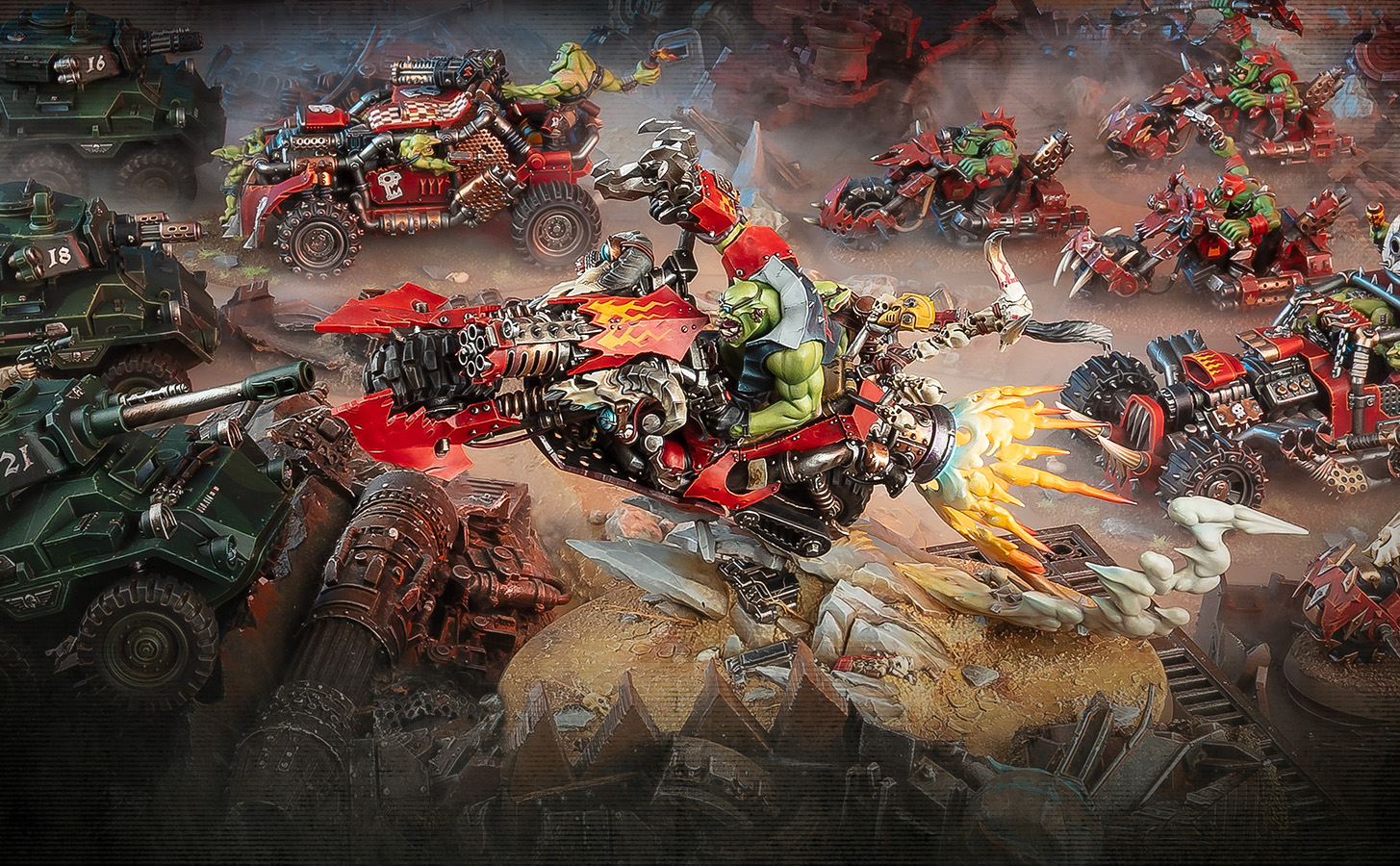
The Architecture of Simulated Chaos
The release of the Wazdakka Gutsmek rules represents a specific evolution in systems design within the tabletop simulation sector. By introducing the Speedwaaagh! mechanic, the system shifts from static unit positioning to a high-mobility framework that prioritizes momentum and rapid deployment over traditional defensive postures.
In the context of game engineering, these rules function as a logic layer designed to simulate unpredictable behavior while maintaining a rigid mathematical balance. This approach to “structured chaos” allows for an emergent gameplay experience where the user-the player-must optimize resource allocation and movement vectors to maximize the efficiency of their fleet. In practice, it turns what could be a purely thematic update into a test case for how far a ruleset can push volatility without undermining competitive integrity.
Operational Logic of the Speedwaaagh!
The Speedwaaagh! is not merely a thematic addition but a systemic modification to how vehicle-based units interact with the battlefield. It introduces a set of modifiers that alter the fundamental physics of the game’s movement phase, effectively creating a “fast-attack” protocol that overrides standard deployment constraints and rewards decisive commitment over incremental positioning.
| System Component | Operational Impact | Strategic Objective |
|---|---|---|
| Mobility Vector | Increased movement distance and charge capacity | Rapid breach of enemy perimeter |
| Aggression Modifier | Bonus to offensive capabilities during initial contact | Shock-and-awe tactical saturation |
| Unit Cohesion | Dynamic grouping of vehicle-based assets | Concentrated force application |
This framework relies on the interplay between high-risk movement and high-reward offensive output. From a design perspective, this creates a “high-variance” system where the probability of success is tied directly to the aggressive execution of the movement algorithm. Designers are effectively encoding a risk appetite into the rules, using probability curves to ensure that high-speed play remains exhilarating without becoming mathematically dominant.
Infrastructure, Governance and Intellectual Property Ecosystems
The deployment of these rules highlights the broader market structure of the miniatures industry. Companies like Games Workshop utilize a “living system” model, where rules are iteratively updated to maintain game design equilibrium and drive the consumption of new physical assets. That living system sits on top of a formal intellectual property regime defined by frameworks such as the Berne Convention for the Protection of Literary and Artistic Works, which underwrites the commercial exclusivity that makes long-horizon rules development economically viable.
This creates a symbiotic relationship between the rule-set (the software) and the miniatures (the hardware). When a new systemic capability like the Speedwaaagh! is introduced, it increases the utility and demand for specific vehicle models, effectively updating the “hardware requirements” for competitive play. For tournament organizers, retailers and local clubs, that shift functions as a soft form of standards-setting: if you want to participate in the meta, you align with the most current rules architecture and the physical kits it implicitly mandates.
- Iterative Balancing: Regular updates prevent system stagnation and force players to re-optimize their army compositions, shaping buying patterns and stock decisions across the retail chain.
- Asset Monetization: New rules often center around specific unit types, driving targeted consumer spending while testing the limits of player tolerance for perceived “pay-to-perform” dynamics.
- Community Feedback Loops: The “meta-game” acts as a massive distributed testing environment, providing developers with data on system imbalances and, increasingly, informing how publishers communicate with regulators on issues like consumer protection and fair competition in digital-adjacent hobbies.
Systemic Integration, User Experience and Policy-Relevant Friction
The transition from traditional movement to the Speedwaaagh! logic reflects a trend toward “high-action” simulation. By reducing the friction of movement and increasing the lethality of charges, the system minimizes downtime and accelerates the game’s tempo. The result is a design language that favours kinetic spectacle and rapid resolution over incremental calculation, aligning tabletop experiences more closely with the pacing of digital action games.
This design choice aligns with modern consumer expectations for faster, more visceral experiences. The complexity is shifted from the “setup” phase to the “execution” phase, requiring players to master a more complex set of systemic interactions in real time. That, in turn, raises familiar governance questions already surfacing in adjacent sectors-from disclosures around rules changes that materially impact competitive outcomes, to how organized play circuits articulate and enforce standards derived from privately-held intellectual property.
For policymakers and institutions that have traditionally viewed tabletop gaming as peripheral, evolutions like the Speedwaaagh! are a reminder that even analogue systems now operate on digital-era logics: rapid patch cycles, monetized meta shifts and data-rich communities. In this context, what looks like a rules tweak for Wazdakka Gutsmek doubles as a live experiment in how commercial game ecosystems manage volatility, sustain engagement and navigate the thin line between entertainment design and market power.
Keep reading
