
Robotic Exploration of the Hadal Zone
The deployment of advanced deep-sea submersibles has unveiled a massive biological archive in the south-eastern Indian Ocean. Researchers have identified the oldest and deepest whale graveyard ever documented, with fossil remains dating back more than 5 million years. While “whale falls”-the process of carcasses sinking to the ocean floor-are known phenomena, this site represents a shift in scale and depth, reaching levels exceeding 7 kilometres.
Operating at these depths requires specialized engineering to withstand the crushing pressures of the Hadal zone. The exploration of the Diamantina fracture zone, a geological feature formed 50 to 60 million years ago during the separation of the Australian and Antarctic continents, utilized precision submersible technology to navigate treacherous trenches and ridges. Stretching thousands of kilometres across the south-eastern Indian Ocean, the Diamantina system has long been mapped as a tectonic scar on nautical charts; this is the first time it has been revealed as a vast biological repository as well.1
| Exploration Parameter | Discovery Data |
|---|---|
| Maximum Depth Reached | 7,002 metres |
| Total Dive Missions | 32 dives |
| Fossil Site Count | 485 locations |
| Geographic Extent | 1,200km (northwest-southeast axis) |
| Chronological Range | Up to 5.3 million years old |
These missions were conducted under strict environmental protocols that now govern activity in areas beyond national jurisdiction, framed by the UN Convention on the Law of the Sea. For policymakers watching the rapid expansion of deep-ocean activity-from scientific expeditions to prospective mining and cable-laying-the Diamantina findings will feed directly into debates over what should and should not be permitted on the planet’s least-understood seabeds.
The Whale-Fall Community Supercorridor
The sheer density of remains has led to the proposal of a “whale-fall community supercorridor.” This 1,200km stretch of the sea floor functions as a critical hub for deep-sea biodiversity, effectively a cold, dark analogue to a savannah migration route. The carcasses provide a concentrated carbon source in an otherwise nutrient-poor environment, supporting a complex web of life including molluscs, crustaceans, brittle stars, and specialized bone-eating worms that can dominate a skeleton for years at a time.2
Dr Giovanni Bianucci noted: “This discovery demonstrates that these extreme and unexplored environments are home to species and ecosystems still unknown to science, and that we are therefore still far from understanding the true biodiversity of our planet.” His remarks underscore a tension now facing regulators: how to design rules for human access to deep waters when the basic inventory of life there is still being compiled.
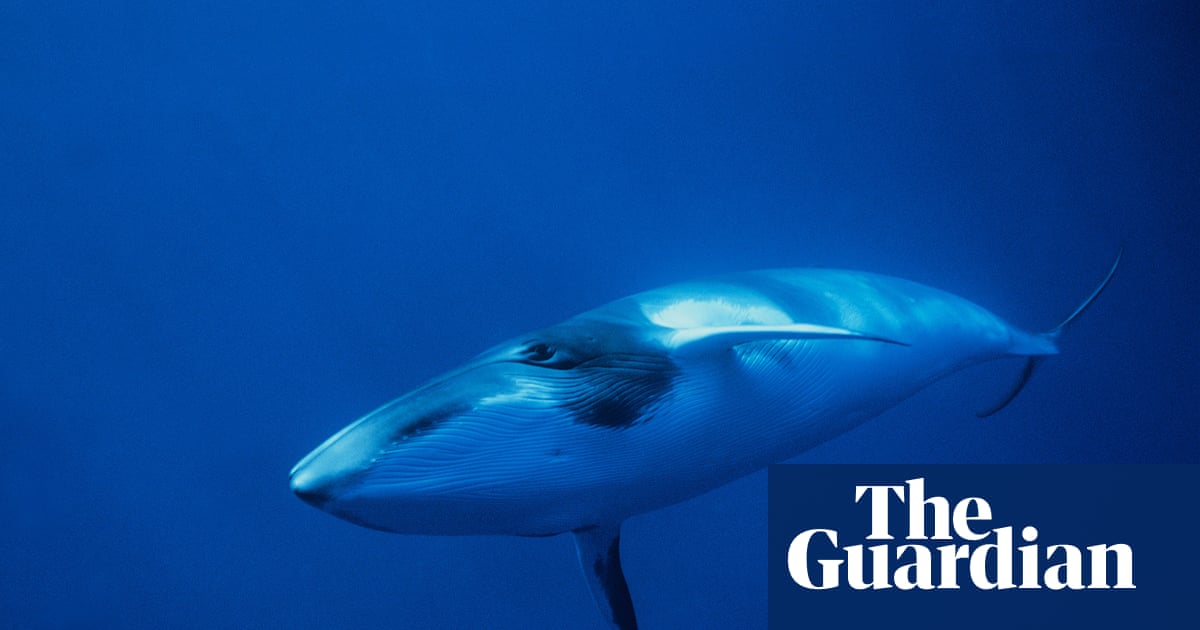
The biological diversity discovered includes both modern and extinct species. A five-metre skeleton of an Antarctic minke whale was identified alongside fossils of the Pterocetus benguelae and a previously unknown species named Pterocetus diamantinae. Dr Giovanni Bianucci added: “Furthermore, it shows us that life can adapt and evolve even in extreme environments where light is absent and pressure is extremely high.” For conservation agencies and regional fisheries organisations, the work adds weight to calls for precautionary management of migration corridors that clearly extend far beyond surface waters.
Mapping Deep-Sea Migration and Mortality
The distribution of these remains suggests a complex intersection of migration patterns and predatory behaviour. The site contains a puzzling mix of shallow-diving filter feeders and deep-diving hunters, such as beaked whales, implying that the fracture zone has been both a feeding ground and a mortality trap across geological time.
Jon Copley observed: “It’s an exciting and rare discovery – not only the world’s deepest known ‘whale-fall’ colony of deep sea animals, but also such an abundance of modern whale skeletons and fossils in this particular location.” His assessment reinforces the sense that the Diamantina system is an outlier, not a typical patch of abyssal seabed.
The difficulty in locating these sites stems from the lack of remote detection capabilities. Unlike hydrothermal vents, which emit heat and chemical signatures detectable by sensors, whale falls are discrete biological events. Jon Copley commented: “Finding a ‘whale necropolis’ where there are nearly 800 skeletons per square kilometre is a surprise, and the mix of whale types is a puzzle.” It is a reminder that most global whale mortality remains invisible to satellite and ship-based monitoring, complicating enforcement of whaling bans and the assessment of ship-strike risks.
The high concentration of remains is likely linked to the region’s geography. Jon Copley explained: “As the researchers suggest, such a necropolis probably results from being on a migration route for filter-feeding species, while also a good place for the hunter species to dive deep for squid, but perhaps pushing them perilously close to their limits as they dive into this crack in the ocean floor.” That combination of oceanography and behaviour, researchers say, may have created a persistent “sink” for whales over millions of years.
Implications for Marine Science, Governance and Infrastructure
This deep-sea study highlights the necessity for increased investment in autonomous underwater vehicles (AUVs) and high-resolution bathymetric mapping. The ability to identify these biological hotspots is essential for understanding global carbon cycling, clarifying the role of whale carcasses in long-term carbon storage, and tracing the evolution of species in extreme environments.
Stephen J Godfrey described the graveyard as “a truly unique discovery”, suggesting the site will continue to provide critical data. “[The research] reminded me of a trailer for the first in a series of epic movies,” he wrote-an image that hints at both the cinematic appeal and the long research arc now opening up in the Hadal zone.
- Biodiversity impact: Discovery of new species and “mysterious” beaked whale data that will inform endangered-species listings and high-seas protected area proposals.
- Geological significance: Confirmation of the Diamantina fracture zone as a biological trap, not only a tectonic structure, sharpening the case for including deep fracture systems in marine spatial planning.
- Technical requirement: Need for enhanced sensing technology to detect non-thermal biological markers-such as subtle chemical plumes and acoustic cues-before large-scale industrial uses of the deep seabed are authorised.
As governments negotiate new standards for deep-sea mining, submarine cable routes and marine protected areas, the Diamantina whale graveyard gives negotiators something they have long lacked in the Hadal zone: concrete evidence that the least accessible parts of the ocean are not empty, but densely layered with life, history and risk.
1 According to marine mapping databases, the Diamantina fracture zone runs for more than 3,000km across the south-eastern Indian Ocean.
2 Fieldwork in the fracture zone has documented extensive whale-fall communities, including previously unknown species, at depths of around 5,000-7,000 metres.
Worth a look
