
A cereal‑box spacecraft is taking ultraviolet aim at habitability
NASA’s Jet Propulsion Laboratory has pushed ultraviolet imaging into a smaller, cheaper class of missions. Riding on the Star-Planet Activity Research CubeSat (SPARCS), a custom camera called SparCAM is now collecting far‑UV and near‑UV light from nearby low‑mass stars to understand how often they erupt and how hostile they are to planets in the putative habitable zone. The mission is designed as a pathfinder for how much exoplanet‑relevant climate science can be done from a spacecraft that, in engineering terms, is closer to a student CubeSat than a traditional observatory.
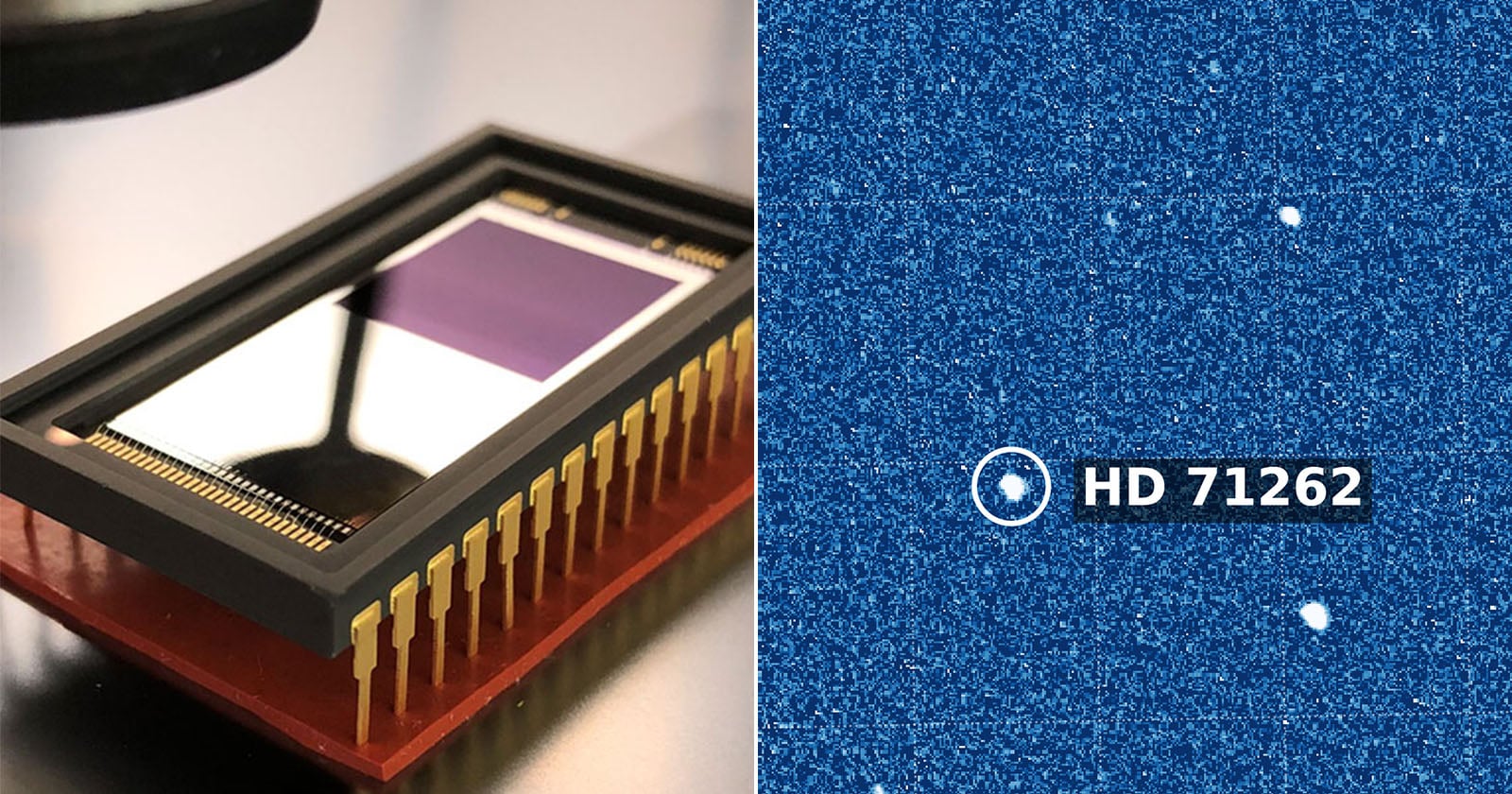
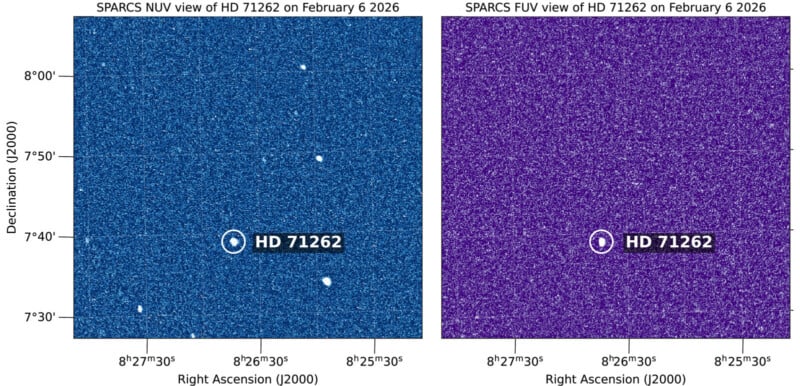
SPARCS launched on January 11, 2026, into low‑Earth orbit and quickly demonstrated on‑orbit performance with its first ultraviolet images. The mission’s early target set and commissioning cadence are designed to capture stellar flares that can evolve over seconds to minutes-events that are easy to miss from the ground due to daylight, atmosphere, and weather interruptions. The first‑light dataset was captured on February 6, 2026, validating the instrument’s dual‑band approach and timing‑critical operations during the opening weeks of flight, and giving mission teams confidence to move from checkout into science mode.
Mission at a glance
| Spacecraft class | Cubesat-scale ultraviolet telescope roughly the size of a cereal box |
| Instrument | SparCAM ultraviolet camera with on‑sensor filters and dual‑band imaging |
| Spectral bands | Simultaneous near‑UV (NUV) and far‑UV (FUV) |
| Primary targets | Low‑mass stars (~30-70% of the Sun’s mass) that are known or suspected to host many habitable‑zone rocky planets |
| Observation plan | About 20 stars, each monitored continuously for ~5-45 days to catch flares, starspot cycles, and longer‑period activity trends |
| Initial timeline | Launch: January 11, 2026; first images: February 6, 2026 |
| Planned mission duration | Approximately one year of primary operations, with the possibility of extended science if the hardware remains healthy |
On‑sensor filtering is the breakthrough
“We took silicon-based detectors – the same technology as in your smartphone camera – and we created a high-sensitivity UV imager. Then we integrated filters into the detector to reject the unwanted light. That is a huge leap forward to doing big science in small packages, and SPARCS serves to demonstrate their long-term performance in space.” In other words, the mission is as much a test of a manufacturing technique as it is an astrophysics experiment.
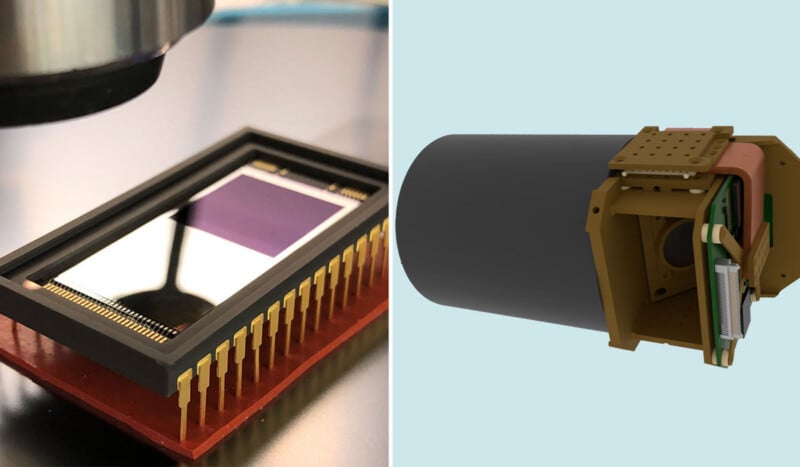
SparCAM uses UV‑optimized, delta‑doped silicon detectors with filters deposited directly on the photosensitive surface. Eliminating separate filter wheels and optics cuts volume and mass while reducing stray light and boosting throughput-essential gains when the entire observatory must fit into a small satellite bus and survive on limited power and pointing authority.
- Delta‑doped silicon improves quantum efficiency in the ultraviolet by engineering the detector’s back surface for minimal absorption losses.
- Integrated multilayer filters suppress out‑of‑band visible and infrared light, improving spectral purity in both FUV and NUV channels.
- Simultaneous dual‑band imaging captures the full profile of rapid flares without calibration drift between exposures, critical when events last only seconds.
Why ultraviolet signatures decide whether small stars can host life
Most of the nearby planets that future telescopes will be able to probe for biosignatures orbit small, cool stars. Those stars can be violently active in ultraviolet light, so their UV “weather” becomes a first‑order input to how space agencies, observatories, and even treaty processes eventually interpret signs of life.
- Atmospheric escape: Intense UV radiation can strip hydrogen and other volatiles from thin atmospheres, shrinking the window for surface liquid water.
- Photochemistry: UV photons drive the breakdown of H2O and CO2, altering ozone formation and potentially creating biosignature look‑alikes.
- Flare frequency: Repeated flaring can sterilize surfaces or, conversely, energize prebiotic chemistry; only long, continuous monitoring resolves true rates.
- Starspot cycles: UV variability linked to magnetic activity shapes long‑term climate forcing on close‑in terrestrial planets.
Operations and data integrity on a lean platform
Running precision astrophysics on a CubeSat forces mission teams into the same trade spaces now facing commercial and academic operators as low‑cost spacecraft proliferate. Every design choice touches not just science return but compliance and risk.
- Pointing stability: Long, continuous stares require fine attitude control with star‑tracker feedback and reaction wheels to keep photometry stable throughout multi‑week campaigns.
- Calibration discipline: UV instruments are sensitive to contamination; careful on‑orbit procedures and periodic dark/bias frames maintain throughput and flat‑field accuracy.
- Bandwidth limits: Constrained downlink budgets drive compact data products and scheduled ground passes; flare alerts hinge on efficient data triage and automated prioritization of interesting events.
- Radiation and aging: UV detectors face radiation‑induced noise and optics darkening; shielding, thermal control, and trending analyses limit drift over the one‑year mission.
Governance, spectrum, and debris policy for small science missions
Because SPARCS flies in the same regulatory ecosystem as commercial megaconstellations, its operations are also a test case for how nimble science missions navigate increasingly crowded orbits and airwaves.
- Spectrum coordination: Federal spacecraft coordinate radio frequencies through the National Telecommunications and Information Administration under the Manual of Regulations and Procedures for Federal Radio Frequency Management to protect ground links and avoid interference.
- Orbital debris standards: NASA missions implement the U.S. Government Orbital Debris Mitigation Standard Practices, which inform licensing decisions and require disposal planning and end‑of‑life passivation for low‑Earth orbit.
- Open science norms: Astrophysics missions typically archive data in public repositories after quality checks, enabling rapid reuse by the research community and reinforcing taxpayer accountability for federally funded missions.
From pathfinder to flagship
By proving that compact, dual‑band UV instruments can survive and deliver stable science in orbit, SPARCS lowers risk for a new generation of observatories. The same detector and filter strategies are directly relevant to future ultraviolet‑capable flagships such as the planned Habitable Worlds Observatory, where imaging Earth‑sized exoplanets will demand extreme sensitivity and spectral purity. SPARCS’ early performance-its first images in space and the ability to watch flares across both UV bands at once-signals that high‑value exoplanet climate diagnostics no longer require a bus‑sized telescope to get started, and that policy decisions on future flagship investments can be informed by flight‑proven technology rather than paper designs alone.
Image credits: NASA/JPL-Caltech/ASU
