
Thermal Stress and Re-entry Precision
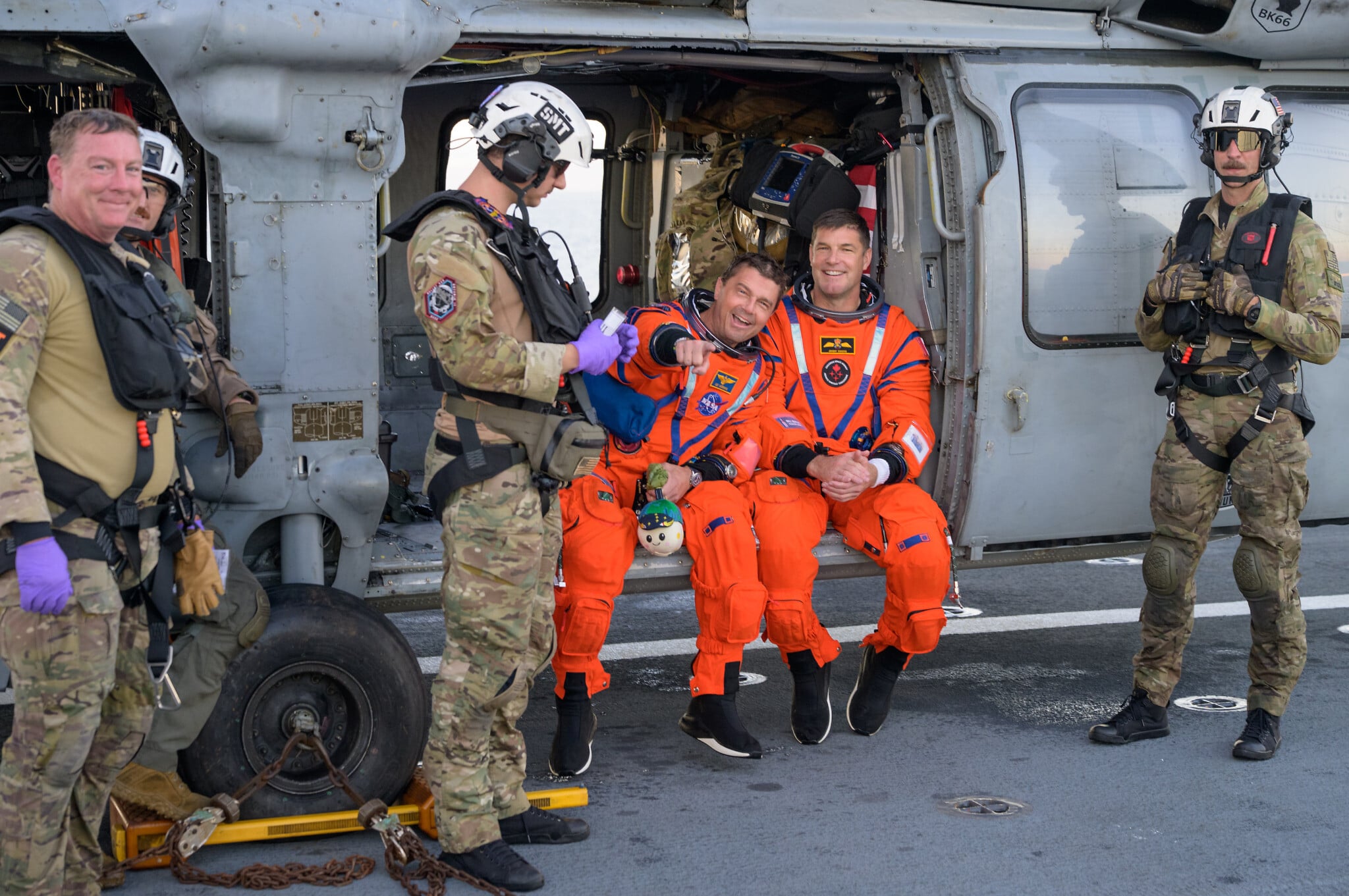
The successful splashdown of the Orion capsule off the California coast marks a pivotal validation of deep-space thermal protection systems and NASA’s capacity to bring crews safely home from lunar distances for the first time in more than half a century. Returning from a lunar trajectory requires managing kinetic energy far beyond that of Low Earth Orbit (LEO) missions. The spacecraft entered the atmosphere at speeds exceeding 30 times the speed of sound, subjecting the heat shield to plasma temperatures reaching roughly half the heat of the sun’s surface.
This phase of the mission was a critical test of the Orion’s ablation shield, which had shown unexpected wear during previous uncrewed trials. To mitigate these risks, NASA adjusted the return trajectory for this flight and refined entry guidance to keep thermal loads within verified limits. Flight director Rick Henfling emphasized the tension surrounding the descent, stating, “If you didn’t have anxiety bringing this spacecraft home, you probably didn’t have a pulse.”
The tension broke when mission commander Reid Wiseman’s voice reached Houston following the communication blackout. “What a journey,” Wiseman reported, confirming the crew-including Christina Koch, Victor Glover, and Jeremy Hansen-were “stable” and “green.” Rob Navias, a NASA public affairs official, clarified the technical status during the livestream: “They’re in great condition, that’s what that means.” Mission control responded with a definitive, “We have you loud and clear,” closing the loop on the riskiest segment of the mission-and on the central safety question U.S. policymakers had about Orion’s readiness for future crews.
Mission Performance and Deep Space Benchmarks
The Artemis II voyage serves as a baseline for the human endurance, systems integration and hardware reliability required for sustained lunar habitation under the U.S.-led Artemis architecture. The mission achieved several unprecedented distance and endurance records for the post-Apollo era, pushing the boundaries of current deep space communication and navigation while validating procedures that will underpin subsequent lander flights.
| Mission Metric | Recorded Value |
|---|---|
| Maximum Distance from Earth | 252,756 miles (406,771 kilometers) |
| Total Mission Duration | 9 days, 1 hour, 31 minutes, 35 seconds |
| Peak Re-entry Velocity | >30x Speed of Sound |
| Crew Composition | 3 Americans, 1 Canadian |
Beyond the telemetry, the mission broke social and geopolitical barriers in astronautics. Victor Glover became the first person of color to fly around the Moon, Christina Koch the first woman, and Jeremy Hansen the first non-American to achieve a lunar flyby. For the U.S. and Canadian governments, those milestones reinforce stated commitments to diversity in publicly funded exploration and signal to allies that participation in Artemis is not merely contractual but genuinely multinational.
Public-Private Infrastructure and Lunar Governance
The success of Artemis II accelerates the transition toward a hybrid space economy where government agencies provide oversight and core infrastructure, while private entities manage delivery, cargo and landing systems. This model is embedded in the U.S. civil space framework set out in the National Space Policy, which directs federal agencies to “promote public-private partnerships” as a primary tool for expanding human activity beyond Earth orbit.
However, the reliance on commercial partners introduces systemic risks regarding development timelines and budgetary exposure. Current lunar lander contracts are split between SpaceX and Blue Origin, and industry analysts remain skeptical about whether these systems will be operationally ready for the 2028 target date for human lunar landings. Any slippage will force NASA and congressional appropriators into trade-offs between schedule, safety margins and the political imperative to demonstrate progress before the end of the decade.
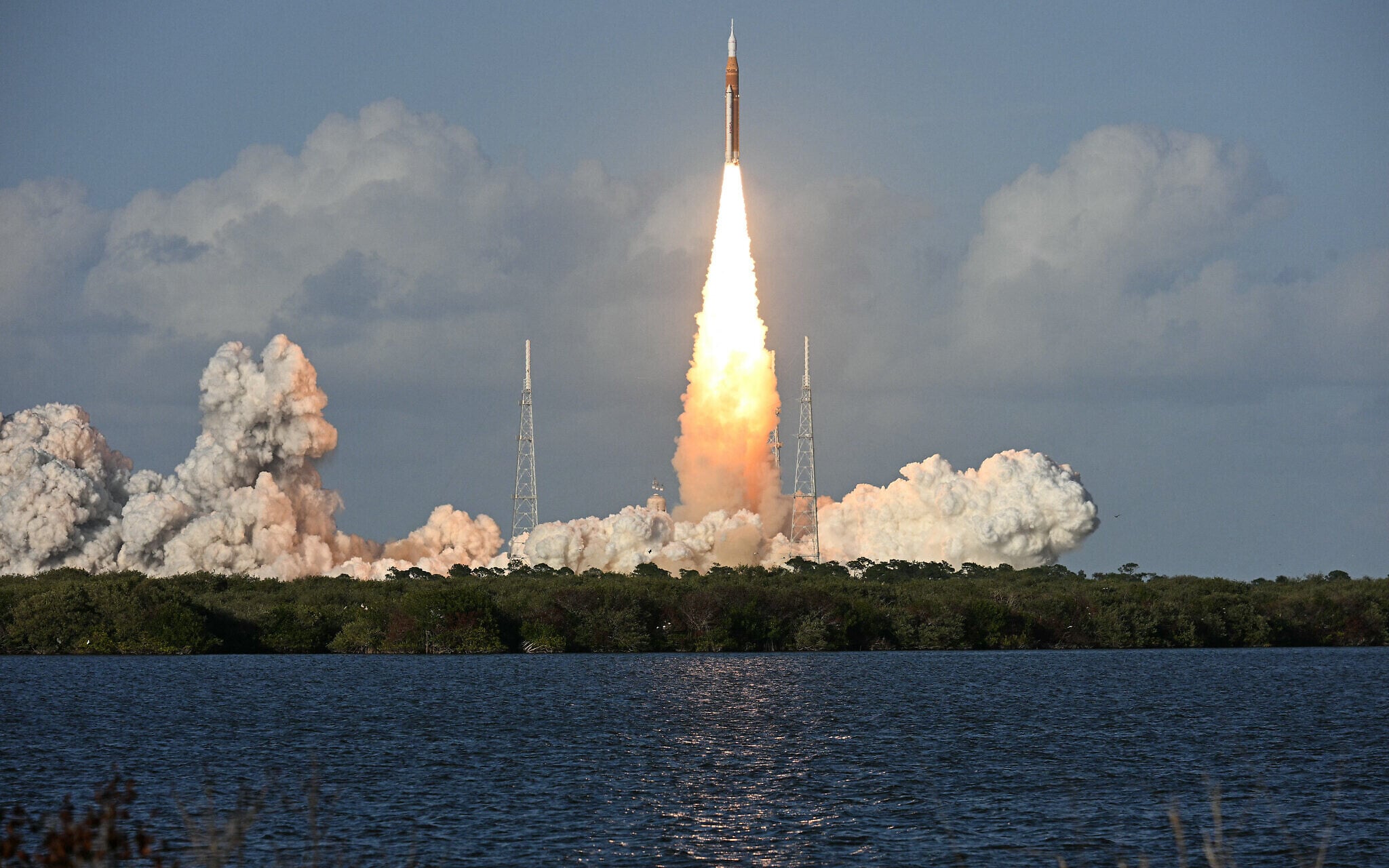
NASA administrator Jared Isaacman characterized the flyby as “a perfect mission,” adding, “We’re back in the business of sending astronauts to the Moon” and noting that “this is just the beginning.” The framing is aimed not only at the U.S. public but also at lawmakers who will decide whether to sustain multi-year Artemis funding lines as costs rise from test flights to surface infrastructure. That sentiment was echoed by US President Donald Trump, who called the trip “spectacular” and stated he “could not be more proud,” while signaling the next strategic pivot: “Next step, Mars!” – a slogan that, if turned into formal policy guidance, would further tighten the link between Artemis milestones and long-term human exploration goals.
The Cislunar Geopolitical Race
The successful return of the Artemis II crew occurs against a backdrop of intensifying competition for cislunar dominance. While the US aims for 2028, China is aggressively pursuing its own crewed lunar objectives with a target date of 2030. This race is not merely symbolic; it involves the governance of lunar resources, the placement of navigation and communications assets in cislunar space, and the establishment of strategic infrastructure on the lunar surface that could shape norms for decades.
For Washington, Artemis II is now a reference point in diplomatic outreach around the Artemis Accords, the non-binding principles through which the United States is seeking to align partner nations on issues such as resource extraction, deconfliction of activities and data sharing. Beijing, pursuing a separate framework with its own partners, is watching closely to see whether the U.S.-led coalition can convert technical success into durable political consensus.
The psychological and technical impact of this mission has provided a significant boost to the program’s credibility. Astronomer Derek Buzasi of the University of Chicago described the mission as “an almost flawless success,” adding, “I admit to having had my doubts about the Artemis program, but now I have fresh confidence in our next steps as we go back to the Moon to stay.”
From a policy perspective, the mission serves as a demonstration of national capability and industrial alignment. Clayton Swope, a space policy expert at the Center for Strategic and International Studies, noted that the achievement stands as “proof that when America keeps its eye on the prize, it can still do very great things.” That political narrative, reinforced by the images of a diverse, multinational crew orbiting the Moon, will now be tested against the harder questions of how to regulate commercial activity, manage competition with China and keep long-duration lunar operations within acceptable risk for the astronauts asked to go next.

Related reading