
PHNOM PENH –
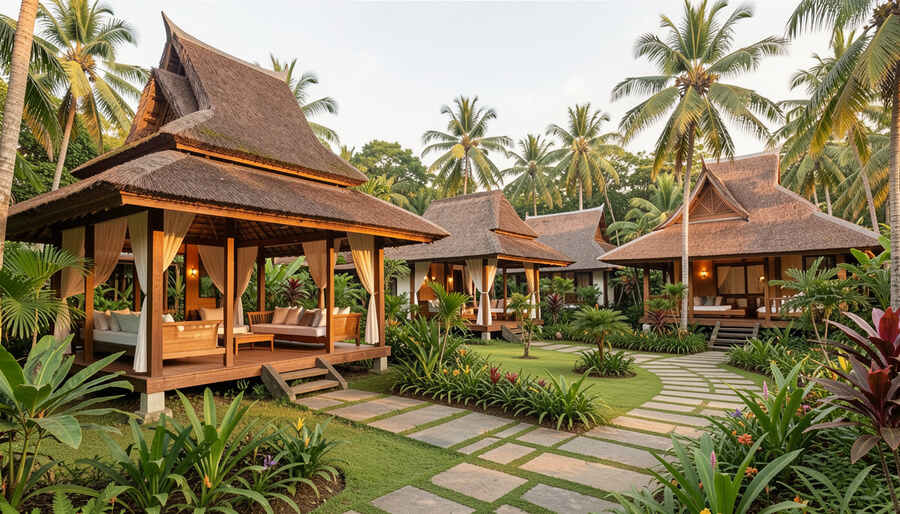
Samanea Wellness Resort has opened in Cambodia’s Cardamom Mountains, positioning a 32‑villa sanctuary in Pursat Province that blends low‑impact design with a wellness program centered on nature immersion, Cambodian cuisine and community engagement. The resort, developed by the Samanea Group-known for its coastal Samanea Beach Resort & Spa in Kep-integrates partial solar power, an ozone‑treated pool, a farm‑to‑table kitchen and guided experiences that range from jungle treks to a Siamese crocodile night watch.
Set inside one of mainland Southeast Asia’s last great rainforest blocks, the property leans on three operating pillars-wellness, nutrition and sustainability-and directs a mandatory 1% guest contribution to environmental and community initiatives, according to the company. Villas are constructed with locally sourced materials and outfitted with Getha natural‑latex mattresses to support restorative sleep, dovetailing with the resort’s emphasis on mindful living.
A mountain sanctuary aligned with conservation policy
Pursat sits between the Tonlé Sap basin and the northern ramparts of the Cardamoms, a geography that has kept much of the province sparsely developed and biodiverse. Cambodia has formalized large tracts of the range as protected areas, including Southern Cardamom National Park (4,104 km²; established 2016) and Central Cardamom Mountains National Park (about 4,011 km²), both overseen by the Ministry of Environment. Together they anchor a contiguous protected landscape exceeding 18,000 km² across multiple provinces, forming one of the country’s core climate‑ and biodiversity‑policy assets.
The Cardamoms’ ecological value is global in scope: the forests store significant carbon, feed the Tonlé Sap watershed and shelter more than 500 animal species, over 50 of which are on the IUCN Red List-from Asian elephants and clouded leopards to the critically endangered Siamese crocodile. Conservation organizations estimate the landscape supports indigenous Por and Chourng communities while supplying freshwater flows to tens of thousands downstream. The Ministry of Environment, acting under Cambodia’s Law on Protected Areas, has encouraged “nature‑based” private investment to align with these national conservation objectives.
Wellness meets Cambodia’s culinary heritage
Samanea’s program marries spa therapies and guided movement with nutrition rooted in Khmer flavors. Its kitchen sources organic produce from an on‑site river farm and surrounding growers, presenting a short supply chain that reduces transport emissions and keeps procurement within local communities. That farm‑to‑table approach mirrors national and donor‑backed efforts to diversify rural livelihoods through nature‑based tourism in the Cardamom Mountains-Tonlé Sap landscape, positioning the resort as a test case for higher‑end, low‑impact development in a previously marginal destination.
Getha mattresses-Malaysia‑made from 100% natural latex-underscore the property’s sleep‑health focus, part of a broader industry trend in which lodging brands hard‑wire wellness features directly into rooms rather than only into spas.
Energy, water and waste: signals of lighter footprints
The resort’s operations incorporate solar generation for roughly 30% of energy needs and ozone treatment for its pool-an alternative to chlorine that reduces chemical discharge. Its design choices mirror emerging policy and investment priorities in Cambodia, where authorities and partners are channeling funds into greener infrastructure and better environmental management, from solid‑waste reforms to climate‑resilient water systems. For provincial officials, privately financed renewables and cleaner water treatment in a flagship property offer a working example of how tourism growth might be decoupled from heavier environmental impacts.
Within the Cardamoms specifically, the World Bank‑supported Sustainable Landscape and Ecotourism Project is financing protected‑area management and community ecotourism through 2026, a framework into which private operators are increasingly plugging conservation levies and local hiring. Samanea’s mandatory 1% guest contribution, and its reliance on local supply chains, effectively place the resort inside this broader governance architecture linking tourism receipts to park budgets and community enterprises.
From jungle treks to crocodile night watches
Samanea’s guided activities extend beyond spa menus. Guests can join low‑impact treks, eco‑motorbike outings and village immersions, and-under expert supervision-participate in a Siamese crocodile night watch. The species (Crocodylus siamensis) is listed as Critically Endangered and on CITES Appendix I; Cambodia’s Cardamom range is one of its last remaining strongholds. Responsible night surveys double as awareness‑raising for a reptile whose survival hinges on strict habitat protection and science‑based monitoring, and-if properly coordinated with conservation authorities-can demonstrate how commercial wildlife experiences are being steered away from exploitative models.
A bet on wellness amid Cambodia’s tourism rebound
Cambodia’s visitor economy has rebounded beyond pre‑pandemic levels: the Ministry of Tourism reports 6.7 million international arrivals in 2024, generating roughly $3.63 billion and contributing about 9.4% to GDP, with the government targeting up to 7.5 million visitors in 2025. Improved air links-capped by the opening of Phnom Penh’s Techo International Airport in September 2025-are widening access to secondary destinations like Pursat and Kep, where the Samanea Group first established its Cambodian footprint. For policymakers, dispersing tourists beyond Angkor Wat and Phnom Penh is a stated goal, and higher‑spend wellness tourism is increasingly seen as one route to that diversification.
Global demand also favors Samanea’s positioning. The wellness economy reached an estimated $6.8 trillion in 2024 and is projected to hit $9.8 trillion by 2029, with wellness tourism among the fastest‑growing segments. That trajectory has encouraged resorts to harden sustainability credentials and clinical‑grade wellness offerings while governments integrate high‑value, low‑impact travel into national strategies. Cambodia’s decision to license a luxury wellness project inside a sensitive landscape will be watched by regulators and investors as a bellwether of how strictly environmental and social safeguards are enforced as the sector scales.
Access and orientation
- Province: Pursat, western Cambodia, between Tonlé Sap and the Cardamom range; the Pursat River runs east to the lake.
- Protected context: Adjacent to Central and Southern Cardamom national parks, within a wider protected‑area system overseen by the Ministry of Environment.
- Connectivity: Overland routes link Pursat with Phnom Penh and Battambang; national air access improved with the 2025 opening of Techo International Airport.
Key resort facts
- Operator: Samanea Group (expanding from Samanea Beach Resort & Spa, Kep)
- Inventory: 32 private villas built with locally sourced materials
- Wellness: Sanctuary for relaxation therapies; ozone‑treated pool; fitness house
- Cuisine: Farm‑to‑table Khmer menu using organic, locally grown ingredients
- Energy: Around 30% of electricity from solar power
- Community: Mandatory 1% guest contribution directed to local and environmental projects
- Experiences: Jungle treks, eco‑motorbike tours, village immersion, wildlife watching and Siamese crocodile night surveys
- Sleep: Natural‑latex Getha mattresses in all villas
As of February 5, 2026, Samanea Wellness Resort is operating in Pursat Province within Cambodia’s Cardamom Mountains, inside a protected‑area landscape administered by the Ministry of Environment since 2016. How effectively the resort’s wellness promise can coexist with that regulatory mandate will help shape future decisions on where-and under what conditions-Cambodia allows luxury tourism to take root in its remaining wild places.

