
Quartz rewired the watch industry. Now mechanical is rewriting the brief.
The Quartz Crisis dismantled two‑thirds of Switzerland’s watchmakers after 1969 as ultra‑accurate, low‑cost Japanese movements surged, compounded by an appreciating Swiss franc that priced many traditional brands out of global markets. Half a century later, the pendulum has swung again: consumer demand for craft, longevity and repairability is coaxing historically quartz‑first names back into mechanical watchmaking-without abandoning the electronic technologies that made them household staples. For industrial policymakers, the episode has become a case study in how technology shocks, currency swings and competition law can reshape an entire export ecosystem within a decade.
Timex’s arc: from durability slogan to deliberate upmarket play
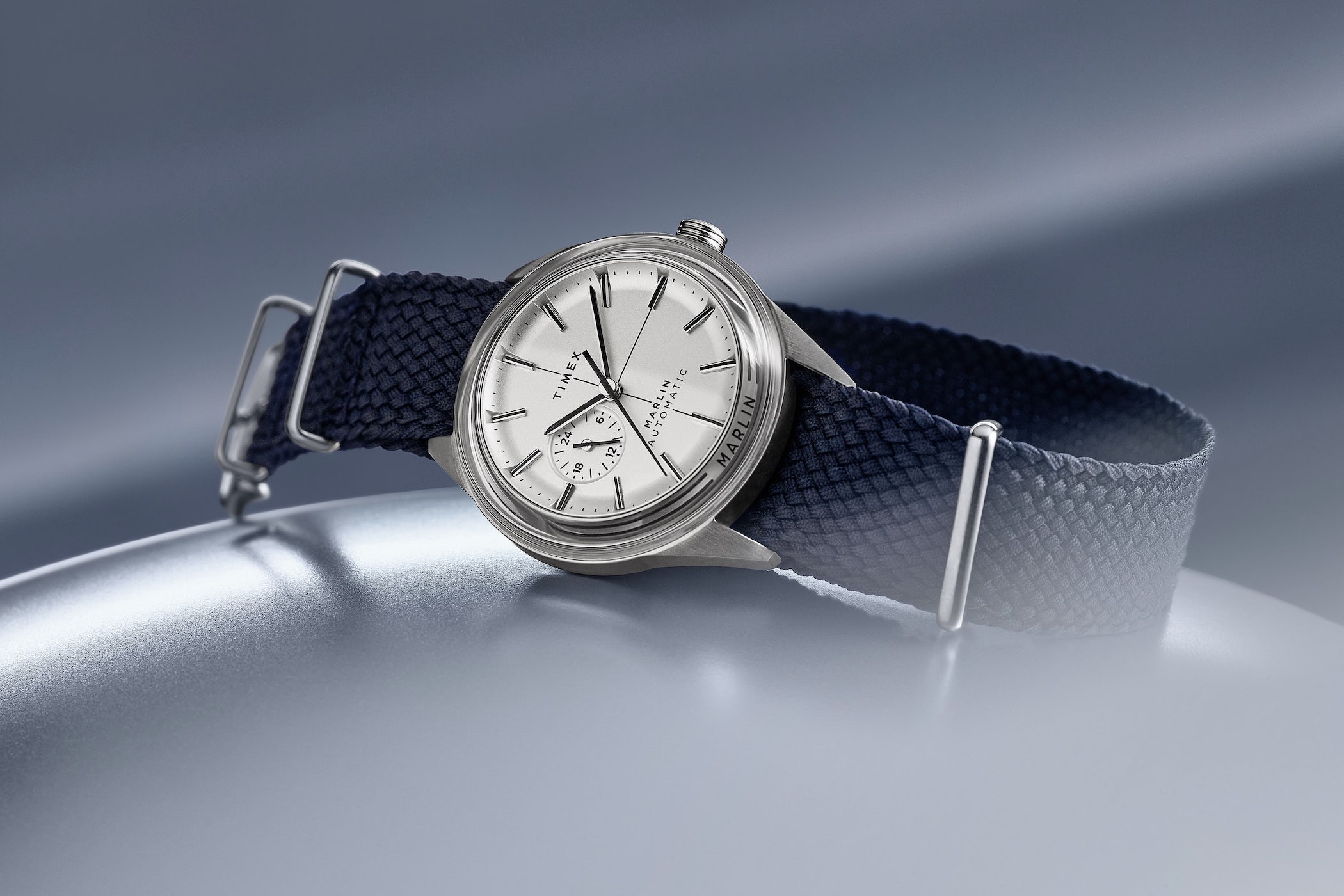
Timex built modern brand equity on televised torture tests in the 1950s and a line that entered pop culture: “It takes a licking and keeps on ticking”. After halting mechanical production in 1982 to ride the quartz wave, the company re‑entered the space in 2017 with the hand‑wound Marlin and has since expanded into automatics while keeping entry prices accessible.
The strategic turn continued with a push into premium tiers. Recent Atelier models position Timex in the “attainable luxury” lane, pairing sapphire, elevated finishing and quick‑adjust hardware with Swiss automatic movements. Bracelets use tool‑free “I-Size” adjustment and quick‑release lugs, signaling that convenience and serviceability can coexist with traditional watchmaking and quietly aligning the brand with a broader right‑to‑repair mood among regulators and consumers.
- Portfolio mix: mechanical Marlin, Expedition and other lines now sit alongside vast quartz catalogues rather than replacing them.
- Feature direction: exhibition casebacks, higher water resistance, and bracelet systems designed for at‑home sizing and lower lifetime ownership costs.
Casio’s debut mechanicals: a signal from a digital titan
Casio-whose Casiotron digitized the wrist in 1974 and whose F‑91W defined durable minimalism-spent decades perfecting resin engineering, shock protection and low‑power LCDs. The surprise in 2025 was a metal‑cased automatic in the Edifice family that kept pricing aggressively low and design language recognizably Casio. The result undercuts many rivals while testing whether a brand synonymous with indestructible digital tools can build a second franchise around tactile mechanics.
- Design inheritance: integrated bracelets, strong case geometry, date windows, and sapphire as standard in key variants.
- Movement strategy: proven, widely serviceable Japanese calibres to ensure parts availability and repair networks from day one.
Casio’s shift doesn’t retire the G‑SHOCK playbook; it supplements it. The original DW‑5000C architecture-hollow case, floating module, layered shock protection-remains a template for ruggedness that few analogue divers match at similar prices. For procurement officers in defense, emergency response and critical infrastructure, the brand’s move into mechanicals broadens the menu of non‑connected, hard‑wearing options at a time when many agencies are re‑evaluating their dependence on smartphones for mission‑critical timekeeping.
Swatch’s counterintuitive lesson: quartz saved Swiss jobs, then automation scaled mechanics
Swatch’s colorful plastic analogues changed the economics of Swiss manufacturing in 1983, proving that emotional design plus mass automation could outrun cheaper Asian imports. The brand then used that scale to re‑seed interest in mechanical watches-first via Irony models with Swiss automatics, then with a more radical idea: a sealed movement built end‑to‑end by machines.
At Baselworld 2013, Swatch unveiled the “world’s first mechanical movement (calibre C10111) with entirely automated assembly.” The 51‑part architecture, 90‑hour power reserve and laser regulation brought semiconductor‑style process control to the escapement. The trade‑off-factory‑set accuracy in a non‑serviceable package-made a mechanical watch behave like a durable appliance. It also taught a generation of buyers that gears and springs could be both whimsical and ultra‑consistent, while giving Swiss policymakers a template for how automation can preserve high‑wage manufacturing rather than hollow it out.
Citizen’s dual track: Eco‑Drive scale and a measured mechanical return
Citizen never left mechanical watchmaking, but it invested most heavily in quartz innovation. Light‑powered Eco‑Drive movements erased routine battery swaps and now dominate the brand’s volume models. In parallel, Citizen has rebuilt a premium mechanical offering-most notably a modern integrated sports watch with a high‑grade in‑house calibre developed with a Swiss movement specialist-while sustaining broad affordability through Miyota‑equipped divers and daily wear pieces.
- Technology moat: ultra‑efficient solar charging, long reserves, and power‑save modes that blunt e‑waste concerns tied to disposable cells.
- Mechanical cadence: limited yet targeted releases at both enthusiast and entry tiers to complement the quartz core rather than compete with it.
For regulators pushing extended producer responsibility and stricter electronics recycling, Citizen’s mix of solar quartz and repairable mechanicals offers a practical case study in how incumbents can keep mass‑market pricing while reducing the volume of battery waste flowing through municipal systems.
What’s really driving the pivot: policy, supply, and standards
The mechanical resurgence isn’t just aesthetics. Policy and industrial structure are shaping product roadmaps in ways that most consumers never see, from antitrust oversight of movement suppliers to environmental rules governing tiny batteries.
- Competition policy: changes in Swiss movement supply obligations over the past decade reduced reliance on a single dominant supplier and expanded access to alternatives from Sellita, Soprod, STP and Japanese makers. That pluralism lowers risk for brands testing new mechanical lines and gives competition authorities a live example of how remedies in a niche component market can ripple out to end‑consumer choice.
- Environmental compliance: tighter rules on hazardous substances and end‑of‑life management, including EU frameworks under the [[Battery Directive]], continue to raise compliance costs for disposable button‑cell platforms. Solar‑rechargeable and kinetic architectures amortize those costs over longer lifecycles.
- Standards baseline: ISO 6425 for divers and chronometric norms derived from ISO 3159 anchor performance claims. As brands re‑enter mechanics, standardized water‑resistance, shock and accuracy testing provide clearer consumer signals and make it easier for public agencies to write technology‑neutral procurement specs.
- Currency dynamics: prolonged yen weakness versus the dollar and euro has sharpened Japan’s value proposition globally, enabling aggressive price points for entry‑mechanical offers without gutting margins-and giving trade negotiators one more reminder that exchange rates can be as decisive as tariffs in shaping industrial outcomes.
Under the caseback: architecture, automation and repairability
| Dimension | Quartz (battery/solar) | Mechanical (hand‑wound/automatic) |
|---|---|---|
| Timebase | 32,768 Hz tuning fork crystal; IC division logic | Regulated balance wheel and escapement (2.5-5 Hz typical) |
| Energy | Button cell or rechargeable cell with solar panel | Mainspring wound by crown or rotor |
| Accuracy (typical) | ±15 s/month; HAQ and thermocompensation reach ±1 s/year | ±5-20 s/day for quality calibres; better if chronometer‑rated |
| Service model | Battery swap or solar cell/capacitor longevity; electronics usually non‑serviceable | Full disassembly, lubrication and regulation; parts‑based longevity |
| Shock/Water performance | Excellent in resin/sandwich cases; fewer moving parts | Improving with modern shock systems; depends on build and seals |
| Lifecycle footprint | Battery waste mitigated by solar; PCB and IC end‑of‑life considerations | Long service lifespans; metal components largely refurbishable |
Factory automation is narrowing the spread. Machine‑vision QC, automated lubrication and clean‑room assembly lines now touch both sides of the market-from resin‑molded digital modules to simplified, sealed mechanical movements. The result: tighter tolerances, fewer field failures and more predictable service intervals, giving both regulators and warranty underwriters better data on how long a wrist‑worn computer or chronometer is likely to last in the field.
Design, data and the post‑smartwatch mood
Not every wrist needs a notification stream. As governments scrutinize data practices and endpoint security, non‑connected watches benefit from a different kind of trust. A quartz digital with a perpetual calendar or a three‑hand automatic tells time without tracking location history, and many agencies still specify non‑networked timekeeping in sensitive environments where radio‑linked devices are barred.
The cultural pull is equally strong: tactile winding, rotor wobble and visible escapements have become the tech‑era equivalent of vinyl-mechanisms you can hear, feel and hand down. For institutions worried about digital fatigue in their workforces, the quiet return of analogue objects with clear, limited functions is a small but telling counter‑trend.
Rereading the classics in a new market cycle
The 1980s glorified the LCD as a “microcomputer on your wrist”. Four decades later, the industry is finding room for two ideas at once: keep the convenience, and bring back the craft. Swatch embedded this duality in the name itself-“Second Watch”-proving a second category can rescue a first. Timex’s premium foray, Casio’s inaugural automatic and Citizen’s calibrated return to high‑end mechanics show that the world’s most prolific quartz brands aren’t rejecting their past. They’re leveraging it to build a more resilient future-one that mixes mass automation with heirloom engineering and, in the process, offers regulators, employers and consumers a broader set of choices about how much technology they actually want on their wrists.