
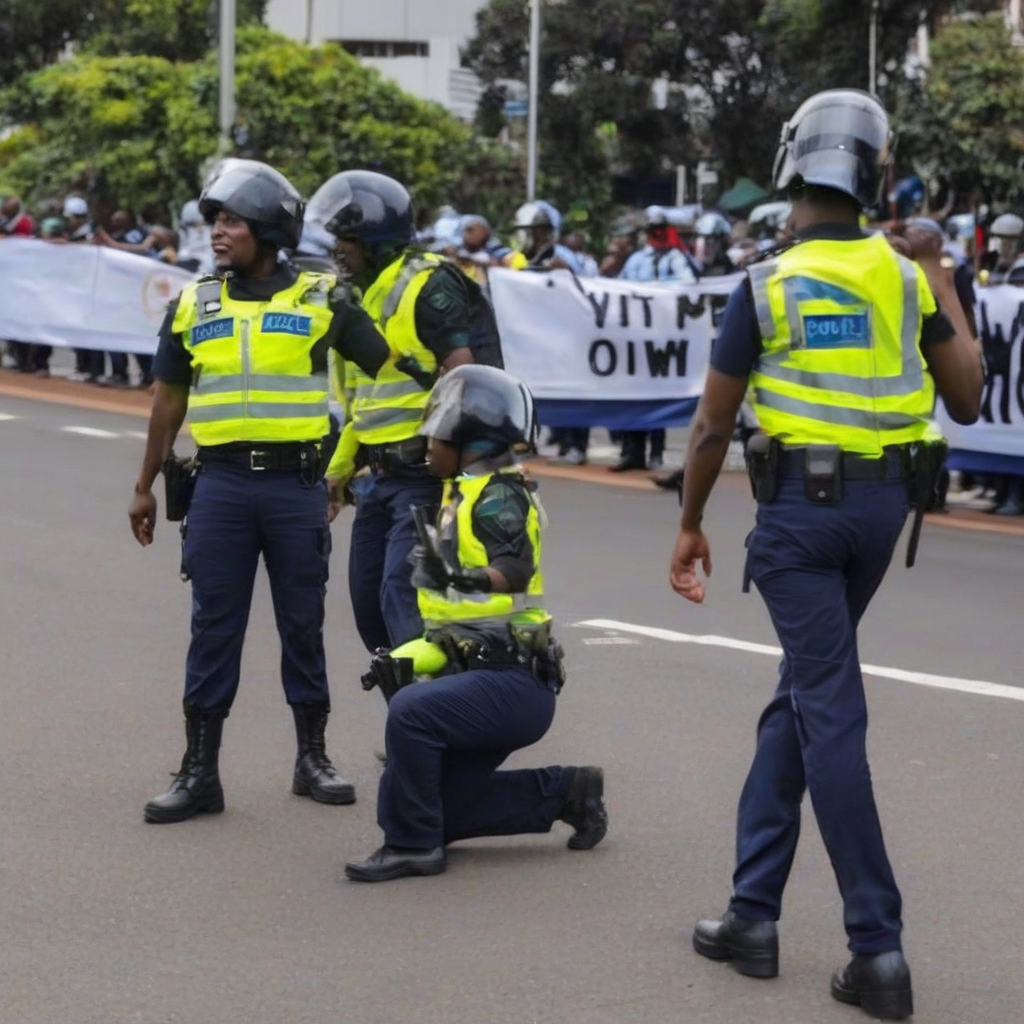
DURBAN – The planned June 30 protest by the March and March movement will proceed in Durban, despite ongoing disputes between organizers and city officials regarding the demonstration’s route.
The march arrives amid heightened national tension following the movement’s June 30 deadline for undocumented foreign nationals to leave South Africa, prompting a significant government security surge to prevent civil unrest.
Route Negotiations and Security Risks
Durban Metro Police confirmed that while the event is authorized under South Africa’s constitutional right to peaceful assembly, a final agreement on the march’s trajectory has not been reached.
Colonel Boysie Zungu, spokesperson for the Durban Metro Police, stated that both parties have agreed on the commencement point at King Dinuzulu Park. However, the proposed destination remains a point of contention.
“I can confirm that we had discussions with representatives of March and March,” Zungu said. “We agreed on the starting point of the march, which will be King Dinuzulu Park. Where we disagree is on the end point. They wanted the march to end at the old drive-in site, while we proposed City Hall, where government representatives will meet with them.”
The police have flagged the old drive-in site as a high-risk location. The municipality argues that ending the protest there would be unsafe because the site currently houses thousands of migrants awaiting repatriation, raising concerns over possible confrontation between protesters and vulnerable groups.
Zungu dismissed reports that the event had been blocked by authorities, stating, “That is where discussions currently stand. But there is no truth to claims that permission for the march was denied.” The city’s stance, officials say, is focused on risk management and compliance with the conditions typically attached to gatherings in terms of the Regulation of Gatherings Act, which governs protest action in South Africa.
Repatriation Concerns and the June 30 Deadline
The dispute over the route is tied directly to the objectives of March and March, which has framed the protest as a campaign against illegal immigration and alleged state inaction. The group is using the demonstration to pressure the government to increase enforcement against undocumented foreign nationals, including faster repatriation processes and stricter border control.
The tension is amplified by the movement’s own self-imposed deadline of June 30 for these individuals to exit the country. This timeline has turned the old drive-in site-a hub for those seeking to return to their home countries-into a flashpoint for potential conflict, with human rights advocates warning that rhetoric around forced departures risks inciting xenophobic targeting of migrants.
City officials have privately expressed concern that allowing the march to conclude at a temporary accommodation site for foreign nationals could be interpreted as tacit endorsement of vigilante-style enforcement of immigration rules, which formally remain the responsibility of national authorities such as the Department of Home Affairs.
Jacinta Ngobese-Zuma, leader of March and March, has maintained that the protest will move forward regardless of the confusion surrounding municipal permissions. She has accused local authorities of “stalling tactics” and insists that the route should reflect what she calls “the community’s frustration with parallel refugee settlements in the city”.
Economic Anxiety and Policing Surge
The anticipation of the march has triggered a wave of preemptive security measures from both the public and private sectors. Although Ngobese-Zuma has asserted that the protests will remain peaceful, local business owners in Durban’s central business district report significant fear of looting, intimidation and spillover violence similar to previous unrest in the province.
Ahmed, a local shop owner, indicated that the threat level is high enough to warrant a total shutdown of his business.
“I’m closing my shop on Tuesday. I’m not taking any chances, even though I’m South African,” Ahmed said, adding that neighbouring stores were considering reduced trading hours or shuttering completely for the day.
In response to the potential for volatility, the government has implemented the following measures, according to officials briefed on the security planning:
- Allocation of R600 million to expand policing capacity and respond rapidly to disruptions associated with the march and any copycat actions.
- Increased deployment of law enforcement personnel across the country, with a focus on key metropolitan routes, transport hubs and commercial districts.
- Coordination with private security companies to protect commercial assets, particularly in Durban’s CBD and surrounding logistics corridors.
National security planners are also expected to lean on existing cooperative mechanisms between the South African Police Service, intelligence structures and municipal law enforcement, frameworks that were strengthened after previous episodes of unrest.
Discussions between city officials and March and March representatives continue to determine the final destination of the June 30 procession, with the municipality insisting that any approved route balances the movement’s right to protest with public safety, economic stability and South Africa’s obligations under its immigration and refugee regimes, including the country’s commitments in terms of the Constitution of the Republic of South Africa.