
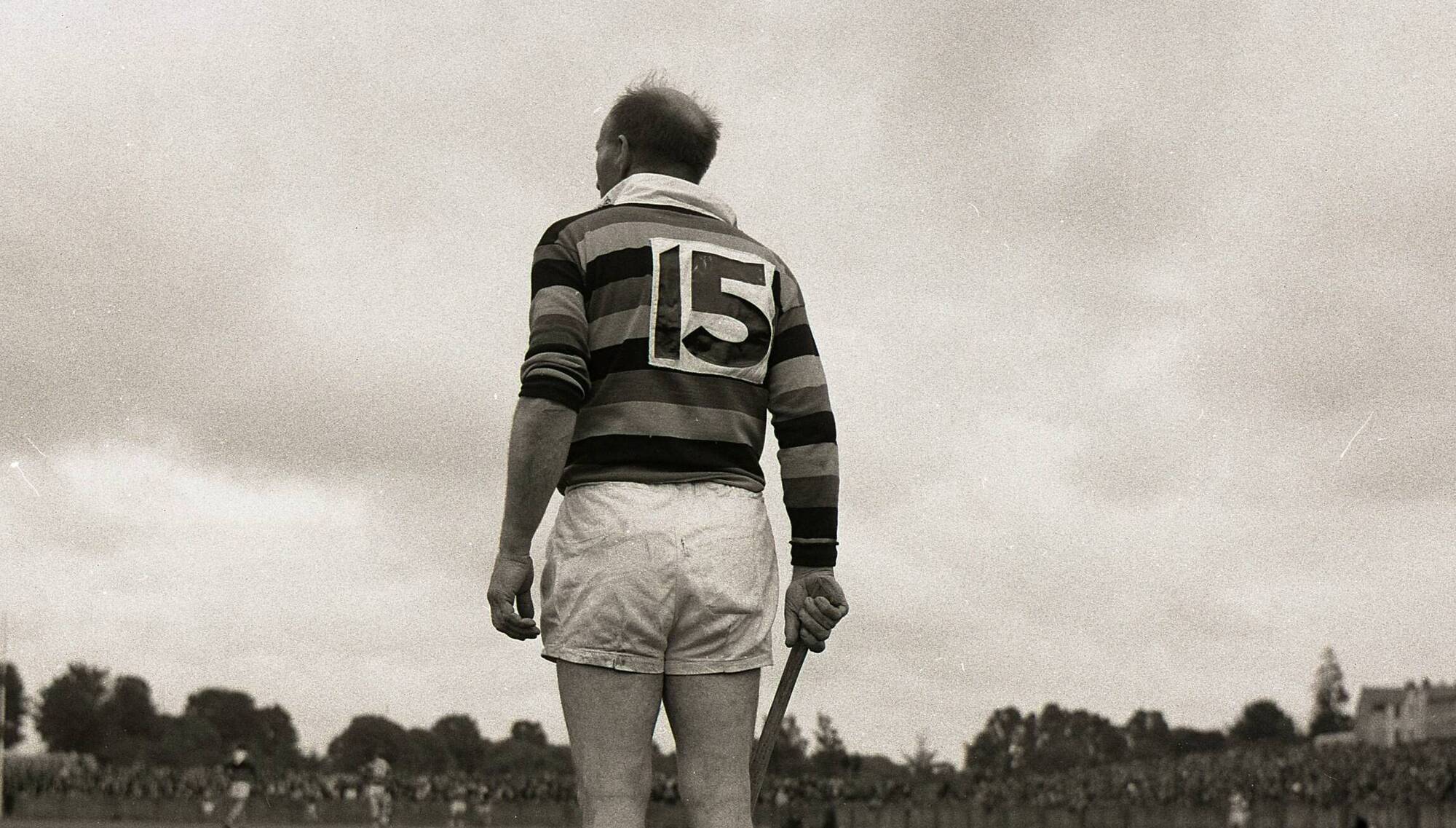
Christy Ring, Cloyne and the Transfer That Still Haunts Hurling
A half‑page that changed Irish sport
In Tim Horgan’s detailed biography of Christy Ring, the major events of the Cork great’s life are broken down chronologically into sub‑sections. Ring’s first appearance in Croke Park with the Cork minor team is afforded a little over two pages, while those Munster final clashes with Limerick are given three or so. Meanwhile, the culmination of this formative period – his departure from Cloyne – is limited to barely half a page.
That imbalance is not a measure of the episode’s significance. Rather, it underlines how reluctant people have been to discuss the break and how much uncertainty still surrounds it. For a player now widely viewed as one of the defining figures in hurling history, the reasons why his own parish club lost him at the outset of his career have never been fully resolved – and that ambiguity continues to shape how the Gaelic Athletic Association, and elite team sport more broadly, thinks about loyalty, player movement and power at club level.
A village on the rise, a rumour that would not die
Cloyne GAA club had just won the Cork Junior Hurling Championship, and while no one can say with certainty how far this small, rural side might have gone with Christy Ring at its heart, they were clearly a team on the rise.
Horgan captures the trigger in a single tight sentence: word went around the village that Christy was leaving the club and, even though there was no truth in the rumour, the matter was raised at an acrimonious meeting where it was sarcastically suggested that his brothers should go too. In that reading of events, the perceived disrespect shown to the Ring family crossed a line that could not be ignored.
What followed is undisputed. Willie John Ring started hurling for Ballinacurra, while Paddy Joe joined Russell Rovers. Christy, by contrast, stepped away from club hurling altogether. Before he eventually joined Glen Rovers, arguably the most successful team in Cork at the time, there was a period in which one of the game’s greatest ever players was, at club level, in effect a free agent who simply did not play.
The alleged rumour that set all of this in motion has no clear source. It appears grounded instead in a misreading of circumstance. During this period Ring left Cloyne to find work in Cork city, a move that reflected the limited opportunities available to a young man seeking employment in the late 1930s. That need had likely been sharpened by the untimely death of his father, Nicholas, in 1937.
Whether the physical distance from Cloyne encouraged him to look more closely at the larger city clubs he encountered is an understandable question, but there is no evidence that this actually happened. What is clear is that context – movement for work, family pressure, and a still‑amateur sport – created fertile ground for suspicion.
Transfer rules, power and a superstar in limbo
The vacuum around Ring’s status was all the more sensitive because of how the GAA’s club‑and‑county structure works. The Association’s core playing unit is the local club, rooted in parish and community, with transfers traditionally tightly controlled and subject to formal approval processes that emphasise place and loyalty as much as sporting ambition. Within that framework, the suggestion that the best player a small club had ever produced might be contemplating a move was always likely to be emotionally and politically charged at committee level.
What has been claimed, though not definitively documented, is that several Cork city clubs quickly recognised Ring’s sudden availability. Val Dorgan wrote that the hurler was offered jobs by Sarsfield and St Finbarrs, while making it clear that his own club, Glen Rovers, did not attempt to secure Ring with such an offer. Even the basic timeline is hazy, and Dorgan’s account does not indicate whether the approaches came before or after Ring stopped playing for Cloyne. That lack of clarity, then and now, has done little to dispel rumours around one of the most consequential moves in club hurling.
Any hint of doubt over Ring’s future with Cloyne had the potential to spiral, particularly among officials already inclined to see threat. Writer Breandán Ó hEithir once observed of GAA committees in this period that the higher up the hierarchy he went, the more reserve tended to resemble suspicion, even antagonism. In the same way Ring would later divide opinion among opponents who felt his reputation earned him favourable treatment on the field, there may have been a similar sentiment festering at Cloyne: a sense that no individual, however gifted, could be seen to rise above the club.
Cloyne’s Babe Ruth moment
The silence that still hangs over this episode is inseparable from the scale of what came after. Ring’s subsequent achievements for Cork and Glen Rovers have made his departure one of Irish sport’s great “what if” questions.
To reach for a comparison that international readers may recognise, Cloyne’s loss has often been likened – imperfectly but tellingly – to the Boston Red Sox trading Babe Ruth to the New York Yankees. The reasons and mechanics were entirely different, but the shared sensation is striking: a local institution forced to watch, at relatively close range, as the player it once had within its own dressing room became a defining figure of the wider game.
In Cloyne that pain was arguably even sharper. Ring was not an outside signing but a product of a hurling‑mad community; his roots in the place ran back generations. Former Cork goalkeeper and Cloyne man Donal Óg Cusack has spoken of how uneasily the subject rested on those who discussed it at home, and how rarely it was mentioned aloud. The episode became a kind of communal trauma that was never fully processed in public.
That context matters far beyond nostalgia. In a sport where elite county teams and powerful urban clubs can now exert a gravitational pull on emerging talent, the Ring story remains a reference point whenever supporters worry about losing a once‑in‑a‑generation player – and whenever administrators consider how rigidly to enforce, or when to relax, local‑eligibility boundaries.
A private exit that shaped a public persona
There is no record of Ring ever publicly discussing his break with Cloyne, but the impact on his attitude to scrutiny and fame is hard to overlook. Those who knew him describe a shy man who often held back from the full glare of his own celebrity. It is not difficult to see how being the unwilling subject of village speculation and committee intrigue at a young age might harden a lifelong instinct for privacy.
The experience seems to have deepened two traits that would define his career: a refusal to provide material for gossip, and a rigid view of loyalty. For a player whose sense of right and wrong was, by many accounts, almost binary, the feeling of betrayal at being pushed towards the exit by his own club must have been profound. If Cloyne could not be fully trusted, the circle of people he would place faith in afterwards inevitably narrowed.
That unforgiving streak is present throughout Dorgan’s portrayal of Ring. He is presented as a deeply intelligent man who avoided pronouncing on matters where he was unsure, but for whom certain principles were non‑negotiable. The singular obsession that drove his development as a hurler – endless training, demanding standards – extended to questions of ethics and identity. Dorgan recalls Ring, a staunch Republican, attending a play that criticised the GAA and telling a mutual friend afterwards that he would have walked out if the playwright had not been a Glen man. The line is revealing: allegiance to club and cause sat side by side, and crossing either was risky.
From Cloyne’s fields to Glen Rovers’ dynasty
Against that backdrop, the possibility that a careless suggestion of disloyalty was enough to push Ring away from Cloyne feels entirely consistent with his character. Whether there were deeper aspects to the fallout that never entered the public domain remains unknown. So too does the extent to which Ring himself had already begun to recognise that, to fully test his limits as a hurler, he might need to move to a club capable of matching his ambitions.
What can be said with confidence is that 1941 became a pivot. “The year 1941 was a memorable one in my life,” Ring later wrote. “I won my first All‑Ireland and Railway Cup medals but in particular it was the year I joined Glen Rovers Hurling Club.”
The partnership that followed has become one of the foundational stories of Cork hurling. Glen Rovers had been county champions for seven consecutive seasons before Ring’s arrival and would win an eighth in 1941; he was stepping into a high‑performing environment that valued precisely the qualities he brought. In one sense it was a textbook fit between an emerging superstar and an already dominant club culture.
The move, as it has often been told, began with a conversation between Ring and his Cork teammate and Glen stalwart Jack Lynch. They discussed Ring’s dispute with Cloyne, which he felt could not be resolved. Lynch argued that remaining unattached was no help to his hurling progress and urged him to return to club action. “Why not join the Glen?” Lynch suggested. Ring’s response – that he might do so, before going away to think – led, in the understated phrase, to the rest being history.
Ring would later describe Glen Rovers as a club where complacency was never tolerated. He spoke of a team that frequently went into matches as underdogs and emerged victorious, driven by a blend of quality, collective commitment, toughness, pride and a little luck. For an athlete who prized effort and standards above reputation, that culture was compelling.
Dorgan, unabashedly a Glen man himself, captured the stark sporting logic: nobody seemed willing to say why Ring left Cloyne, but it was logical that he should. In Glen Rovers he found a home that matched his ability and his hunger to win. In modern terms, it was the equivalent of a generational talent leaving a village side for a perennial contender – a move that reshaped not only his own medal haul but the balance of power in the county for years.
Who owns a legend?
Almost four decades later, the question of who could tell Ring’s story came sharply into focus. In April 1980, not long after Ring’s death, Dorgan and a friend travelled to Cloyne to seek the family’s approval for a proposed book. Sitting in Willie John’s living room, Dorgan made the case that Christy no longer belonged solely to Cloyne, Glen Rovers or Cork, but to Irish people everywhere.
The family declined. Too many stories had already been told; their intention was that the first extended study of his life and career should be definitive and driven by the family’s voice. It is easy to imagine that Ring, wary of misrepresentation and gossip, would have agreed.
The dynamic that Dorgan described on leaving the house is revealing. He wrote that Ring always seemed able to live with divided loyalties to Cloyne and Blackpool, the Cork city district around Glen Rovers. In practice, the arrangement worked both ways. Cloyne cherished the memory of a native son who had left but never fully gone; Glen Rovers embraced a player whose greatness reflected back on the working‑class streets and club that were his later home.
For all the obscurity around the original break, it is reasonable to conclude that joining Glen Rovers allowed Ring to come closer to his peak than if he had stayed. In an era when emigration from Ireland was routine, families were used to watching loved ones leave in search of opportunity. Ring did not go far geographically, but the scale of what his departure enabled – in terms of titles, reputation and the global exposure that followed – meant that the glory he achieved always illuminated where he had come from.
When Dorgan later wandered through the fields where Ring had hurled as a boy, he met a group of local children and asked if they had heard about Christy Ring. They were tongue‑tied, but one, wary of a stranger, eventually asked from the back, “Hear what about him?” The exchange underlines how each generation inherits, reshapes or quietly forgets its sporting myths. For Cloyne, Ring will always be part of the village’s identity, even if the details of exactly why he left remain contested.
A reluctant global ambassador for hurling
Ring’s club choices and county medals made him a towering figure within the GAA. Over time, they also turned him into something rarer: a recognisable ambassador for hurling, and for Irish sport and culture more broadly, at a time when the international visibility of Gaelic games was limited.
His playing career extended across decades, a longevity that made him difficult to pin down even for those who watched him year after year. As Irish media expanded in scale and reach through the 1950s and 1960s, his profile grew with it. The range of events deemed newsworthy illustrates the level of attention he attracted. When he accepted an invitation to play a private round of golf in July 1961, his first recorded attempt at the sport, it was treated as a front‑page story. The report described how the famed Cork hurler caused a stir at Limerick Golf Club and noted that, in the view of club player Kevin Hayes, he performed extremely well for a novice.
A short time later, when his work with Irish Shell took him to Waterford for several weeks, a local newspaper reported simply that “Christy Ring [was] in town”, as though his presence itself were a form of endorsement. When he was appointed trainee sales superintendent with the company that summer, Irish Shell’s public relations officer, Arthur Rae, was required to clarify publicly that Ring’s new responsibilities would not interfere with his training programme any more than they had in his previous 14 years’ service.
Nor was the interest confined to print. Days before that debut golf round in Limerick, Ring’s voice was broadcast nationally on Radio Éireann. At the request of his former Cork teammate, Fr Con Cottrell – then rector of St Joseph’s School for Blind Boys in Drumcondra – Ring delivered an on‑air appeal for donations to support the school. His involvement had been trailed in the national press and was warmly received. One columnist described him as a remarkable man who had never made any money from his story and had never sought to publicise himself.
Those episodes underscore an unusual tension. Ring became one of the earliest examples of an amateur GAA star whose movements and choices carried commercial and public‑relations weight, yet he remained personally cautious about anything that smelled of self‑promotion. For administrators trying to grow the reach of hurling while maintaining the Association’s amateur ethos, that combination was both a blessing and a challenge: he was a powerful symbol of the games’ appeal but not a willing celebrity in the modern sense.
New York, Broadway and the globalisation of a parish game
On the international stage, especially in the United States, Ring became a touchstone for Irish communities abroad and a point of curiosity for American sports fans encountering hurling for the first time. Some of the coverage leaned heavily into sentimental descriptions of his place in Irish life, but beneath that tone there was genuine interest.
In his memoir of playing with and observing Ring, Dorgan recalled a joint trip they made to New York City in the mid‑1960s. The scenes he describes are as close as the GAA of that era came to big‑league celebrity: walking down Broadway and being stopped three times by men who recognised Ring; attending a reception where the Cork man was besieged for two hours by admirers and the occasional crank; enduring inane approaches with patient humour. Over 22 days together in the US, Dorgan wrote, Ring was in such demand that he effectively became his secretary, fielding calls and shielding him from the sheer volume of attention.
At event guest lists, Dorgan observed, the Cork hurler’s name could appear alongside those of global figures such as the Pope and John F. Kennedy. In a tongue‑in‑cheek flourish he recalled saying that Ring outranked even the US president, who by then had reduced America’s immigration quota for Ireland. Behind the humour lies a serious point: within Irish circles at home and abroad, the star of Glen Rovers embodied a link between a changing Ireland and its diaspora.
Ring’s introduction to a wider American sporting audience came earlier. On a visit in late 1954 he was profiled in the weekly magazine Sports Illustrated, then an emerging national title, and featured prominently in a photographic essay on hurling in Life, its hugely influential sister publication. Life sold copies by the tens of millions; while it is impossible to know how many readers studied the images in detail, those pages represented one of the first mass‑market visual explanations of hurling in the US, with Ring at the centre of the frame.
Within the context of a community‑based, amateur code, that level of exposure was transformative. It helped establish hurling as one of the world’s most distinctive field sports in the eyes of international observers, long before television and streaming brought regular live coverage to overseas audiences. For the GAA, which remains the governing body for Gaelic games, the image of Ring in action – hurley raised, sliotar in flight – became part of an informal archive of how the Association wanted its flagship sport to be seen beyond Ireland’s borders.
The unresolved core of a complete life
The episode that started it all – the fallout in Cloyne – remains stubbornly incomplete. There is no smoking gun, no late‑in‑life confession that clarifies what was said and why it cut so deep. The key protagonists are gone.
Unanswered questions still echo. With family ties to Cloyne stretching back centuries, did Willie John, Paddy Joe and Christy truly walk away from their local club primarily because of a misjudged comment about loyalty at an overheated meeting? In the period when Christy represented no club at all, did anyone seriously attempt to repair the damage and bring him back into the fold? How did Cloyne reconcile the weekly reality that the village still meant everything to Ring with the fact that he was now the figurehead of its great urban rival?
The available portrayals of Ring paint a man who viewed some things as unalterable: codes of conduct, lines that once crossed could not be uncrossed. That clarity of principle helped shape one of the most complete hurlers the game has seen. It also may explain why, for all the words written and the honours won, the story of his departure from Cloyne has never felt fully told.
What is certain is that the consequences moved far beyond a single parish boundary. The combination of a small club’s misstep, an ambitious player’s character and the structures of an association that prizes place and loyalty produced a transfer that still resonates across Irish sport. It changed the competitive landscape of Cork hurling, contributed to the mythology of Glen Rovers, and helped propel Christy Ring from the fields of Cloyne to the pages of international magazines and the streets of New York.
In that sense, the half‑page in Horgan’s biography may understate the length of its shadow. For the GAA, for the communities that nurtured him, and for any club worrying about how to keep hold of its brightest talent, the unanswered questions around Christy Ring’s exit from Cloyne continue to matter.