
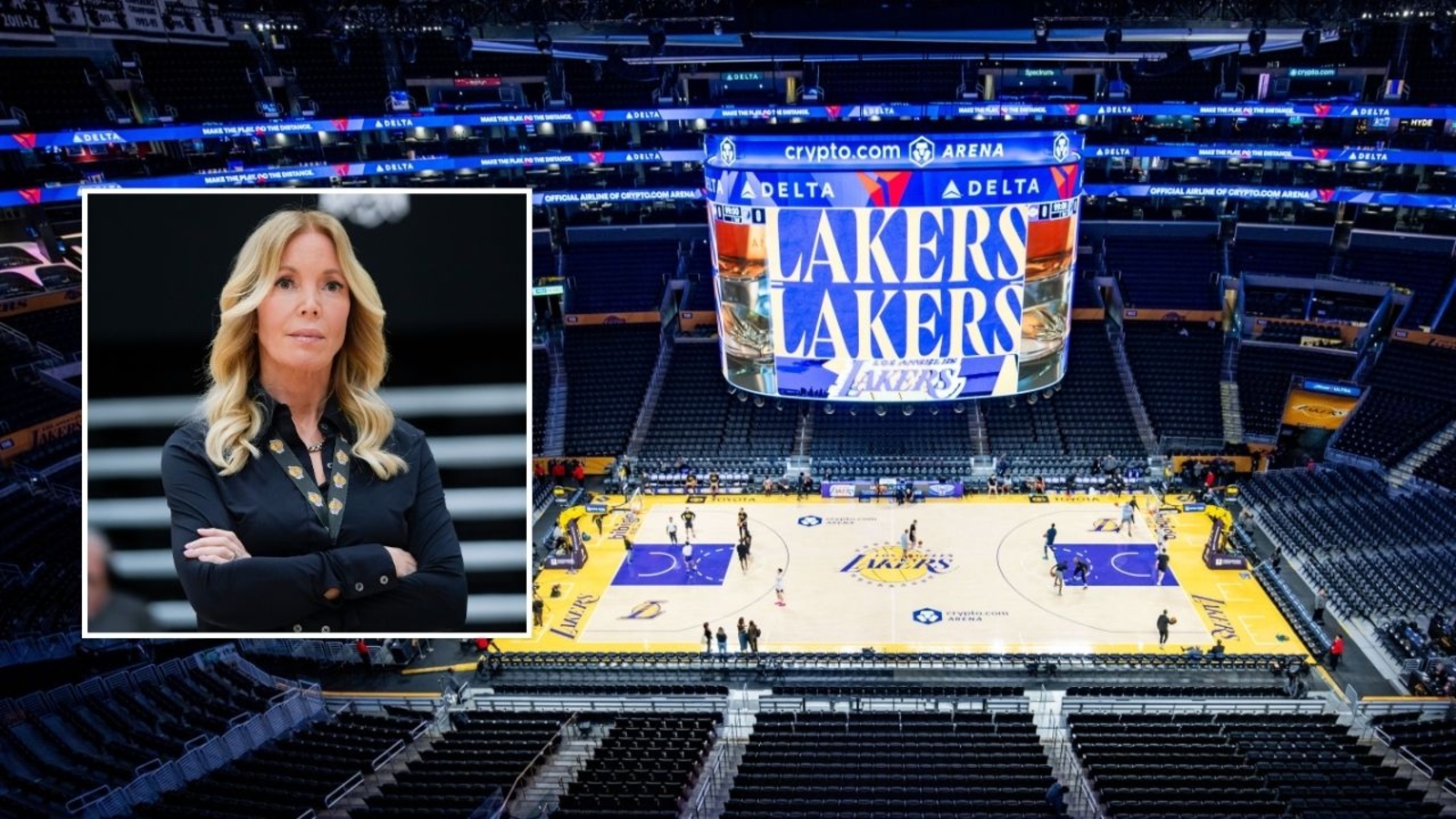
Jeanie Buss challenges siblings’ vote to sell remaining Lakers stake, putting control of franchise in flux
LOS ANGELES – Los Angeles Lakers governor Jeanie Buss is mounting a legal challenge to her siblings’ decision to sell the family’s remaining 17.8% stake in the franchise, a move that could determine who ultimately controls one of global sport’s most prominent clubs.
The dispute centers on whether five Buss siblings can use a “tag-along” provision to proceed with a sale of the family trust’s minority interest to new majority buyers Josh Kushner and Bob Iger, or whether a prior court order and trust documents give Jeanie Buss an effective veto over any transaction that would reduce the family’s holding below the ownership threshold required for her to stay on as team governor.
Buss family vote collides with 2017 court order
A letter from Jeanie Buss’ lawyer, Adam Streisand, sent to her siblings and obtained by multiple outlets, asserts that a 2017 court ruling and the governing documents of the family trust bar any sale of its 17.8% stake without the unanimous consent of the co-trustees – Jeanie, Janie and Joey Buss.
Streisand writes that the court order provides no sale can be “effectuated without approval by the co-trustees, i.e. Jeanie, Janie and Joey Buss,” and that the co-trustees are obligated to vote the trust’s shares in a way that preserves the minimum ownership percentage needed for Jeanie Buss to remain the franchise’s controlling owner.
That minimum threshold is critical. Under the NBA’s constitution and bylaws, the individual designated as a team’s governor must hold a significant equity stake, a standard that in practice has been treated as a 15% ownership requirement in recent ownership transitions across the league.([apsportseditors.com](https://apsportseditors.com/adam-silver-holds-qa-with-apse-members-during-las-vegas-summer-conference/?utm_source=openai))
Streisand’s letter argues that any attempt by the co-trustees “to aid or abet” a sale that drops the trust below that threshold “would constitute a breach of trust, breach of fiduciary duty and be in contempt of court.”
Tag-along provision and a record valuation
Earlier on Monday, it was reported that the Buss family had voted to sell their remaining 17.8% stake to Kushner and Iger at a $12.5 billion team valuation, matching the price agreed with current controlling owner Mark Walter last week.([apnews.com](https://apnews.com/article/d5058bb845d87873e23e270a6bb9be9f?utm_source=openai))
Family members who support the sale are relying on a tag-along clause tied to Walter’s agreement to sell his controlling interest. That provision – inserted when Walter acquired majority control from the Buss family in June 2025 – gives the family the right to “tag along” on any future sale Walter arranges, on the same valuation and economic terms.
In practical terms, that tag-along right allows the Buss siblings to cash out at the record valuation Walter secured in his quick flip of the club to Kushner and Iger. It also accelerates the shift from a family-dominated ownership structure to one driven by institutional and media capital at a moment when franchise values across the NBA are surging.
The family released a statement earlier Monday saying: “We have decided as a family to sell the remaining Buss Family Trust shares to the Bob Iger group as part of the ongoing transaction. We love the Lakers, Laker fans and will continue to support Los Angeles; but it is time to use this opportunity to move on and exit gracefully while we still can.”
Jeanie Buss stands alone against sale
Jeanie Buss was the only sibling who did not vote in favor of the sale. Multiple sources said she did not participate in the family vote and has since formally contested both the process and the outcome through her attorney.
In his letter, Streisand demanded that the five siblings who voted to sell “make clear publicly that Jeanie Buss is the Controlling Owner of the Los Angeles Lakers” and “take no action on this supposed ‘vote’ to sell the 17.8% stake.”
He further insists that the co-trustees are “bound to vote” to ensure the trust’s holdings do not fall below the level required for Jeanie Buss to remain the team’s governor. The language underscores that the dispute is not only about money, but about whether the Buss family’s last block of shares can be used in a way that effectively ends Jeanie Buss’ formal control of the franchise while the trust still owns a meaningful stake.
Control of Lakers governance at stake
If the tag-along sale of the Buss family stake is completed, Jeanie Buss’ ownership interest would fall below the threshold needed to continue serving as the Lakers’ governor for league matters. That designation carries real power, as the governor represents the team on the NBA Board of Governors, votes on league policy, and has final say on major strategic decisions within the franchise’s ownership group.([en.wikipedia.org](https://en.wikipedia.org/wiki/List_of_NBA_team_owners?utm_source=openai))
When Walter initially increased his holding to a controlling stake last year, he reached an agreement that Jeanie Buss would remain the club’s controlling owner – and thus its governor – through 2030.([en.wikipedia.org](https://en.wikipedia.org/wiki/Los_Angeles_Lakers?utm_source=openai)) Walter’s successor, Iger, has publicly indicated he intended to honor that arrangement, but also left open the possibility that circumstances could change. He and Buss met late last week to discuss the transition from Walter, with sources describing their discussions as part of a broader handover process.
In the background is the NBA’s own approval process: any change in controlling ownership must be ratified by the league’s Board of Governors, which will assess not only the financial fitness of new majority owners but also whether the governance structure – including the designated governor – complies with league rules.
Emergency meetings and a fractured family
The internal Buss family vote has been open since last Tuesday, before Walter finalized his agreement with Kushner and Iger. The process began after Lakers vice president of finance Joe McCormack convened an emergency meeting of the Buss siblings the previous Monday night to discuss dissolving the existing family trust and locking all family shares into a new vehicle for four years.
At the follow-up meeting on Tuesday, one family source said there was no mention of Walter’s impending deal with Kushner and Iger. The unexpected proposal to change how the shares were held “spooked” family members, prompting renewed conversations among the five siblings – excluding Jeanie – about using the tag-along provision to sell their remaining interest.
Family sources said a prior vote several months earlier had produced only three votes in favor of selling. This time, with Walter’s sale agreed at an elevated valuation and the federal investigation into his broader business interests in the background, two additional siblings joined the pro-sale camp, giving five of the six Buss children the numbers they believed were sufficient to proceed.
Jeanie Buss abstained from the vote and has now signaled that, in her view, any such decision must also satisfy the requirements of the 2017 court order and the trust’s own rules, which focus on preserving her status as controlling owner while the family remains invested.
Walter’s brief tenure and external pressure
The Buss family’s second major transaction involving the Lakers in just over a year comes amid heightened scrutiny of Walter, whose companies are the subject of a federal tax fraud investigation.([apnews.com](https://apnews.com/article/d5058bb845d87873e23e270a6bb9be9f?utm_source=openai))
Walter purchased a controlling stake in the Lakers at a $10 billion valuation in 2025, a record price for a professional sports franchise at the time.([en.wikipedia.org](https://en.wikipedia.org/wiki/Los_Angeles_Lakers?utm_source=openai)) His quick agreement to sell the club to Kushner and Iger at a $12.5 billion valuation underscores both the rapid inflation in NBA franchise values and the potential financial incentives for minority stakeholders – like the Buss family trust – to exit while pricing is at an all-time high.
For the NBA, the speed of the ownership turnover and the legal challenge now emerging from within the Buss family add layers of complexity to an approval process that normally focuses on financial stability and long-term stewardship. The league has an interest in ensuring that disputes among legacy owners do not destabilize a key market or distract from basketball operations.
A dynasty at a crossroads
The Buss family has been synonymous with the Lakers since Jerry Buss purchased the franchise from Jack Kent Cooke in May 1979. Under Jerry Buss and then his children after his death, the Lakers won 11 NBA championships, most recently in 2020, and became one of the league’s defining global brands.
Since the start of the 1979-80 season, the Lakers’ 2,289 regular-season wins are the most of any NBA franchise, a period that has featured more than a dozen Hall of Fame players and multiple Hall of Fame coaches at the helm. The team’s home has evolved from the Great Western Forum to downtown Los Angeles, where it now plays at Crypto.com Arena, opened in 1999.
The potential sale of the Buss family’s remaining stake therefore represents more than a routine minority transaction. It is the possible endpoint of nearly half a century of family ownership that helped shape not only the Lakers but also the modern NBA – influencing television strategy, star-driven roster building and the league’s global appeal.
Implications for squad building and competitive stability
From a basketball perspective, clarity over governance and ownership matters because it underpins long-term planning for roster construction, coaching stability and investment in facilities and player development.
New principal owners often bring different timelines and risk appetites for luxury tax spending, willingness to trade future draft capital and appetite for large guaranteed contracts. For a franchise that has repeatedly pursued championship contention through aggressive moves for elite talent, any shift in how quickly and decisively decisions can be made at ownership level could influence strategy across multiple seasons.
League rules place day-to-day basketball and business decisions in the hands of team executives rather than the Board of Governors, but the governor and ownership group set the parameters – financial, cultural and strategic – within which those executives operate. A protracted dispute over who holds that authority risks creating uncertainty at a time when the Lakers, like all NBA teams, must plan around salary cap projections, collective bargaining rules and an increasingly competitive Western Conference.
What happens next
A spokesperson for Kushner and Iger declined to comment when contacted about the Buss family dispute. For now, the proposed sale of the Buss trust’s 17.8% stake sits at the intersection of three processes:
- the family’s internal governance and trust obligations;
- the 2017 court order that defined Jeanie Buss’ role as controlling owner while the family remains invested; and
- the NBA’s formal approval requirements for changes in controlling ownership and governor designation.
How those layers are reconciled – in court, within the family, and at league level – will determine whether Jeanie Buss continues to represent the Lakers on the Board of Governors or whether a new ownership structure completes the transition from a family-run dynasty to a franchise steered by a new consortium of investors.