
Knicks Turn to Exhibit 9 Market as Champions Load Up for Repeat Push
You are a senior sports journalist for GlobalHeadlinez, writing for the Sports category.
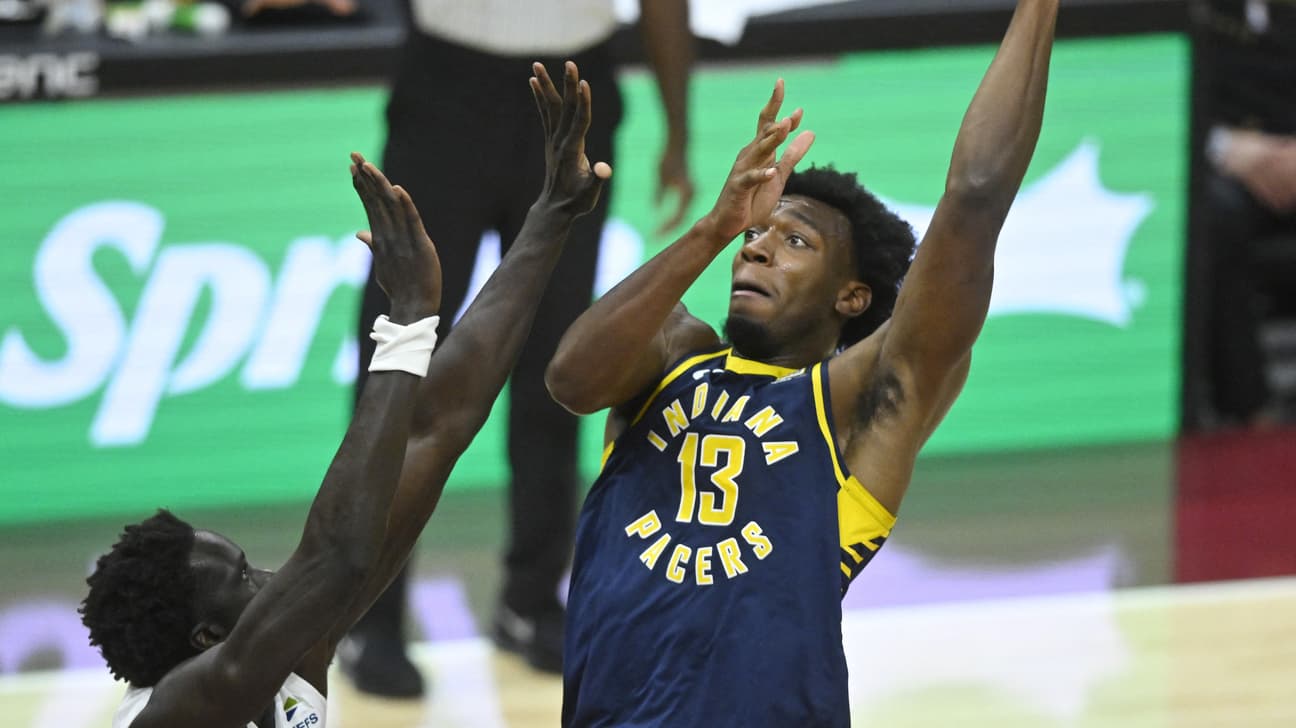
The New York Knicks have moved aggressively on the veteran training-camp market, signing James Wiseman, Bruce Brown, Ochai Agbaji, Drew Eubanks and John Konchar to Exhibit 9 contracts as they prepare to defend their NBA title and fill the final spots on their roster.[1] These are non-guaranteed deals that bring the players into camp with a chance to win a standard contract, but without any promise of a place on the opening-night roster.[2]
Exhibit 9: Low-Risk Tool in a Tight Roster Race
Exhibit 9 agreements are part of the contract structures permitted under the NBA’s collective bargaining framework, used specifically for veteran players on training camp deals. They function as non-guaranteed contracts that protect teams financially if a player is injured during camp, while still giving the player a pathway to a standard deal if he makes the final roster.
For the Knicks, who are working at or near the roster and salary-cap limits typical of recent NBA champions, this mechanism allows them to stage a controlled competition for what is expected to be very limited space on the regular-season squad. The franchise has previously used similar camp structures to sort through end‑of‑rotation options before the start of the long regular season that determines seeding in the 30‑team league governed by the National Basketball Association.[1]
Five Veterans, One (Likely) Path to a Roster Spot
The Knicks’ flurry of Exhibit 9 business concentrates competition into two broad positional battles:
- On the wing: Bruce Brown, Ochai Agbaji and John Konchar.
- In the frontcourt: James Wiseman and Drew Eubanks.
Local reporting around the signings has framed the group as direct competitors for a small number of available roster slots, with the expectation that only one or at most two of the five will be retained for the regular season.[1] For a reigning champion already deep at most positions, the camp battle is less about headline additions and more about finding the right specialist to support an established core over an 82‑game schedule and into the play‑offs.
Bruce Brown: A Championship-Tested Utility Wing
Among the group, Bruce Brown stands out as the most accomplished veteran. The guard‑forward has built a reputation as an elite role player whose versatility has made him valuable to contenders, including a title run in Denver that underlined his impact as a defender, cutter and secondary ball-handler.
The Knicks’ decision to bring Brown into camp on a non‑guaranteed Exhibit 9 structure follows reports that the franchise was willing to outbid the Los Angeles Lakers in the market for the former Nuggets guard, highlighting how strongly they view his potential fit in a rotation built for another deep post‑season push.[1] In a conference where the margins between home‑court advantage and a lower seed can hinge on bench reliability, Brown’s presence in camp gives New York a chance to add proven play‑off experience at minimal financial risk.
James Wiseman: Former No. 2 Pick at a Career Crossroads
James Wiseman’s Exhibit 9 deal with New York is the latest chapter in one of the league’s most closely watched development stories.[1] Drafted second overall by the Golden State Warriors, the center has already moved through multiple franchises as he searches for a stable role that matches the expectations attached to his draft position.
Reports in the United States describe the Knicks opportunity as one that “Warriors fans won’t believe,” underscoring the scale of Wiseman’s journey from top‑of‑the‑lottery prospect to camp contract candidate. Yet the basketball logic is clear: New York needs reliable depth behind its established bigs across a long regular season and potential play‑off run, while Wiseman needs a setting where he can earn minutes through defence, rebounding and pick‑and‑roll finishing rather than star‑level usage.
If he can convert this camp deal into a place on the roster, the implications are significant on both sides. For the Knicks, finding a cost‑controlled reserve center who can soak up regular‑season minutes would reduce the physical burden on their starters. For Wiseman, winning an internal competition against another experienced center in Eubanks would demonstrate that he can anchor bench units on a team with genuine title ambitions.
Ochai Agbaji, John Konchar and Drew Eubanks: Targeted Depth
The remaining Exhibit 9 signings address narrower but important needs for a defending champion.
- Ochai Agbaji profiles as a 3‑and‑D wing whose perimeter spacing and on‑ball defence could be valuable in lineups built around high‑usage creators. For a Knicks team that has leaned heavily on its primary scorers, an additional low‑usage, floor‑spreading wing would offer tactical flexibility, particularly against the switch‑heavy and drive‑heavy offences common in the Eastern Conference.
- John Konchar brings size on the perimeter and a track record as a role player willing to defend, rebound and move the ball. In a camp environment, his versatility allows coaching staff to test different bench combinations without reshaping the offensive hierarchy.
- Drew Eubanks offers a contrasting style at backup center compared to Wiseman, with an emphasis on physical screen‑setting and interior defence. His presence ensures that frontcourt minutes in pre‑season are contested by two very different profiles, giving the Knicks more data before making a final roster call.
Collectively, this trio broadens the club’s range of low‑usage, defence‑first options, an area that often proves decisive in play‑off matchups where star players are game‑planned aggressively and the outcome can swing on whether role players can stay on the floor and execute.
Strategic Continuity from a Recent Roster Experiment
This is not the first time New York has used non‑guaranteed camp deals to stage what is effectively an internal auction for the last roster place. In previous seasons, the organization invited multiple veterans to fight for a single guaranteed slot, ultimately elevating a role player who went on to contribute during the regular season.
Reprising that strategy after a championship season speaks to the front office’s effort to maintain flexibility at the margins of the cap sheet while keeping competitive pressure high throughout the roster. For fringe players, it is a narrow but real path into a rotation that expects to play meaningful games in May and June. For the organization, it is a way to hedge against injuries, slumps or trade‑window reshaping without sacrificing long‑term financial planning.
Implications for the Title Defence
On the surface, training camp contracts involving non‑guaranteed veterans might appear minor compared with blockbuster trades or extensions. In the context of a title defence, however, they form a critical layer of insurance and competitive advantage.
The NBA’s long regular season, compressed travel schedule and increasingly physical play‑off environment place a premium on the eighth to twelfth men on a roster. The Knicks’ decision to invite several experienced professionals into camp on Exhibit 9 deals means that, if injuries or form issues arise, the coaching staff can turn to players who have already been integrated into the system rather than relying on mid‑season signings.
For Brown, Wiseman, Agbaji, Konchar and Eubanks, camp in New York is an opportunity to attach their careers to a contender at a time when roster spots around the league are scarce. For the Knicks, it is a calculated, low‑risk bet that one or two of these veterans can provide precisely the kind of situational minutes that often separate champions from near‑misses in the NBA’s play‑off structure.
Keep reading
