
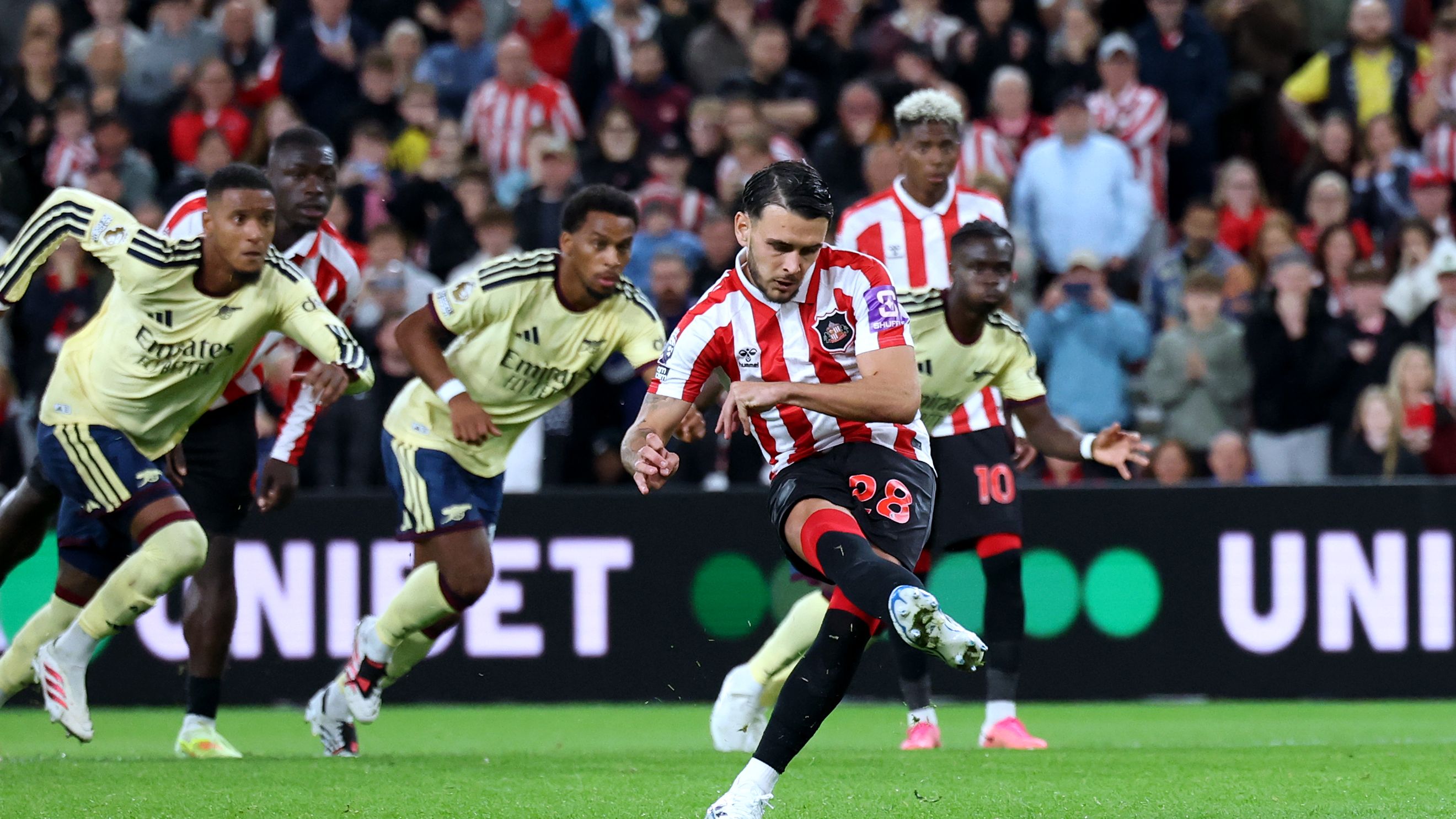
Arteta Fury Over Penalty Call Highlights Growing Strain on VAR in Premier League Title Race
Arsenal manager Mikel Arteta did not hold back in his post-match assessment following a hard-fought victory, sealed by goals from Bruno Guimaraes and Bukayo Saka. Despite the three points, his focus was firmly on a controversial penalty decision that became the defining talking point of the night.
Cutting a frustrated figure, Arteta questioned the logic behind the call and the subsequent video review, expressing disbelief that such a decision could be made at the highest level of English football, where the stakes are significant for clubs and players alike.
“This is not acceptable at this level. I watched it 20 times and I cannot find a way to understand how they think to give a penalty in that situation, or the way the VAR has to intervene,” the Arsenal manager said, underlining his concern not only with the on‑field referee but also with the process that led to the decision being upheld.
VAR Process Under Scrutiny
Arteta’s comments place renewed attention on the use of the video assistant referee system in the Premier League, overseen by match officials operating in line with the Laws of the Game set by the International Football Association Board, which are implemented domestically under the authority of the Premier League.
Under current protocols, VAR is intended to intervene only in clear and obvious errors relating to goals, penalties, direct red cards and cases of mistaken identity. Arteta’s frustration centres on whether the threshold for intervention was met and how such a subjective call could withstand multiple replays.
By highlighting that he had watched the incident “20 times” without understanding the reasoning, Arteta echoed a wider feeling among players, managers and supporters that the technology has not eliminated controversy but has instead shifted it towards the interpretation of slow‑motion replays and off‑field judgments.
Title Stakes and the Cost of a Single Decision
In his post-match remarks, Arteta went beyond the incident itself to underline its potential impact on the Premier League title race. He stressed that a single high-profile mistake can have consequences stretching far beyond one evening’s result.
“So I don’t know what to think. I’m sad that we have to discuss this after such a beautiful game, that at this level has the gravity of that. Because that changes the course of the season and it can cost you the championship. At this level, with all the work we put in, this cannot happen,” he said.
For Arsenal, operating in a league where margins between leading clubs are often measured in a handful of points, Arteta’s warning is clear: a contentious penalty, awarded or denied, can tilt momentum in a title race in which every decision is amplified.
Match Context and Key Figures
While the controversy dominated the post-match narrative, the game itself still carried notable performances and moments that framed Arteta’s anger.
- The match ended in an Arsenal victory.
- Goals came from Bruno Guimaraes and Bukayo Saka.
- A disputed penalty decision became the central flashpoint.
Saka’s role as a decisive attacking outlet and Guimaraes’ contribution on the scoresheet ensured the game had significant footballing merit. Yet the manager’s insistence on revisiting the penalty shows how officiating errors can overshadow the technical and tactical aspects that normally define top‑level contests.
Trust, Transparency and the Demands on Officials
Arteta’s reaction speaks to a broader issue facing elite competitions: maintaining trust in officiating structures at a time when every decision is replayed, dissected and compared across platforms worldwide.
In an era where clubs invest heavily in coaching, sports science and data analysis, managers are increasingly vocal when they feel officiating standards are not matching the professional standards demanded of teams. Arteta’s reference to “all the work we put in” underlines a belief that errors in interpretation can undermine months of preparation.
The tension lies in balancing the need for human judgment with the expectation of consistency that technology is presumed to deliver. When a manager claims he cannot understand a decision even after multiple viewings, it sharpens the debate about how decisions are communicated and justified within the existing regulatory framework.
Implications Beyond One Game
While the immediate outcome was a win, Arteta’s remarks were not framed as an isolated complaint. By linking the incident to the possibility of losing a championship, he effectively positioned the controversy within a season‑long narrative.
In practical terms, such episodes influence several layers of the sport:
- Competitive balance: In a league decided over many months, a single contentious penalty can alter the trajectory of multiple clubs, affecting their position in the table and potentially shaping qualification for European competition.
- Managerial and player psychology: Repeated frustration over officiating can influence the mentality within a squad, especially in decisive phases of the season when confidence and composure are critical.
- Institutional review: High-profile criticism from leading managers often prompts internal reviews of refereeing procedures and communication, even when the official framework does not change immediately.
Arteta’s language – emphasising sadness at discussing officiating “after such a beautiful game” – underscores the sense that, at this level, the spectacle and the integrity of the competition must align. When they do not, pressure grows on governing bodies and refereeing panels to demonstrate that lessons are being learned.
A Debate That Will Shape the Run-In
As the season progresses, Arsenal’s pursuit of major honours will be judged primarily on performances, results and consistency. Yet Arteta’s outburst ensures that one controversial penalty will linger as a reference point in any discussion about tight margins at the top.
For the Premier League and its match officials, the challenge is to show that the systems in place are robust enough to withstand scrutiny from managers and global audiences, without allowing the technology designed to assist them to become the dominant story in its own right.
In that sense, this incident is about more than a single decision. It is a case study in how modern officiating, framed by VAR and intensive analysis, can influence not only the outcome of a match but also the ongoing debate over how the game is governed at the very highest level.
Worth a look
- Montreal Canadiens Extend Martin St. Louis Through 2030 as Team Prepares for New NHL Season
- US Open 2026 Week Two Recap and Key Highlights from the Tournament
- AI Chatbots Dangerously Dismiss Sleep Apnea Symptoms, Study Warns (archyde.com)
- Alexander Zverev’s Inspiring US Open Victory and Powerful Message on Type 1 Diabetes (archysport.com)
