
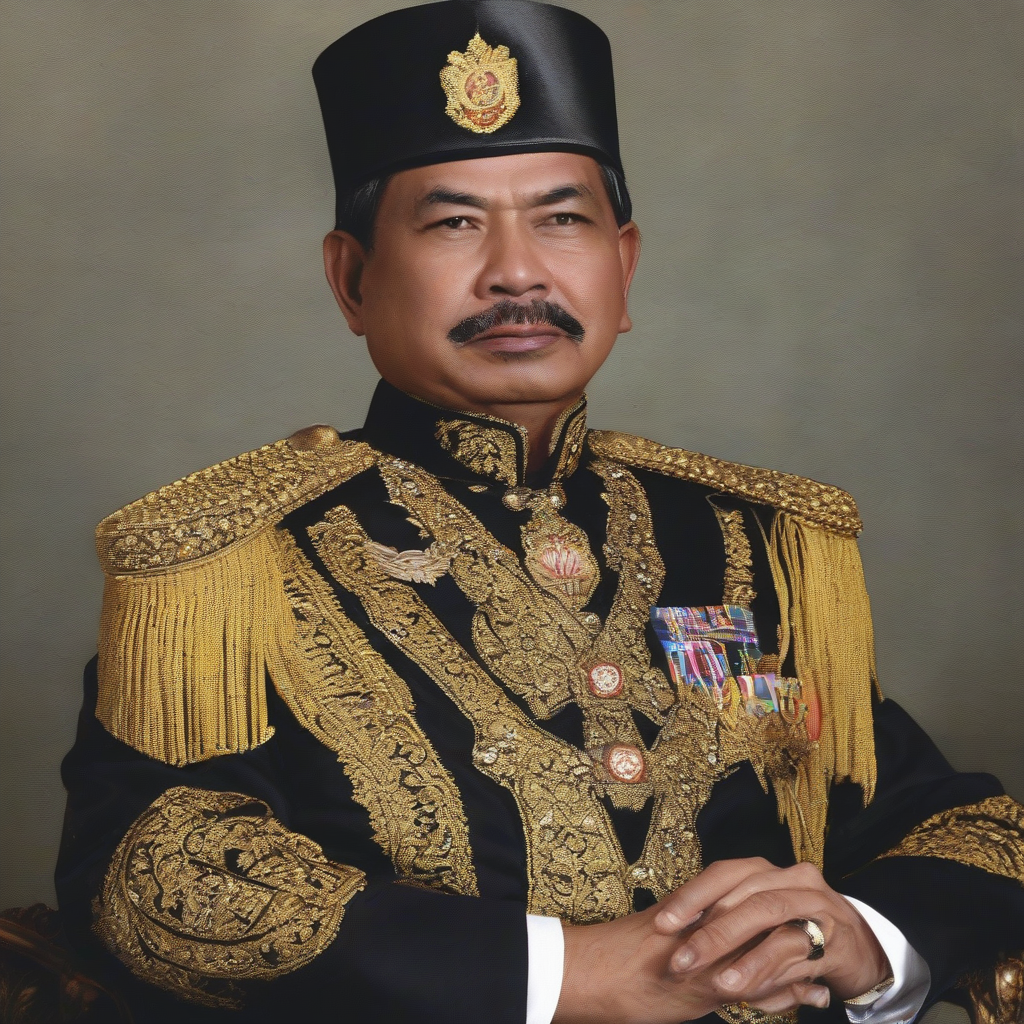
KUALA LUMPUR – A constitutional crisis has emerged in the state of Negeri Sembilan as two rival claimants vie for the throne ahead of the Conference of Rulers scheduled for June 23 to 25.
The dispute pits the recognized ruler, Yang di-Pertuan Besar Muhriz Munawir, against Nadzaruddin Ja’afar, who was proclaimed ruler by four territorial chieftains.
The resolution of this royal feud carries immediate implications for the legitimacy of the state’s leadership and the viability of the state election scheduled for August 1.
The Adat Perpatih Custom and the Royal Split
The conflict is rooted in the unique Adat Perpatih customs of Negeri Sembilan, where territorial chieftains known as Undangs, or lawgivers, hold the authority to elect and remove the state ruler.
Under Negeri Sembilan’s matrilineal Adat Perpatih system, the Undangs of the four traditional territories choose the Yang di-Pertuan Besar, giving customary law an unusual degree of influence over a constitutionally recognized monarchy within Malaysia’s federal framework.
The current impasse followed a special meeting of the Dewan Keadilan dan Undang (DKU), the state’s highest authority on Malay customs, on April 17. During this session, Muhriz affirmed the sacking of one of the Undangs by the territories’ own tribal chiefs, a move his supporters frame as necessary to preserve discipline within the traditional hierarchy.
In response, the Undangs conducted a ceremony on April 19 to remove Muhriz from power, asserting that his endorsement of the sacking violated established adat and undermined their prerogatives.
The sequence of events escalated through June:
- June 4: The state government announced the dissolution of the legislature via a midnight press conference, a move widely seen as an attempt to pre-empt the installation of a new ruler and preserve continuity in state leadership.
- June 5: Police blocked the gates of the planned installation venue, forcing the Undangs to relocate to a hotel in Melaka.
- June 5: At the Melaka hotel, the Undangs swore in Nadzaruddin Ja’afar, the son of the previous Yamtuan, as the new Yang di-Pertuan Besar in a ceremony they insist was valid under Adat Perpatih.
- June 5: The Undangs sent a letter to the King, Sultan Ibrahim Iskandar of Johor, notifying him of Muhriz’s removal and the selection of his successor, setting up a potential clash between customary authority and formal constitutional recognition at the federal level.
Political Friction and the Dissolution of Assembly
The royal dispute has intersected with deteriorating relations between Prime Minister Anwar Ibrahim’s Pakatan Harapan (PH) coalition and its ruling partner, UMNO, turning a palace crisis into a broader test of Malaysia’s coalition politics.
On April 27, UMNO withdrew its support for the Negeri Sembilan Chief Minister, Aminuddin Harun of PH. UMNO alleged that Harun had interfered in royal affairs by declaring that Muhriz remained the state’s rightful ruler, effectively siding with one claimant while legal and customary questions remained unsettled.
This political fracture coincided with UMNO’s decision to contest the Johor state polls on July 11 independently, without PH cooperation, underscoring how royal disputes at state level are feeding into national calculations ahead of key electoral contests.
The Undangs’ efforts are supported by Rais Yatim, a former Negeri Sembilan chief minister and former Cabinet member under three UMNO prime ministers, who serves as the de facto spokesman for the rebel chiefs and has framed their actions as a defence of tradition against executive overreach.
Legal Interventions and Contempt Risks
The dispute has moved into the judicial system, with the High Court in Seremban granting interim injunctions on June 5. These orders bar any changes to the DKU or any meetings of the body until the suit between the Undangs, the Yamtuan, and the state administration is settled.
Lawyers say the case will test how far customary institutions can go when their decisions are challenged under the Federal Constitution and state constitutional provisions governing Malay rulers, and whether courts will treat adat-based decisions as justiciable when they directly affect the line of succession.
Despite the injunction, the Undangs have continued to proclaim Nadzaruddin as the ruler and have petitioned the King, an action that legal observers note risks contempt of court. Any finding of contempt against traditional chieftains would be unprecedented and could complicate their ability to perform ceremonial and constitutional functions.
The Undangs argue they enjoy a level of immunity, claiming that the state Constitution defines “ruler” in certain clauses to include the Undangs, effectively making them “co-rulers” with the Yamtuan and entitled to protections typically afforded to Malay rulers.
A legal expert familiar with royal households stated:
“It would be perverse if he is uninvited, especially as it is his turn to chair the conference.”
This comment refers to the possibility of Muhriz being excluded from the Conference of Rulers, where he is currently slated to serve as chair. The Conference, which deliberates on matters including the election of the Yang di-Pertuan Agong, is conventionally attended by all recognized rulers, making any non-attendance or competing representation from Negeri Sembilan highly sensitive.
State Honors, Resources and Governance Stakes
Beyond the constitutional claims, the friction stems from long-standing disputes over power, business, and the awarding of state honors that have blurred the line between ceremonial roles and access to economic patronage.
Following the pandemic, the state administration and the Yamtuan reduced the annual quota of the Darjah Setia Bakti Negeri Sembilan (DBNS) titles-which carry the “Datuk” honor-given to each Undang, halving it to one. The move was presented as part of a tightening of governance and scrutiny over the honours system.
This reduction followed several controversies regarding fraudulent nominations:
- 2020: The revocation of a DBNS from businessman Ibrahim Yahaya following investigations into fraudulent nominations.
- 2024: The discovery of a state decoration recipient who had faked their resume, prompting calls for more rigorous vetting of honorees.
Additionally, the Jelebu Undang, Maarof Mat Rashad, has been accused of issuing mining licenses despite lacking the legal authority to do so under current land laws, exposing tensions between traditional territorial claims and statutory control of natural resources.
On June 8, the chieftains formally requested that the High Court resolve the dispute via mediation. On June 10, lawyer Azam Aziz, representing Maarof, stated, “Letting this impasse drag on is not in the best interest of the state and the people.”
As the Conference of Rulers approaches, federal officials and constitutional scholars warn that any ambiguity over who represents Negeri Sembilan could complicate decision-making at the national level and unsettle investor confidence, with the throne dispute now entangled in questions of electoral timing, judicial authority and the future balance between adat and written law in Malaysian governance.
Keep reading
- Urban Infrastructure Resilience: How European and Asian Megacities Are Adapting to Extreme Climate Oscillations in 2026
- UN General Assembly 2026 Framework on Autonomous Systems: International Diplomacy Faces Algorithmic Governance
- Bahrain GP in Malaysia 2026: Verstappen on pole ahead of Hamilton (globallypulse.com)
- Pope Leo XIV Sends Personal Letter to Chicago White Sox Ahead of Playoffs (archysport.com)
