
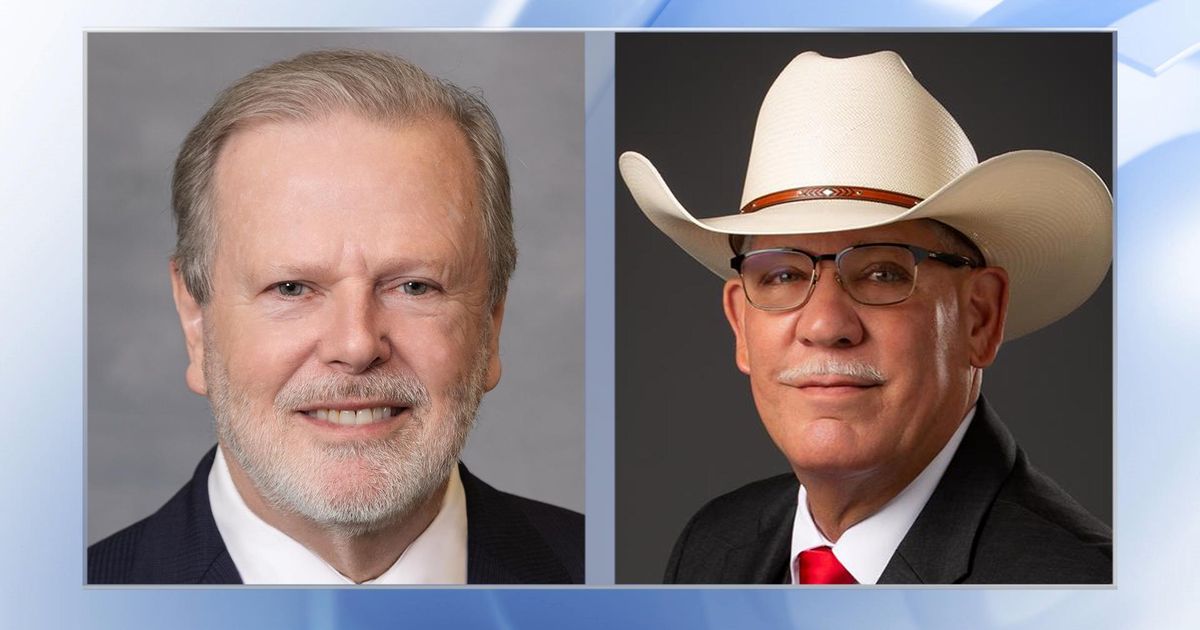
RALEIGH – A North Carolina legislative candidate is challenging the state’s impartiality in counting ballots after the official who appoints key election overseers backed his rival. Sam Page, narrowly ahead in the Republican primary for the 26th Senate District covering Rockingham and Guilford counties, questioned the process because North Carolina State Auditor Dave Boliek recently campaigned for Senate leader Phil Berger.
Page led Berger by two votes – 13,077 to 13,075 – after early and Election Day ballots were tallied on March 3, 2026. With the margin razor-thin and additional ballots still to be reviewed, Page on March 4 called on Boliek to step back from any role connected to the post-election process, citing ethical concerns.
The stakes are unusually high. Berger is one of the state’s most influential Republican legislators, and a Page win would upend the power structure in the chamber, potentially shifting internal negotiations on taxes, education spending, and redistricting.
Key numbers and dates in the NC Senate District 26 primary
- Current margin: Sam Page 13,077; Phil Berger 13,075 (as of March 3, 2026).
- Provisional ballots to review: 137 in Rockingham County; 52 in Guilford County.
- Provisional adjudication and mail-ballot cure deadline: Friday, March 6, 2026.
- Overseas and military ballots counted by: County canvass on Friday, March 13, 2026.
- Recount request window (if within 1 point): By noon on Tuesday, March 17, 2026.
These dates are set out in state election law and the North Carolina State Board of Elections’ guidance under Chapter 163 of the North Carolina General Statutes, which governs how close contests like this move from unofficial tallies to certified results.
Recusal demand – and swift pushback
Page tied his objection to Boliek’s public support for Berger and to staffing ties between the auditor’s office and Berger’s political team. “It seems like a big ethical conflict,” Page said. “I want to make sure that when people cast their ballot for their candidate, it gets counted.”
Boliek did not sit for an interview on March 4, according to his office. Spokesman Randy Brechbiel said in a statement, “The State Board of Elections has issued a thorough description of the process. The State Auditor’s Office has no role in that process.”
The state elections agency echoed that, underscoring that statutory authority for canvassing and recounts rests with county boards and the five-member State Board. Jason Tyson, a spokesman for the State Board of Elections, said concerns about the auditor’s influence were misplaced: “There’s no influence here from the auditor’s office at all,” Tyson said. “The public can be assured that this is going to be a safe and secure process that’s outlined by law, that is not going to have influence, political influence in any way, shape or form.”
Boliek has previously defended his ability to act impartially despite his party affiliation:
“I was elected in a partisan election,” Boliek, a Republican, told WRAL in an interview last month. “But in completing the job, I represent and work on behalf of all North Carolinians, regardless of their political party. And when it comes to voting, voting is sacred in this country. It is sacred in this state.”
Who runs a recount – and why Boliek is central to the debate
Any recount in the Berger-Page race would be conducted by county elections offices and the State Board of Elections, following uniform procedures the board applies statewide. In this race, however, the mechanics of that process are colliding with a newer governance structure that puts the state auditor at the center of elections oversight.
Under a law championed by Berger and other Republican leaders, responsibility for appointing State Board of Elections members – and, through them, county election boards – shifted from the governor to the auditor. Those county and state officials were appointed and are overseen by the auditor’s office. Boliek campaigned for Berger last month and has hired staff with close ties to the Senate leader – his chief of staff previously served as a top lawyer for Berger at the legislature, and his spokesperson is Berger’s former spokesperson.
That web of relationships is what Page and his allies argue creates at least the appearance of a conflict in a race that could be decided by a handful of ballots. Despite those connections, Boliek’s office maintains it will not control ballot adjudication or recount procedures, pointing voters instead to the State Board’s publicly described post-election process and stressing that any recount would unfold in public meetings subject to open-meetings and records laws.
Cross-party pressure for outside eyes on a possible recount
Scrutiny of potential conflicts came from across the political spectrum on March 4, reflecting broader national anxieties about election administration and partisan pressure on institutions meant to operate at arm’s length from campaigns.
Sloan Rachmuth, a Page supporter who has advised Republican candidates in North Carolina, argued the endorsement itself was a problem: “The appearance of a conflict of interest can be just as damaging as an actual conflict,” she said in a social media post. “[Boliek] showed terrible judgment making an official endorsement in a primary.” She added, “Voters have serious trust issues with this recount. Those issues will only grow.”
Democratic strategist Morgan Jackson likewise questioned the setup, focusing on the auditor’s appointment powers: “Republicans are putting their thumbs on the election apparatus and trying to pick winners and losers and trying to influence winners and losers,” he said in an interview Wednesday with WRAL. “And when you see something like the state auditor campaigning for a candidate on the ballot – when the state auditor is the person who picks not only the state board of election members, but the county board of election members – that’s concerning.”
Jackson compared today’s landscape to the period when the governor oversaw the board, acknowledging that then-Gov. Roy Cooper endorsed candidates while holding that power, but defending that practice as distinct from direct involvement by a statewide official whose office now appoints and trains election officials. He also pointed to recent personnel and policy fights: State Elections Director Sam Hayes last June sought authority to hire or fire board employees over personal political views, and Boliek created a new position to train and oversee county election staff that went to former state GOP executive Dallas Woodhouse. “It has been a time-honored tradition, and ethically, that elections officials stay out of campaigning and stay out of politics,” Jackson said. “And this new Republican-controlled board has decided that’s not not important anymore.”
The debate also revives earlier tensions over leadership changes at the state elections office. Cooper appointees replaced longtime director Kim Strach after consulting Jackson, and her successor, Karen Brinson Bell, drew Republican criticism for a 2020 legal settlement extending mail-ballot deadlines – a decision the board’s Republican and Democratic members approved unanimously. When Republicans regained control of the elections board last year, their first action was to fire Brinson Bell.
The back-and-forth over who should referee North Carolina’s elections mirrors a broader policy fight over whether election administration should be insulated from partisan statewide officials or directly accountable to them – a question that will shape public trust well beyond a single Senate primary.
Berger’s campaign did not immediately respond to a request for comment.
Outstanding ballots and how they’re reviewed
Beyond the Election Day tally, several categories of ballots will determine the final margin before any recount request:
- Provisional ballots are issued when a voter’s in-person information conflicts with registration records. Common reasons include voting at the wrong precinct or requesting a primary ballot that does not match the voter’s registered party.
- County election staff research each provisional voter’s eligibility and decide whether to count the ballot in public meetings of the county board.
- Absentee-by-mail ballots with minor deficiencies may be cured by the voter by March 6, 2026.
- Ballots from military and overseas voters are counted by the March 13, 2026 county canvass, in line with federal protections for UOCAVA voters.
- Campaigns may challenge the eligibility of specific absentee ballots; county boards consider those challenges during canvass, with decisions subject to appeal to the State Board of Elections.
If the candidates remain within one percentage point after all eligible ballots are counted, either campaign may request a recount by noon on March 17, 2026. The State Board of Elections would then advise counties on the timeframe and method to complete the recount, typically by re-running ballots through tabulators and, in extremely close contests, conducting hand-to-eye counts of selected precincts.
County election boards are scheduled to finish adjudicating provisional ballots and processing eligible mail-ballot cures by Friday, March 6, 2026. At that point, voters in Rockingham and Guilford counties – and political strategists watching the General Assembly – will get their first clear indication of whether this contest will be settled at canvass or fought again in a recount that tests North Carolina’s reworked election-governance system.
Worth a look
- Urban Infrastructure Resilience: How European and Asian Megacities Are Adapting to Extreme Climate Oscillations in 2026
- UN General Assembly 2026 Framework on Autonomous Systems: International Diplomacy Faces Algorithmic Governance
- Obama to campaign for Michigan Senate nominee Abdul El-Sayed in Detroit (globallypulse.com)
