
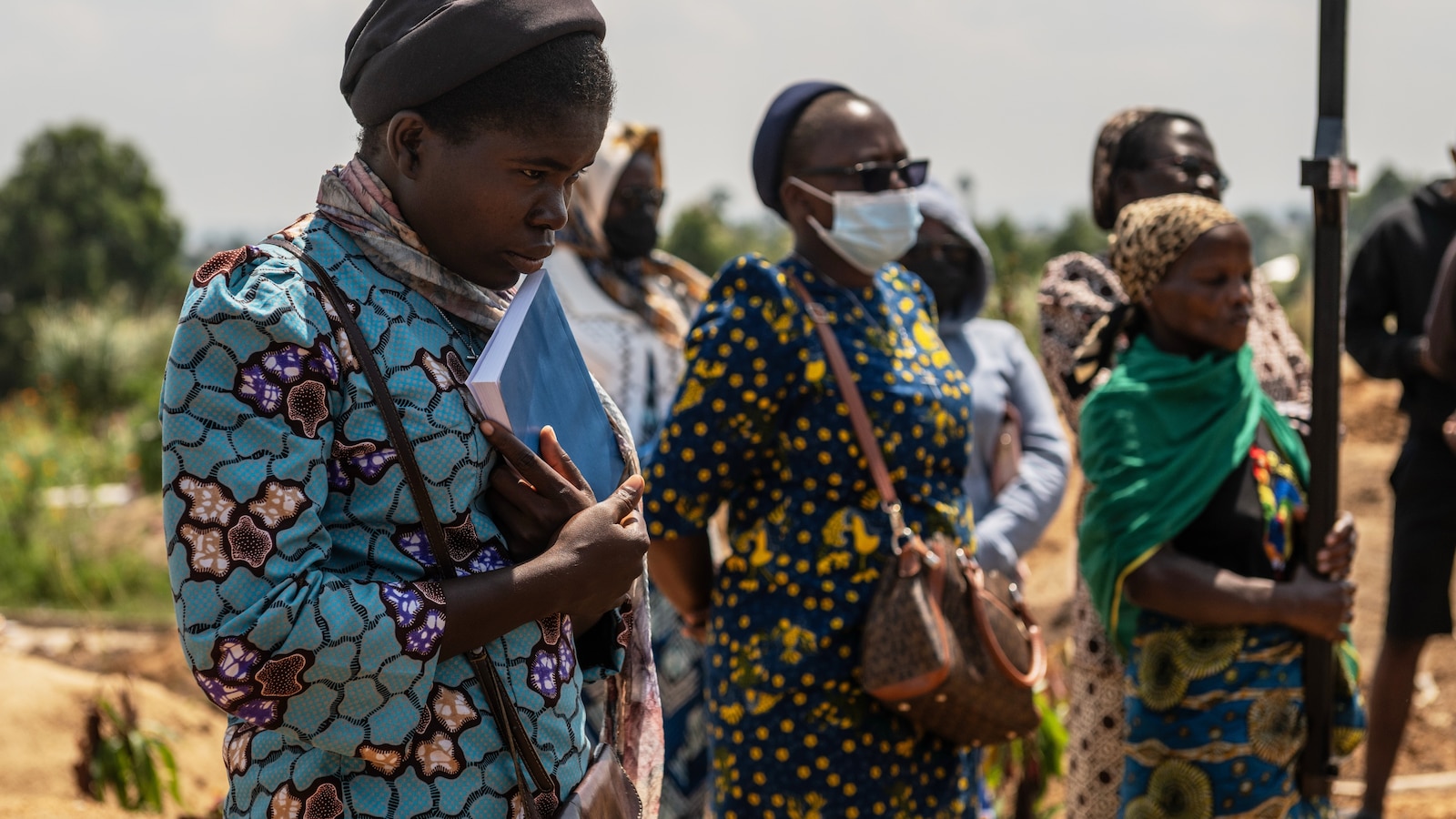
Mourners gathered Friday in Bunia, Congo, to bury a six-month-old girl, the third child to die at a local orphanage amid a challenging effort to contain a regional Ebola outbreak. The ceremony was marked by a stark divide between grieving families and the stringent requirements of epidemiological safety. As a small coffin was lowered into the ground by health workers in full protective gear, the community stood at a distance.
“It’s a feeling of sadness because we have lost one of our own, a daughter of the church,” said Father Innocent Ndogo. “As we have always said, the Lord gives, and the Lord takes away.”
The Diagnostic Gap and Viral Specificity
The current crisis is driven by the Bundibugyo strain of the Ebola virus, a distinction that carries severe implications for clinical management. Unlike the more common Zaire virus, which has benefited from the development of targeted vaccines and therapeutic interventions, the Bundibugyo strain currently has no approved treatment or vaccine. This regulatory and pharmaceutical gap significantly complicates the containment strategy and exposes how unevenly global research and development investments are distributed across Ebola species.
Early delays in identifying the specific strain hindered the initial response. Because diagnostic protocols in the region often prioritize the Zaire strain, the Bundibugyo virus was not immediately tested for, allowing the pathogen to circulate further within the population before specialized countermeasures could be considered. This underscores a systemic vulnerability in rapid-response diagnostics when dealing with less common viral variants in resource-constrained environments, and raises questions for national laboratories and international partners about updating testing algorithms, procurement lists and training.
Epidemiological Impact and Regional Spread
The outbreak is heavily concentrated in the Ituri region, which accounts for more than 90% of all reported cases. However, the virus has demonstrated its capacity for cross-border transmission, moving into the North Kivu and South Kivu provinces and crossing into neighboring Uganda, where border communities are tightly linked by trade, family ties and displacement.
| Metric | Current Status/Impact |
|---|---|
| Confirmed Cases | 894 |
| Confirmed Deaths | 200+ |
| Potential Contacts Under Follow-Up | 35,000 suspected |
| Uganda Transmission | 19 cases, 2 deaths |
| Primary Epicenter | Ituri region, Democratic Republic of the Congo |
These figures, while evolving, are already large enough to strain provincial surveillance systems. Each suspected contact must be identified, informed and monitored daily, a task that depends on local government capacity, community health workers and the steady flow of national and international funding.
Systemic Infrastructure and Workforce Strain
The response in eastern Congo has been hampered by critical shortages in healthcare infrastructure and personal protective equipment (PPE). Reports from the field indicate that even frontline health workers have lacked the necessary masks and gloves to ensure their own safety, creating a precarious environment where the providers of care are themselves at high risk of infection. In some facilities, basic isolation capacity is limited to a handful of beds, forcing difficult triage decisions and delaying referrals.
Beyond material shortages, the intersection of public health and security has created friction. The response has been militarized at times, leading to clashes between residents and healthcare professionals. This tension is most evident during the implementation of safe burial practices. While essential for preventing post-mortem transmission, the impersonal nature of these protocols often conflicts with local cultural and religious traditions, fueling community resistance and occasionally prompting families to remove bodies before teams arrive.
Alex Lock, a communications officer at the International Federation of Red Cross and Red Crescent Societies, emphasized the human cost of the epidemic. “She was a baby. She had her whole life ahead of her. Unfortunately, she was taken by the disease, a disease that, as you know, is transmitted from one person to another,” Lock said, noting that every statistic in the daily situation reports hides a story as personal as the one unfolding in Bunia.
Public Health Governance and Mitigation
To mitigate the spread of the Bundibugyo strain, health authorities must navigate the complex balance between strict infection control and community engagement. Under the International Health Regulations, the World Health Organization and national governments share responsibility for detecting and containing outbreaks that may pose a cross-border threat, a framework that informs decisions on declaring a public health emergency of international concern and on coordinating travel, trade and resource flows.
The current outbreak, while not as lethal as the 2014 epidemic that claimed over 11,000 lives across West Africa, is three times more severe than the 2000 Bundibugyo-related outbreak in Uganda. This trajectory highlights the urgent need for improved surveillance systems, flexible financing mechanisms and the development of broad-spectrum countermeasures that can address multiple Ebola species simultaneously, rather than relying on a single-strain strategy.
The risk to the 35,000 potential contacts remains a primary concern for Africa’s Centres for Disease Control and Prevention and national health ministries, requiring an intensified focus on contact tracing, cross-border data sharing and the stabilization of the healthcare workforce in conflict-affected zones. As the small grave in Bunia is covered with earth, the question now confronting policymakers in Kinshasa, Kampala and Geneva is whether they can move quickly enough to prevent many more.
- Global Antimicrobial Resistance Action: Surveillance Networks and Novel Bacteriophage Therapies in Late 2026
- Wearable Biosensors and Continuous Metabolic Monitoring: Preventive Healthcare’s Next Frontier
- Two Iranian nationals charged with terror plot targeting Manchester Jewish community (globallypulse.com)
