
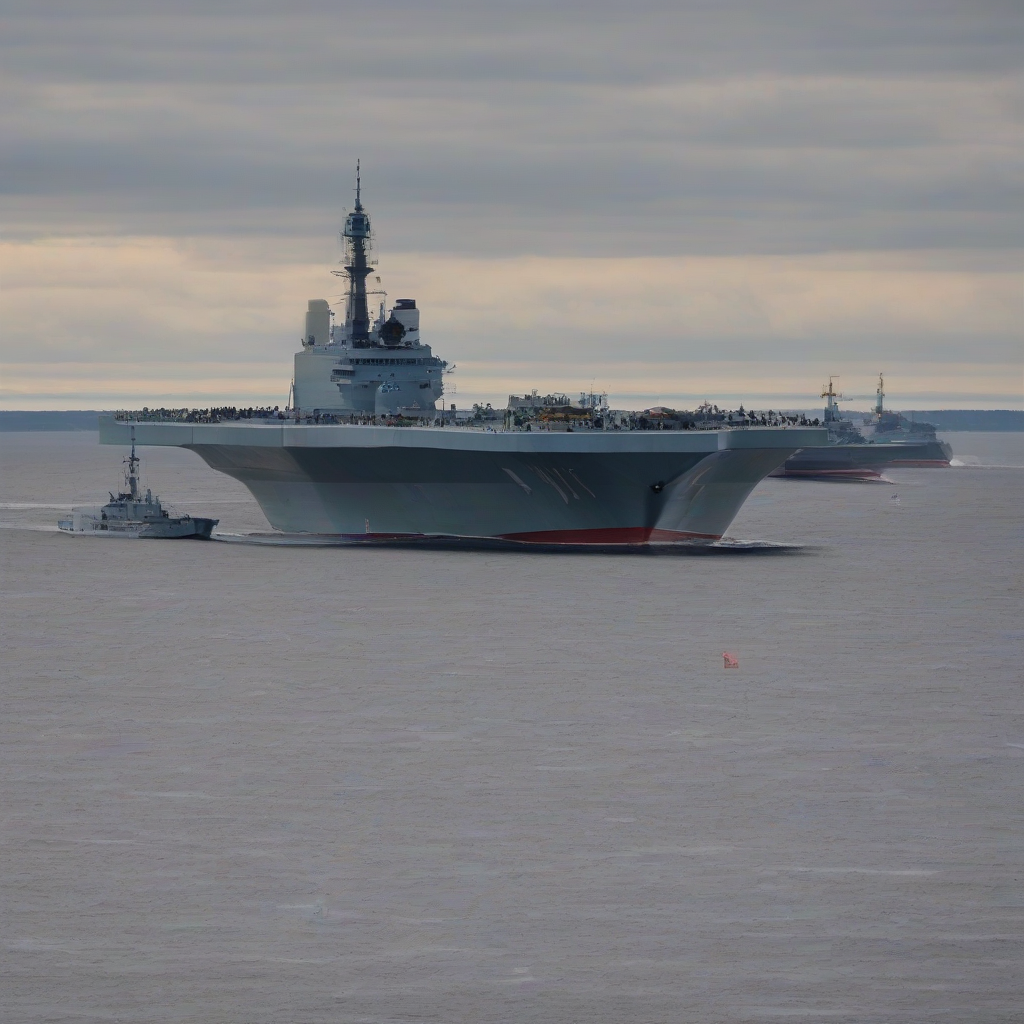
HELSINGBORG – The maritime corridor separating Sweden and Denmark has evolved into a primary flashpoint in a hybrid conflict between Russia and the West, shifting from a routine commuter route to a critical component of the Atlantic defensive architecture.
The Øresund Strait, a narrow passage only 2.5 miles wide at its closest point between Helsingborg, Sweden, and Helsingør, Denmark, now serves as a theater for maritime sabotage and the operations of a Russian “ghost fleet” designed to circumvent international sanctions.
As one of three primary gateways from the Baltic Sea to the Atlantic Ocean-alongside Denmark’s Great Belt and Little Belt-the strait is a mandatory transit point for all cargo, energy, and military vessels entering or leaving the Baltic. This geographic bottleneck has regained its historical strategic importance as the Kremlin seeks to maintain the flow of hydrocarbons to fund its war against Ukraine.
The Mechanism of the Ghost Fleet
Under the guise of ordinary commercial shipping, Russia utilizes a “shadow fleet” of aging tankers to move oil and gas. These vessels are characterized by opaque ownership structures and frequently change the flags of distant nations to evade tracing by Western authorities and financial regulators attempting to enforce the G7 price cap regime.
In 2025, Nordic authorities verified the passage of at least 292 vessels linked to Russia through the region, according to officials briefed on joint Swedish-Danish monitoring efforts. Maritime analysts say the real number is likely higher, as some ships periodically disable their transponders while approaching the strait.
Sweden’s Foreign Minister Maria Malmer Stenergard, speaking from Helsingborg during a meeting of NATO foreign ministers on May 22, described these ships as operating beneath a dense layer of bureaucracy to hide their origins. The vessels are often registered via shell companies and insured through lightly regulated markets, making it difficult for European agencies to establish responsibility in the event of an accident or sabotage attempt.
Intelligence reports have further documented the presence of armed contractors on these vessels. While a Swedish official stated that it is not possible to prove these individuals are Russian military, they added, “there is evidence they are linked to paramilitary companies with ties to the Kremlin.” Western security services view these mixed civilian-military crews as a hallmark of the grey zone between commerce and covert state activity.
Hybrid Warfare and Infrastructure Sabotage
The Baltic region has become a laboratory for Russian hybrid warfare, characterized by ambiguity and deniability rather than traditional naval engagements. Elisabeth Braw, a researcher at the Atlantic Council’s Transatlantic Security Strategy Center, noted that the Kremlin employs tactics including:
- Sabotage of maritime infrastructure, including seabed cables and pipelines
- Interference with navigation systems used by commercial and military vessels
- Manipulation of Automatic Identification System (AIS) signals to obscure ship movements
- Covert espionage and unattributable operations conducted from ostensibly civilian vessels
Braw warned that the ghost fleet is being exploited for more than oil transport, stating, “Russia has discovered these ships can be used for more than moving oil – to cause damage in the Baltic – so they are exploiting them.” For coastal states, this blurring of commercial shipping and statecraft complicates both deterrence and response, as actions that appear accidental at sea may in fact be part of a deliberate campaign.
This strategic exploitation is evident in the targeting of critical undersea infrastructure. According to an Estonian intelligence report, authorities recorded at least 11 significant incidents of damage to submarine cables between October 2023 and the present. These incidents primarily affected telecommunications and power lines, with some involving gas pipelines. While few of the episodes have been publicly attributed to a specific actor, investigators in Tallinn, Stockholm, and Helsinki say the pattern of incidents tracks closely with the routes used by Russia-linked commercial shipping.
A prominent example occurred in December 2025, when Finnish authorities detained the freighter Fitburg. The vessel, sailing under the flag of Saint Vincent and the Grenadines and arriving from St. Petersburg, was discovered with its anchor down in Finnish waters. The ship was implicated in the damage of telecommunications cables connecting Finland and Estonia, a connection that Finland’s government said raised “serious questions” about state responsibility under international law. The case has become a reference point for regional policymakers arguing that seabed infrastructure must be treated as critical national security territory, not just commercial hardware.
The Shift to a ‘NATO Lake’
The geopolitical landscape of the region was fundamentally altered by the invasion of Ukraine, which prompted Finland and Sweden to join NATO. This shift, combined with the existing membership of Denmark and Estonia, has effectively turned the Baltic into an allied sea, with the exception of St. Petersburg and the Russian exclave of Kaliningrad.
Experts have described the region as having become almost a “NATO lake,” a transition that has increased the strategic value of bottleneck cities like Helsingborg. Within NATO planning, the Baltic is now treated as both a frontline and a logistics corridor, where the same maritime routes used to move commercial cargo can rapidly become channels for moving allied forces and equipment.
However, enforcement remains constrained by maritime law. Under the United Nations Convention on the Law of the Sea (UNCLOS), vessels linked to the ghost fleet generally maintain the right of innocent passage unless authorities can provide evidence of illegal fishing, criminal activity, or an immediate environmental risk. That legal framework leaves coastal states limited room to act pre-emptively, even when intelligence services warn of hostile intent.
National Security and Legal Responses
To address these gaps in surveillance, the Swedish government recently implemented legal changes to expand the authority of the Coast Guard. These new powers allow the agency to:
- Request detailed insurance and ownership information from transiting vessels
- Monitor ships within Swedish territorial waters with enhanced boarding and inspection rights
- Increase surveillance within Sweden’s Baltic exclusive economic zone, including the use of drones and seabed sensors
The legislation is part of a broader tightening of Nordic coordination, with Sweden, Denmark, Finland, and Estonia sharing more data on high-risk vessels and aligning rules on port state control. Officials say the aim is not to close the Baltic to Russian shipping entirely, but to make it harder for covert operations to hide inside the flow of legitimate trade.
Prime Minister Ulf Kristersson summarized the current security posture of the nation, stating, “We are not at war, but we are not at peace either.” That assessment has shaped Sweden’s emerging doctrine for “total defence,” which expects civilian agencies, infrastructure operators, and private shipping companies to play an active role in crisis preparedness.
On the Skåne coast, the return of this tension is physically marked by the reactivation of interest in concrete bunkers built during World War II and expanded during the Cold War. Once viewed as anachronisms, these fortifications now align with a national strategy centered on maritime surveillance and the protection of submarine cables. Local authorities have begun integrating some of these sites into modern sensor networks and coastal monitoring systems, turning relics of past conflicts into platforms for today’s security architecture.
For policymakers in Stockholm, Copenhagen, and Brussels, the Øresund is no longer just a busy shipping lane but a test case for whether existing legal and regulatory tools can keep pace with a conflict that is being waged as much in insurance contracts and AIS signals as in open waters. The outcome will help determine how Europe governs its critical sea lanes in an era when the line between trade and threat is increasingly hard to draw.
