
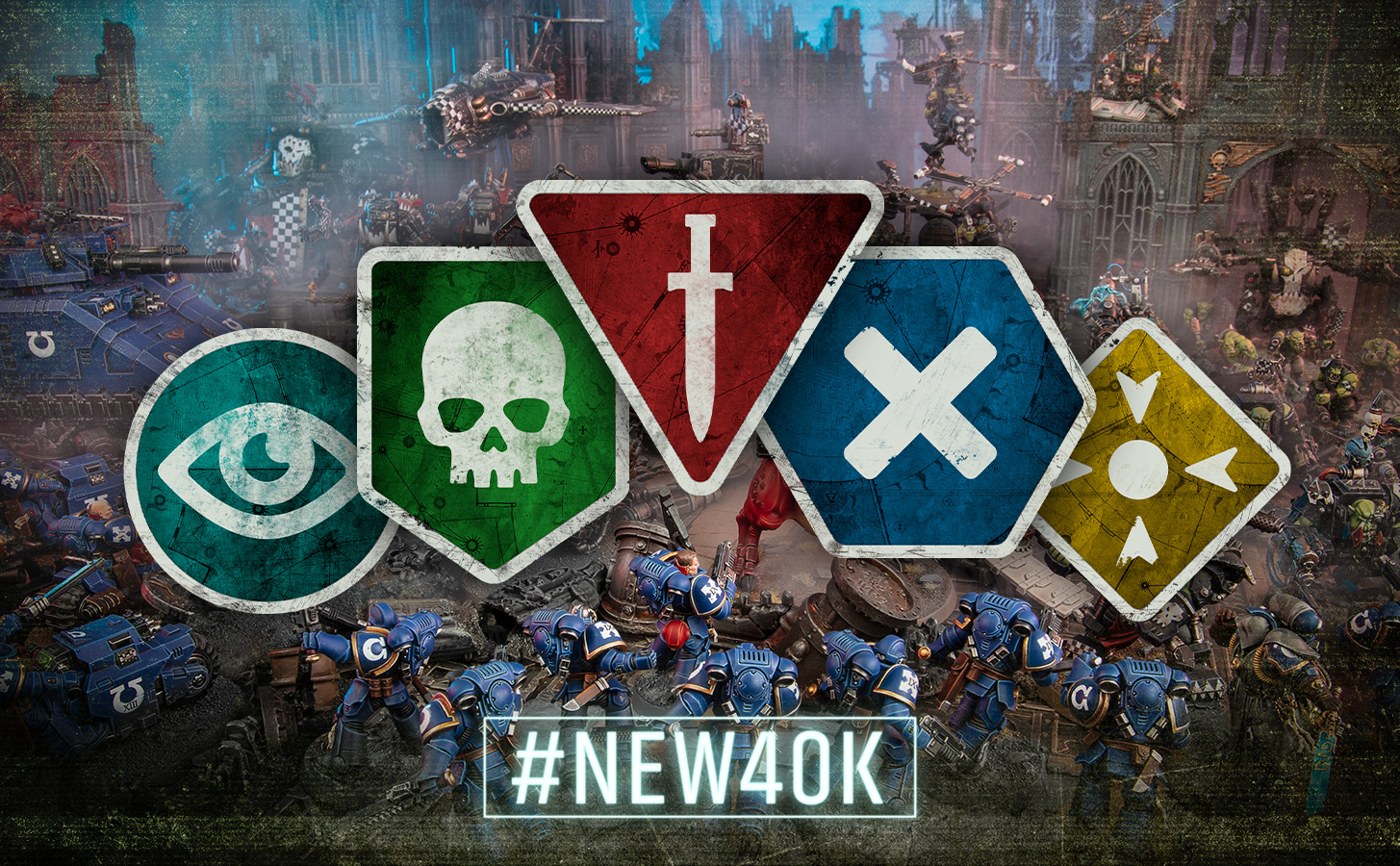
NOTTINGHAM, England – A rules update tied to the new edition of Warhammer 40,000 outlines a structural change in how tabletop battles will be framed: army construction choices are now designed to directly shape the kinds of missions players are asked to complete.
Under the revised framework, players selecting Detachments for their forces will also be selecting from “Force Dispositions,” a set of broad operational roles that are “generally tied to how that force would perform in battle.” Those dispositions then determine how a mission is defined at the start of a game, based on the matchup between the two armies’ selected roles.
For Games Workshop, the U.K.-based maker and publisher behind Warhammer 40,000, the update signals a clear design and product-direction priority: aligning the mission layer of play more tightly with the intended battlefield identity of an army, rather than treating objectives as a separate, disconnected scoring exercise.
Detachments now double as mission framing
The change is built around a specific linkage: “When you build your army, your Detachments each unlock a different Force Disposition, one of which you will choose to represent your army’s Force Disposition for each battle.” The company is positioning this as a core pillar of the new edition, not as an optional add-on for competitive play.
In practical terms, Detachments are no longer just a list-building container with internal rules interactions; they now also determine which mission posture is available to a player. That posture then serves as a high-level assignment for the battle, shaping how commanders are expected to approach objectives from the outset.
The update describes the intent in operational language rather than in pure game-balance terms: “This establishes the broad mission your army would likely be assigned to accomplish.” That phrasing aligns the mechanics more closely with the franchise’s long-standing emphasis on military campaign fiction and strategic doctrine.
A key element is that Force Disposition is chosen for each battle, and the mission details are not set until both players’ choices are known. The rules text frames this as a two-part decision: a broad assignment selected during army construction, and tactical execution decided on-table once terrain, enemy composition, and deployment are visible.
“Like any good general, however, you’ll determine the manner in which you achieve that mission based upon real battlefield conditions on the ground. By comparing your chosen Force Disposition to your opponent’s at the start of the battle, you find out the specific details of the mission you’ll be playing.”
That comparison step is positioned as the mechanism that turns the broad posture into a specific mission, meaning the mission isn’t only a scenario drawn independently of the armies involved; it is, at least in part, a product of the armies’ declared intent.
A stated correction to how missions have functioned
The publisher’s update is explicit about what it is trying to correct in prior mission design. Earlier mission packs are characterized as separating army construction from mission demands: “In earlier mission packs, the way you built your army had no impact on the missions the game asked you to complete.”
The update illustrates the mismatch with two faction-specific examples. It notes that “Khorne Berzerkers might inexplicably race to stand on objectives in the corners of battlefields,” and that “Tau Fire Warriors might find themselves assaulting entrenched melee units to secure a few extra Victory Points.”
Both examples point to the same structural issue: missions that reward actions that may run against the typical battlefield role implied by a unit’s identity and capabilities. The new approach is presented as an attempt to bring objectives and army identity into closer alignment: “The new missions encourage you to complete the sorts of objectives your army would naturally pursue.”
In industry terms, that is a design philosophy shift with downstream commercial implications. Mission packs and core rules are not only gameplay documents; they are also part of the broader content cycle that sustains a global tabletop brand, supports organized play, and maintains engagement between major release beats. When a publisher changes how missions interact with list-building, it changes not just gameplay but also the cadence of how players prepare, practice, and participate in events, from local store leagues to large-scale tournaments that often look to official materials as de facto standards.
The five Force Dispositions
The update defines five Force Dispositions as the complete set available in this system:
- Take and Hold
- Purge the Foe
- Disruption
- Reconnaissance
- Priority Assets
While the rules text positions these as broadly “tied to how that force would perform in battle,” it also establishes them as a formalized vocabulary for intent. Each battle begins not only with army lists but with each player identifying the posture their force will adopt, in language that can be read across factions and playgroups.
For competitive and organized play communities, a standardized set of mission postures can have a stabilizing effect on communication and preparation. Even without additional detail on scoring or mission cards in the excerpted material, a five-option structure creates clear buckets for how an army is expected to pursue points, and it does so at the moment where list-building choices are made. That, in turn, makes it easier for event organizers to articulate formats, for software tools to codify expectations, and for players to understand what a given Detachment is built to do.
Why a mission posture system matters for a global tabletop property
Warhammer 40,000 operates as a major entertainment franchise with a tabletop rules ecosystem at its core: miniatures, books, and regular rules updates that keep the game playable across casual, narrative, and competitive settings. In that kind of ecosystem, mission design is not an accessory; it is a central driver of what players buy, build, and bring to the table, and it informs the informal norms that gaming clubs and convention organizers use when setting their own house rules.
By tying missions to Detachments through Force Dispositions, the new framework makes list-building decisions more consequential beyond internal unit synergies. A Detachment selection now also implies a category of tasks the player will be asked to perform, and it builds a direct line between the narrative identity of a force and the actions the rules will reward. For a franchise that also extends into licensed video games and fiction, a clearer articulation of battlefield roles in the core rules helps maintain a consistent depiction of factions across media.
The publisher also frames this as a coherence upgrade-less of a demand that every army must chase the same generic objectives, and more of a system that encourages armies to pursue goals that fit their implied role. The earlier examples-Khorne Berzerkers and Tau Fire Warriors-are included specifically to demonstrate that the previous approach could create situations where players chased points by acting against type, eroding both immersion and perceived fairness.
From a product strategy perspective, this kind of alignment can serve multiple aims at once: it can make games feel more internally consistent, it can reduce the sense that missions are arbitrary, and it can create clearer differentiation between army builds by associating them with distinct mission approaches. It also lowers the interpretive burden on tournament organizers and clubs who, in practice, function as local regulators of play: they can point back to an official, posture-based mission framework when resolving disputes or harmonizing house formats with the published rules.
At the same time, the broader environment in which tabletop rules live is increasingly shaped by consumer and digital regulations. In markets such as the European Union, for example, the EU rules on consumer rights set expectations around how paid rules updates, digital supplements, and online terms are communicated to customers. While this Warhammer 40,000 change is a mechanical update rather than a legal one, major publishers now operate with those frameworks in mind when they iterate on long-running live products.
What is confirmed in the update-and what is not
The material released so far establishes several concrete points:
- Detachments now provide access to one or more Force Dispositions.
- A player chooses one Force Disposition to represent their army for each battle.
- The specific mission details are determined by comparing each player’s selected Force Disposition at the start of the battle.
- Earlier mission packs did not link army-building choices to mission objectives.
- There are five Force Dispositions: Take and Hold, Purge the Foe, Disruption, Reconnaissance, and Priority Assets.
What is not stated in the provided text is equally important for readers tracking the business and governance side of a major hobby game: there are no financial figures, no release dates, no sales targets, no licensing or distribution notes, and no ratings or audience metrics attached to this specific update. The information presented is rules-structure focused, explaining the intended interaction between army construction, declared posture, and mission selection.
For a system as widely played as Warhammer 40,000, even a purely mechanical change can have downstream effects on organized play formats, community tooling, and how retailers and event organizers communicate recommended standards. But those implications would require additional official detail beyond what is included here, whether through tournament packs, publisher FAQs, or further rules documents hosted on the company’s own platform.
The update’s confirmed status is that the new mission framework is defined around Detachments unlocking Force Dispositions, with five Force Dispositions-Take and Hold, Purge the Foe, Disruption, Reconnaissance, and Priority Assets-serving as the complete set described. As the new edition rolls out, the way these categories are reflected in official mission packs will be a key signal of how Games Workshop intends to steer the balance between narrative flavor, competitive clarity, and the practical governance of play across its global community.
Keep reading
- Interactive Storytelling and Immersive Audio: How Next-Gen Gaming Engines Are Transforming Contemporary Television Production
- Independent Cinema’s New Distribution Paradigms: How Direct-to-Consumer Micro-Premiers Are Shifting Box Office Dynamics
- Jay Clayton named White House AI czar by Trump to lead task force (globallypulse.com)
