
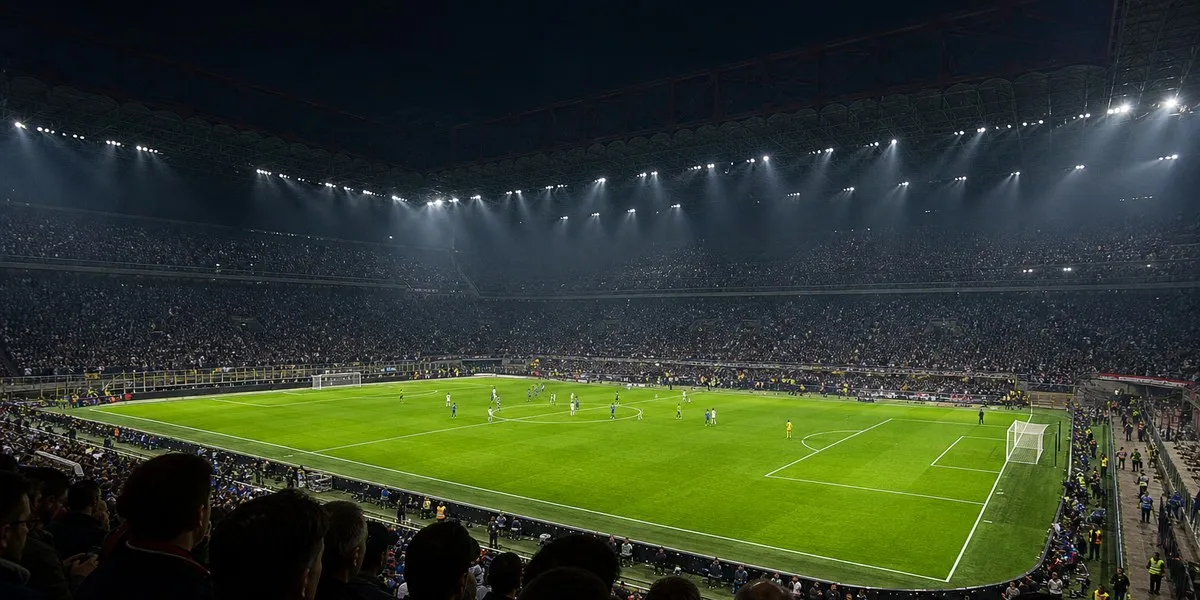
Inter Milan Edge Shakhtar Donetsk Despite Red Card in Tight Champions League Contest
Inter Milan claimed a hard-fought 1-0 home victory over Shakhtar Donetsk in the third round of the Champions League group stage, prevailing despite playing the final 20 minutes with ten men after Alessandro Bastoni was sent off.
The match remained goalless until deep into the second half, when substitute Carlos Augusto struck the decisive goal in the 77th minute. His finish arrived shortly after Inter had been reduced to ten players, turning what had looked like a difficult night into a valuable three-point haul in Europe.
Cagey first half with limited chances
Across the opening 45 minutes, neither side was able to convert territorial phases into a breakthrough. The two teams combined to create chances worth just 0.61 expected goals, with no clear-cut opportunities and only four shots on target in total.
The contest was characterized by careful, risk-averse football, with both Inter and Shakhtar prioritizing defensive structure over expansive attacking play. For a club with Inter’s ambitions in Europe, the lack of incision underlined how finely balanced Champions League group matches can be, where a single moment often decides tight encounters.
Zieliński introduced from the bench
Inter midfielder Piotr Zieliński began the match among the substitutes and entered the game in the 58th minute. His introduction added another passing option between the lines but did not immediately shift the momentum in Inter’s favor.
The most significant development after his arrival was negative for the hosts: Bastoni received a second yellow card around the 70th minute, leaving Inter to navigate the closing stages a player short. Under UEFA regulations, a red card in the Champions League not only forces a team to finish the match with ten players but can also trigger suspension in subsequent fixtures, adding a disciplinary dimension that coaches must manage carefully.
Goal arrives after the sending-off
Reduced to ten men, Inter responded with the game’s decisive attacking move. In the 77th minute, Henrikh Mkhitaryan, who had stepped onto the pitch just a minute earlier, combined effectively on the left and set up Carlos Augusto. The Brazilian finished the move to register the only goal of the night and secure Inter’s win.
That sequence highlighted the importance of bench depth and in-game management at this level. With energy dropping on both sides and numerical disadvantage threatening to tilt the match towards Shakhtar, Inter’s substitutes directly influenced the result and ensured that the red card did not define the evening.
Match facts
- Competition: UEFA Champions League, group stage (third round)
- Venue: Inter Milan home fixture
- Result: Inter Milan 1-0 Shakhtar Donetsk
- Key events:
- Alessandro Bastoni sent off with a second yellow card around the 70th minute
- Carlos Augusto scores the winning goal in the 77th minute
- Henrikh Mkhitaryan provides the assist shortly after coming on
- First-half metrics: combined 0.61 expected goals, no big chances, four shots on target in total
Impact on Inter’s group campaign
Before facing Shakhtar, Inter had three points from their opening two Champions League games. They entered this fixture on the back of a 3-4 home defeat to Brugge, a high-scoring setback that increased the importance of stabilizing their group position.
The narrow win over Shakhtar therefore carries significance beyond the scoreline. In a group stage format where only a limited number of matches determine progression, turning a tense, low-margin contest into three points can prove decisive for qualification. The result strengthens Inter’s platform in the section and reduces the pressure heading into the remaining fixtures.
From a broader competitive perspective, the match also underlines how quickly the balance can shift in elite European football. Inter moved from numerical disadvantage and potential dropped points to a controlled closing spell with a one-goal lead, helped by disciplined defensive work and effective use of substitutions within the framework set by the Champions League’s scheduling and disciplinary rules.
For Shakhtar, the outcome reflects the fine margins of away fixtures at this level. Restricting Inter to low-quality chances for most of the evening and holding them to a goalless first half offered a route to a point or more, but a single lapse against ten men ultimately proved costly in a tightly contested group campaign.
Related reading
