
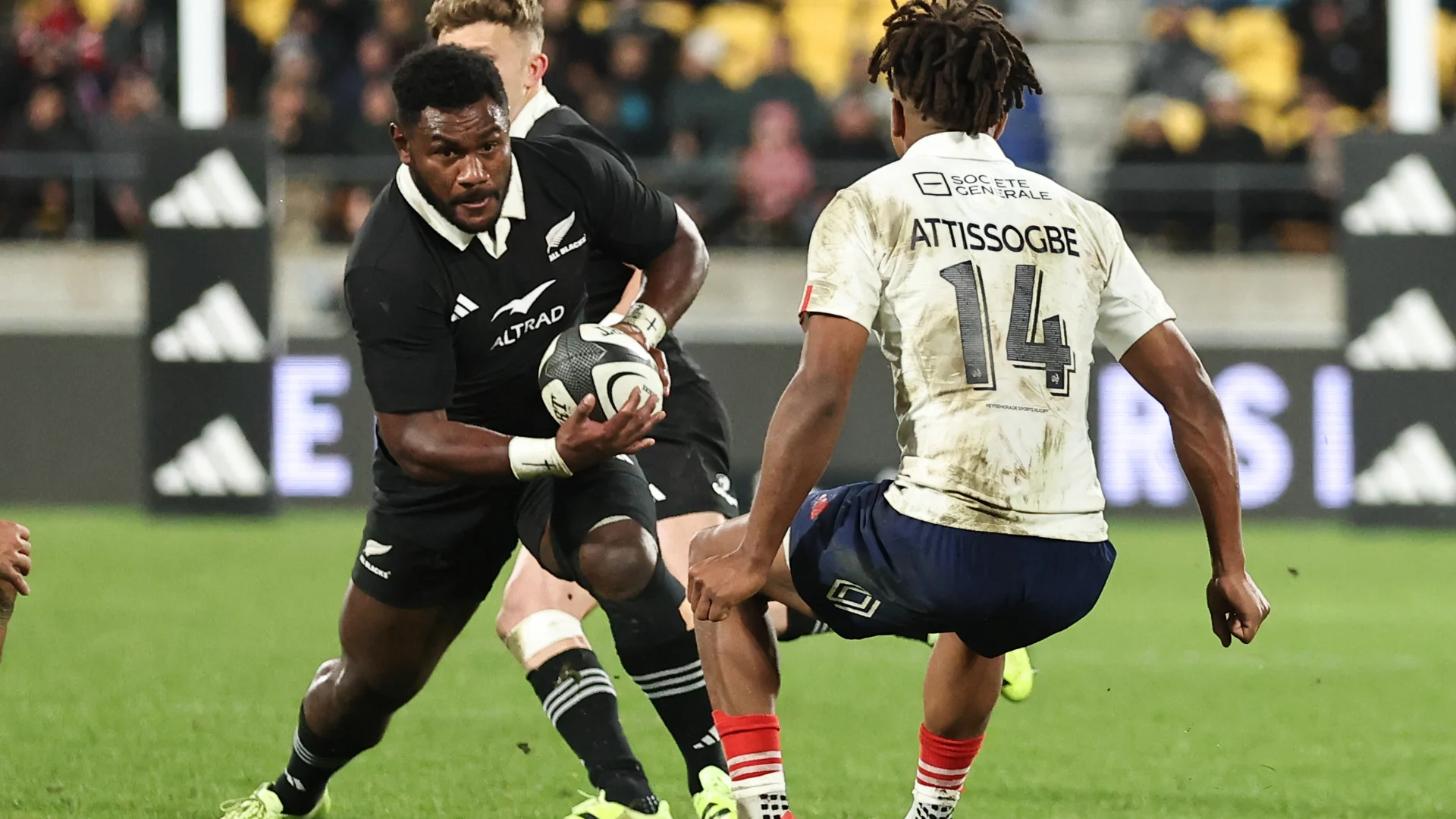
Experience and Emerging Power Blend in Latest All Blacks Line-Up
The latest All Blacks matchday squad brings together some of New Zealand rugby’s most experienced campaigners with a group of forwards and backs still in the early stages of their international careers, underlining how the national team is managing transition while remaining fiercely competitive at the top level of the sport.
The starting XV named is:
- 1. George Bower (30)
- 2. Codie Taylor (113) – Captain
- 3. Fletcher Newell (42)
- 4. Scott Barrett (90)
- 5. Fabian Holland (15)
- 6. Tupou Vaa’i (52)
- 7. Peter Lakai (15)
- 8. Wallace Sititi (24)
- 9. Cam Roigard (25)
- 10. Damian McKenzie (82)
- 11. Josh Moorby (6)
- 12. Timoci Tavatavanawai (2)
- 13. Quinn Tupaea (30)
- 14. Will Jordan (62)
- 15. Beauden Barrett (146)
The numbers in brackets reflect each player’s international appearances, illustrating both the depth of Test experience and the opportunities now being extended to newer squad members.
Leadership Spine Led by Taylor and Barrett
Codie Taylor’s 113 caps and designation as captain reinforce the central role of the hooker in the current leadership structure. In modern Test rugby, the hooker’s responsibilities at the set piece and around communication with match officials are central to a side’s ability to control tempo and territory, particularly under the laws applied by World Rugby.
Behind him, Scott Barrett (90 caps) provides continuity in the second row, while Beauden Barrett’s 146-Test resume at full-back adds another layer of on-field decision-making. Together with Damian McKenzie (82 caps) at fly-half, the backfield and playmaking axis is anchored by players who have been involved in pressure matches across The Rugby Championship and multiple international campaigns.
This spine allows the coaching group to integrate less-seasoned players in the pack and midfield without sacrificing organisational clarity, particularly in areas such as exit strategies, kick reception and late-game management.
A Forward Pack Balancing Development and Control
The front row of George Bower (30), Taylor (113) and Fletcher Newell (42) blends a centurion hooker with props who have now accumulated enough Tests to be trusted in scrummaging contests against the leading packs in the world. For New Zealand, maintaining set-piece parity remains non-negotiable in the Rugby Championship structure, where bonus points and points differential can ultimately shape title races.
In the second row, the pairing of Scott Barrett and Fabian Holland (15) continues the long-standing All Blacks practice of pairing a senior lock with a partner still building experience at the highest level. It offers stability at the line-out while exposing Holland to the tactical demands of elite tier-one international opposition.
The back row of Tupou Vaa’i (52), Peter Lakai (15) and Wallace Sititi (24) reflects a broader strategic shift: using players who can operate across multiple roles in the loose trio. That flexibility is increasingly valuable in an era of strict head contact protocols, high-intensity collisions and evolving breakdown interpretations, where bench usage and rotational planning are heavily influenced by regulatory frameworks and player welfare measures.
Half-Back and Playmaking: Continuity in Key Decision Areas
At scrum-half, Cam Roigard (25) is entrusted with steering the forward pack and dictating tempo around the ruck. His selection alongside McKenzie at fly-half maintains a dual-threat playmaking structure, with McKenzie’s 82 caps positioning him as a central attacking organiser and goal-kicking option.
This continuity at 9 and 10 is particularly significant in Test rugby, where the accumulation of caps for decision-makers often correlates with improved game management in the final quarter. It also shapes how the All Blacks approach field position and risk, especially under the global season calendar that compresses high-intensity fixtures into defined international windows.
Backline Mix: Proven Finishers and Early-Career Opportunities
On the wings, Josh Moorby (6) and Will Jordan (62) give the side contrasting experience profiles. Jordan’s track record as a prolific international try-scorer offers a proven finishing threat, while Moorby continues to build his Test portfolio, benefiting from playing outside a seasoned inside-back pairing.
In midfield, Quinn Tupaea (30) and Timoci Tavatavanawai (2) present an interesting blend of familiarity and relative newness. Tupaea’s 30 caps mean he has operated in a variety of combinations at centre, while Tavatavanawai, still in the very early stages of his international career, is being tested in one of the game’s most tactically demanding channels, where defensive reads and alignment under current law interpretations are critical.
At full-back, Beauden Barrett’s selection with 146 caps underscores the importance of an experienced last line in an era where attacking kicking – including cross-field kicks, contestable bombs and 50:22 attempts – is central to game plans. His collaboration with McKenzie and Jordan forms a backfield unit capable of co-ordinated positional coverage and counter-attack decisions.
Selection Significance in a Global Context
For international audiences, this line-up offers insight into how New Zealand is managing succession planning while remaining firmly committed to competing for major titles. The presence of long-serving players such as Codie Taylor, Scott Barrett, Damian McKenzie, Will Jordan and Beauden Barrett alongside less capped forwards like Fabian Holland, Peter Lakai and Wallace Sititi showcases a deliberate attempt to refresh the squad without sacrificing standards.
Within the global Test calendar overseen by World Rugby, each window carries implications for rankings, seeding at future tournaments and the development of combinations that may feature in upcoming Rugby World Cups and regional championships. The spread of caps across this XV suggests New Zealand is seeking to ensure that, by the time the next major global tournament cycle intensifies, a broader pool of players will have significant international minutes.
Institutional and Strategic Dimensions
New Zealand’s national side operates within a centralised high-performance system in which the national union, Super Rugby franchises and domestic structures align around player workload, rotation and development. This XV exemplifies that model: seasoned internationals are retained in pivotal roles, while promising players with between 2 and 30 caps are exposed to starting responsibilities that test their readiness for long-term inclusion.
For the wider rugby public, the team sheet is more than a list of names. It reflects how a leading rugby nation interprets the current regulatory, commercial and competitive environment: managing player welfare under modern contact regulations, staying tactically aligned with global trends, and ensuring that both experienced figures and newer faces are prepared for the demands of top-tier Test rugby.
Keep reading
