
Week 6 College Football: Georgia-Alabama Headlines a Packed, High-Stakes Schedule
The Week 6 college football schedule offers a rare daily run of fixtures, with at least one game every night from Tuesday through to a full slate on Saturday. At the centre of the programme is a top‑10 Southeastern Conference clash in Tuscaloosa, where No. 2 Georgia visits No. 6 Alabama in a matchup that carries major implications for the national title race and the balance of power in one of the sport’s most competitive leagues.
Both Georgia and Alabama arrive in Week 6 with undefeated records, reflecting strong early‑season form in a competition governed at the national level by the National Collegiate Athletic Association. The betting market underlines how little separates the two: Alabama is a narrow 1.5‑point favourite at home after initially opening as a 2.5‑point underdog. Each team is 4‑1 against the spread this season, while Alabama has won three of the last four meetings between the programmes.
In practical terms, the meeting in Tuscaloosa is likely to shape both the SEC race and the College Football Playoff picture. In a system where selection is made by committee, head‑to‑head results between elite teams and performance against strong schedules are routinely factored into end‑of‑season evaluations. A win for Georgia would strengthen an already robust résumé, while an Alabama victory would restore leverage for the Crimson Tide in both the conference and national discussion.
Other Key Week 6 Lines and Personnel Notes
The Week 6 board extends well beyond Tuscaloosa. Among the most notable lines:
- Oregon (-11.5) vs. UCLA – Oregon is favoured at home but will be without quarterback Dante Moore, who is sidelined with a concussion. The absence of a starting quarterback is a significant factor in American football, where offensive schemes are built around timing and decision‑making from that position. The line reflects both Oregon’s perceived depth and the uncertainty created by Moore’s injury.
- Texas (-8.5) vs. Oklahoma – The Red River Rivalry, one of college football’s traditional neutral‑site showpieces, again plays a role in conference positioning and national perception. An 8.5‑point spread suggests Texas is viewed as the more complete team at this stage of the season, but rivalry dynamics often compress margins on the field.
- LSU (-8.5) at Kentucky – LSU’s status as a road favourite by more than a touchdown signals market confidence in its attacking capability, but an away conference game at Kentucky is typically a test of depth and discipline over four quarters.
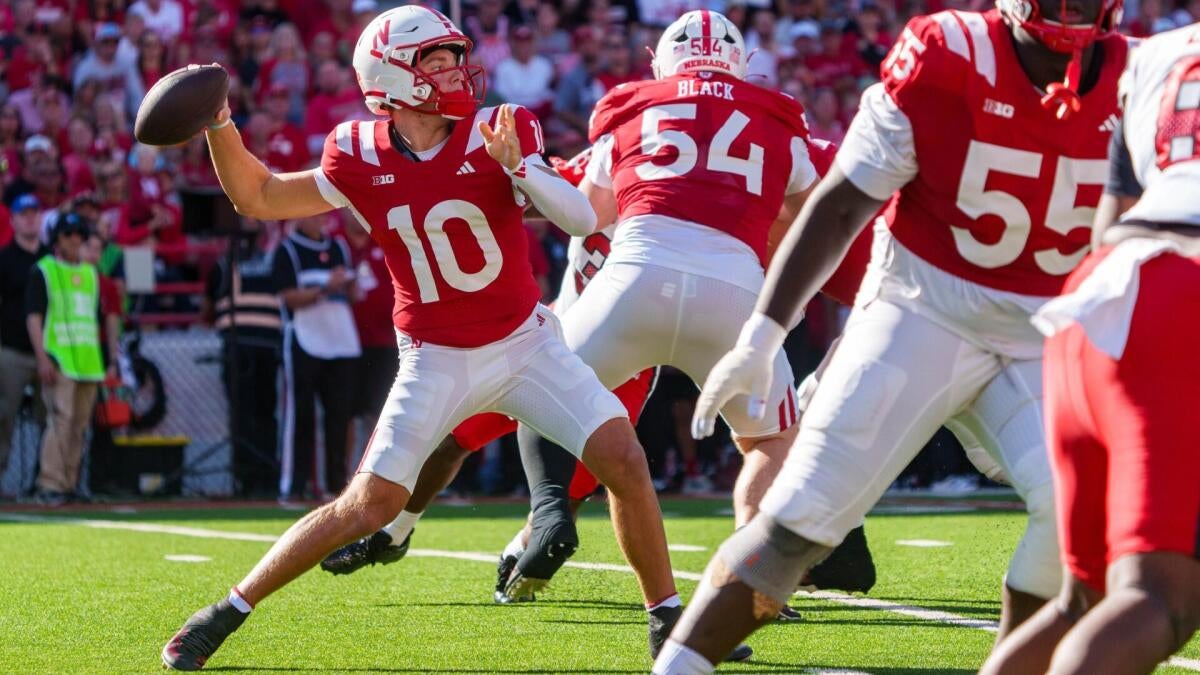
There is also an important Big Ten matchup featuring two unbeaten sides. No. 7 Indiana travels to Nebraska as a 7.5‑point favourite, with the Hoosiers pursuing a 6‑0 start for a third consecutive season. Sustaining that level of early‑season consistency is rare and, in the context of the Big Ten, positions Indiana as a sustained factor in divisional and conference races rather than a one‑year outlier.
Model‑Driven View: How the Numbers See Week 6
A probabilistic model that simulates every Football Bowl Subdivision (FBS) game 10,000 times has framed much of the advance analysis of Week 6. Entering the week, the model is on a 40‑35 run on top‑rated college football selections, a modest but positive record for a high‑volume approach across major betting platforms. Over time, such models seek to exploit small inefficiencies in point spreads and totals by aggregating many independent outcomes.
For Week 6, the model has produced picks on every FBS matchup. Among its highlighted recommendations are two underdogs projected to be more competitive than their lines suggest: Arkansas at home to No. 15 Tennessee, and Nebraska hosting No. 7 Indiana.
Arkansas-Tennessee: Razorbacks Backed to Stay Inside Double Digits
One recommended play is Arkansas as a 13.5‑point home underdog (total 50.5) against No. 15 Tennessee in a 4:15 p.m. ET kickoff on Saturday. Although the Razorbacks have struggled in stretches this season, they showed tangible improvement in Week 4 by beating Tulsa 34‑6 after being favoured by just 7 points. That kind of outperformance relative to the spread suggests adjustments in scheme or execution are beginning to translate on the field.
Tennessee’s defensive unit has been difficult to break down, but its offence has lacked consistent explosiveness, particularly in the passing game. That combination – strong defence, less dynamic offence – often results in lower‑variance scorelines and closer margins, even when the favourite controls play for long periods.
Recent history between the programmes also leans toward Arkansas remaining competitive. The Razorbacks have won four of the last five meetings with Tennessee, and their lone defeat in that span came by just three points. While historical head‑to‑head data cannot predict a single game outcome, it does suggest that stylistic match‑ups between these teams have tended to produce narrow margins.
The model projects a one‑score win for Tennessee, with Arkansas covering the spread well over 60% of the time in simulation. From a broader standpoint, a strong performance from Arkansas would be important in re‑establishing credibility within its conference schedule and easing pressure around programme trajectory, even if it does not result in an outright upset.
Nebraska-Indiana: Cornhuskers Tipped to Cover Against Top‑10 Opponent
Another key projection centres on Nebraska as a 7.5‑point home underdog (total 51.5) against No. 7 Indiana in a noon ET start on Saturday. Indiana continues to win games but has not matched the level of on‑field dominance it displayed during last season’s national championship run. The Hoosiers are 1‑4 against the spread this year, including a narrow victory over Northwestern in Week 4.
Nebraska’s profile is almost the reverse. The Cornhuskers are 4‑1 against the number this season and enter Week 6 on the back of consecutive Big Ten wins and covers. That pattern hints at a team whose underlying performances have been slightly undervalued in the market, particularly within conference play.
In simulation, the model forecasts a contest decided by around four points and has Nebraska covering the spread nearly 60% of the time. For Indiana, a competitive but narrow win would keep its unbeaten record intact but would also prolong questions about whether its play is matching top‑10 billing. For Nebraska, another strong showing against a ranked opponent would bolster both internal confidence and external perception as the programme continues to navigate its pathway within a league that emphasises physicality and line‑of‑scrimmage control.
How the Model Shapes Week 6 Strategy
The same model has issued projections on every Week 6 college game, including several matchups where it anticipates major upsets against the spread. While individual outcomes remain uncertain, the cumulative effect of such projections can influence how bettors allocate stakes across favourites and underdogs and how observers interpret early‑season résumés.
Within the rules frameworks used in major collegiate conferences and the national championship system, margins of victory are not officially rewarded in terms of standings – a win counts the same regardless of scoreline. However, in an era when selection committees and ranking discussions factor in performance quality, repeated narrow escapes or emphatic victories can subtly shape how teams are evaluated beyond their raw win‑loss records.
Notable Week 6 Fixtures at a Glance
Across Friday and Saturday, several fixtures stand out for their competitive or narrative significance. All odds are for Week 6 and are subject to change.
Friday, Oct. 9
- Florida State at Louisville (-3.5, total 59.5)
- Iowa at Washington (-3, total 41.5)
- Washington State at Utah State (-5.5, total 43.5)
- Wyoming at San Jose State (-6, total 43.5)
- Iowa State at BYU (-10.5, total 46.5)
Saturday, Oct. 10
- Indiana at Nebraska (+7.5, total 51.5)
- Texas A&M at Missouri (-3.5, total 48.5)
- South Carolina at Florida (-12.5, total 61.5)
- Ole Miss at Vanderbilt (+9.5, total 58.5)
- Stanford at Notre Dame (-37.5, total 53.5)
- Texas at Oklahoma (+8.5, total 39.5)
- UCLA at Oregon (-11.5, total 59.5)
- Maryland at Ohio State (-34.5, total 56.5)
- Tennessee at Arkansas (+13.5, total 50.5)
- LSU at Kentucky (+8.5, total 54.5)
- Georgia at Alabama (-1.5, total 55.5)
- USC at Penn State (-1.5, total 54.5)
- Minnesota at Purdue (+2.5, total 50.5)
Together, these fixtures will help clarify hierarchies within the major conferences and offer additional data points for both human evaluators and predictive models. With multiple ranked teams involved and several lines sitting within single‑digit ranges, Week 6 shapes as a pivotal checkpoint in a season where a limited number of regular‑season games magnify the impact of each result.
Related reading
