
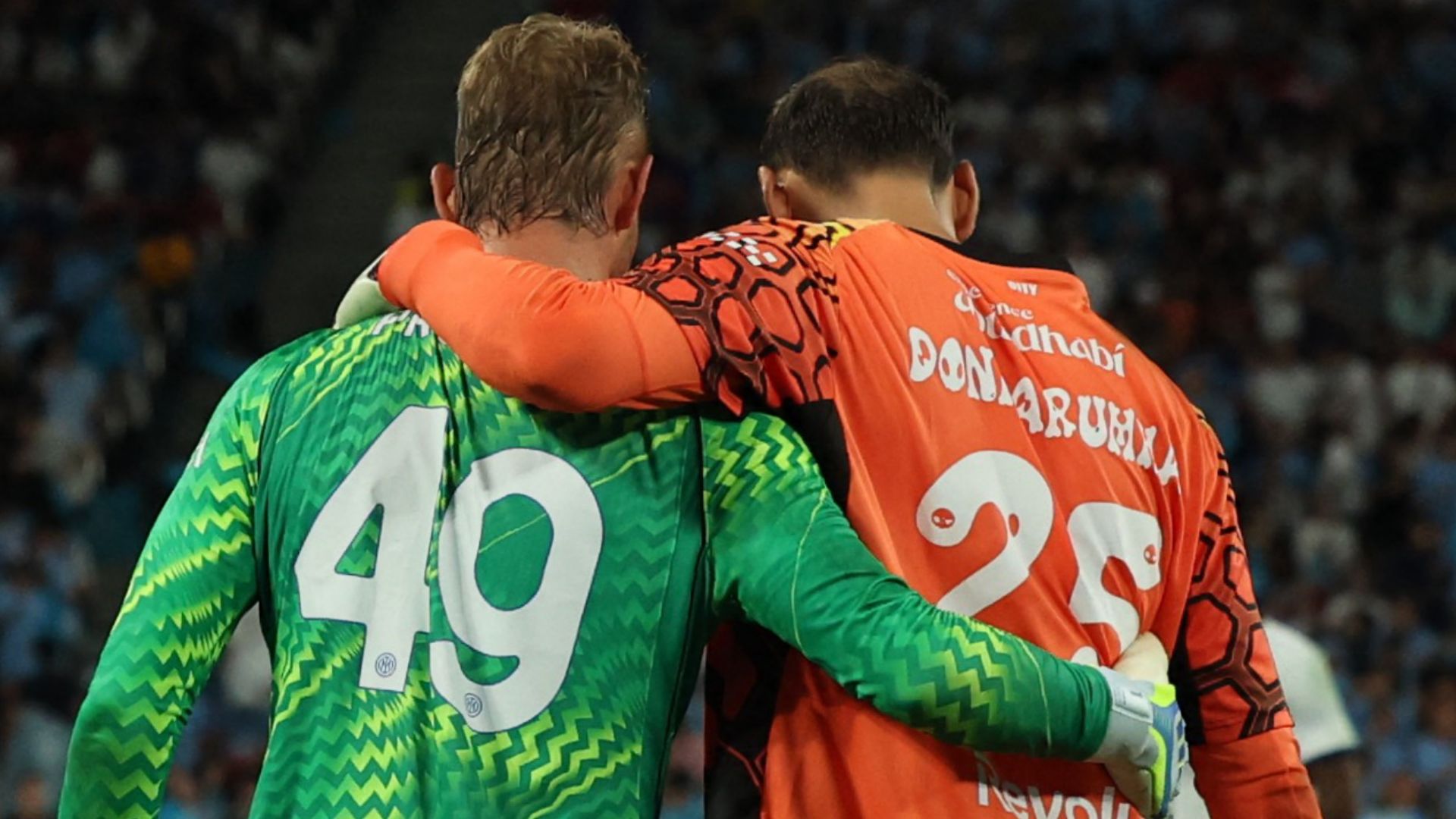
‘You Can See It Happening’: Why a £100m Goalkeeper Is No Longer Unthinkable
While being reluctant to speculate on when a £100m goalkeeper could hit the market, Hislop concedes that big-spending sides in English football are best placed to start a new transfer trend.
Asked if City or Chelsea will be the ones to break through that recruitment ceiling, the former Trinidad & Tobago international added: “Of course, they’re the only ones who are spending that big money.
“You’ve seen clubs spend big money for goalkeepers. I can still remember when Buffon joined Juventus, I think it was close to £35m at the time. That’s a chunk of change in today’s game. At the time, it was simply unheard of and everybody balked at it. By the time Buffon retired from Juventus, nobody questioned the price tag.
“Similarly, if somebody young enough, talented enough comes along, I think somebody may very well spend that money. You had the likes of David De Gea and Thibaut Courtois breaking into big football clubs while still teenagers. If that goalkeeper pops up today, a goalkeeper of those talents as teenagers, a big club may be willing to top the £100m mark for it. That goalkeeper will then stay there for 10 or 12 years and it will look like money well spent.
“You can see it happening, you can put together the scenario, but again, goalkeepers of that quality at that age don’t come along very often.”
The Changing Economics of the Goalkeeper Position
For decades, elite outfield players have set transfer records while goalkeepers remained comparatively undervalued. Hislop’s assessment reflects how that calculus has shifted, particularly in England’s top flight under the financial and regulatory framework overseen by bodies such as FIFA, where transfer rules and registration systems structure how clubs do business across borders.
At the highest level, the modern goalkeeper is no longer just a shot-stopper. At leading clubs, keepers are asked to:
- Initiate build-up play under pressure, often acting as an extra outfield player
- Defend high up the pitch behind aggressive defensive lines
- Manage tempo and positioning over 90 minutes in domestic and European competition
In title races, qualification battles and deep runs in continental tournaments, a goalkeeper who can perform all of these tasks reliably over a decade can shape the competitive cycle of a club as decisively as a centre-forward. That context underpins Hislop’s view that a truly exceptional teenager in that role might justify an unprecedented nine-figure fee if a leading club believes it secures long-term stability in a key position.
Buffon as the Benchmark
Hislop’s recollection of Gianluigi Buffon’s move to Juventus, at around £35m, underlines how transformative deals can reset perceptions. At the time, the fee was seen as excessive for a goalkeeper. Yet, as Hislop notes, by the time Buffon’s long spell in Turin came to an end, the early scepticism around that outlay had largely disappeared.
The Buffon example is central to the argument that transfer fees must be judged over the lifespan of a player’s contribution. When a goalkeeper delivers sustained performance in domestic leagues and major cup competitions over many seasons, the original headline figure can come to look like a calculated investment rather than a gamble.
City, Chelsea and the Power to Shift the Market
Hislop identifies Manchester City and Chelsea as the clubs most likely to smash a £100m barrier for a goalkeeper, pointing to their track record of heavy spending. Both operate in a part of the market where transfer decisions are closely tied to long-term planning around league titles, European qualification and commercial growth.
For clubs with those ambitions, securing an outstanding young goalkeeper could be viewed less as a risk and more as a foundational decision. Over 10 or 12 years, as Hislop suggests, such a signing could:
- Provide tactical certainty for managers building high defensive lines
- Reduce the need for repeated investment in the same position
- Support consistency in style of play across managerial changes
In an environment where marginal gains at the top end of the table can decide titles or Champions League places, that stability carries significant sporting and financial weight.
Teenage Talent and the Rarity Factor
Hislop references David De Gea and Thibaut Courtois as examples of goalkeepers who broke into major clubs while still teenagers. Their careers illustrate how early exposure to high-level football can accelerate development and extend the window in which a club benefits from a player’s peak years.
However, Hislop is clear that the type of teenager capable of commanding such faith is rare. Elite goalkeepers often mature later than outfield players, and clubs are generally cautious about entrusting a title-challenging side to someone still in their teens. That scarcity is what underpins the concept of a £100m fee: it would likely be reserved for a player combining:
- Exceptional technical ability
- Mental resilience under pressure
- Physical attributes suited to the demands of the modern game
Without that unique combination, the market is unlikely to move in the way Hislop outlines.
How a £100m Goalkeeper Would Reshape the Market
Were such a transfer to happen, it would not only recalibrate expectations for goalkeepers but could also influence broader squad-building strategies. A successful long-term signing at that price point might encourage:
- Greater investment in specialist goalkeeper coaching and scouting at youth level
- Earlier integration of standout teenage keepers into senior squads
- Clubs to lock down elite goalkeepers on long contracts to protect asset value
In parallel, it would intensify scrutiny on financial management, sporting regulation and competitive balance, with governing bodies monitoring how record deals align with licensing and sustainability frameworks.
For now, as Hislop stresses, the combination of age, talent and opportunity required for a £100m goalkeeper remains exceptional. But in a landscape where strategic investment at the top end of the game continues to evolve, the scenario he sketches no longer feels out of reach – particularly for clubs with both the resources and the incentive to redefine what a goalkeeper is worth.
Keep reading
