
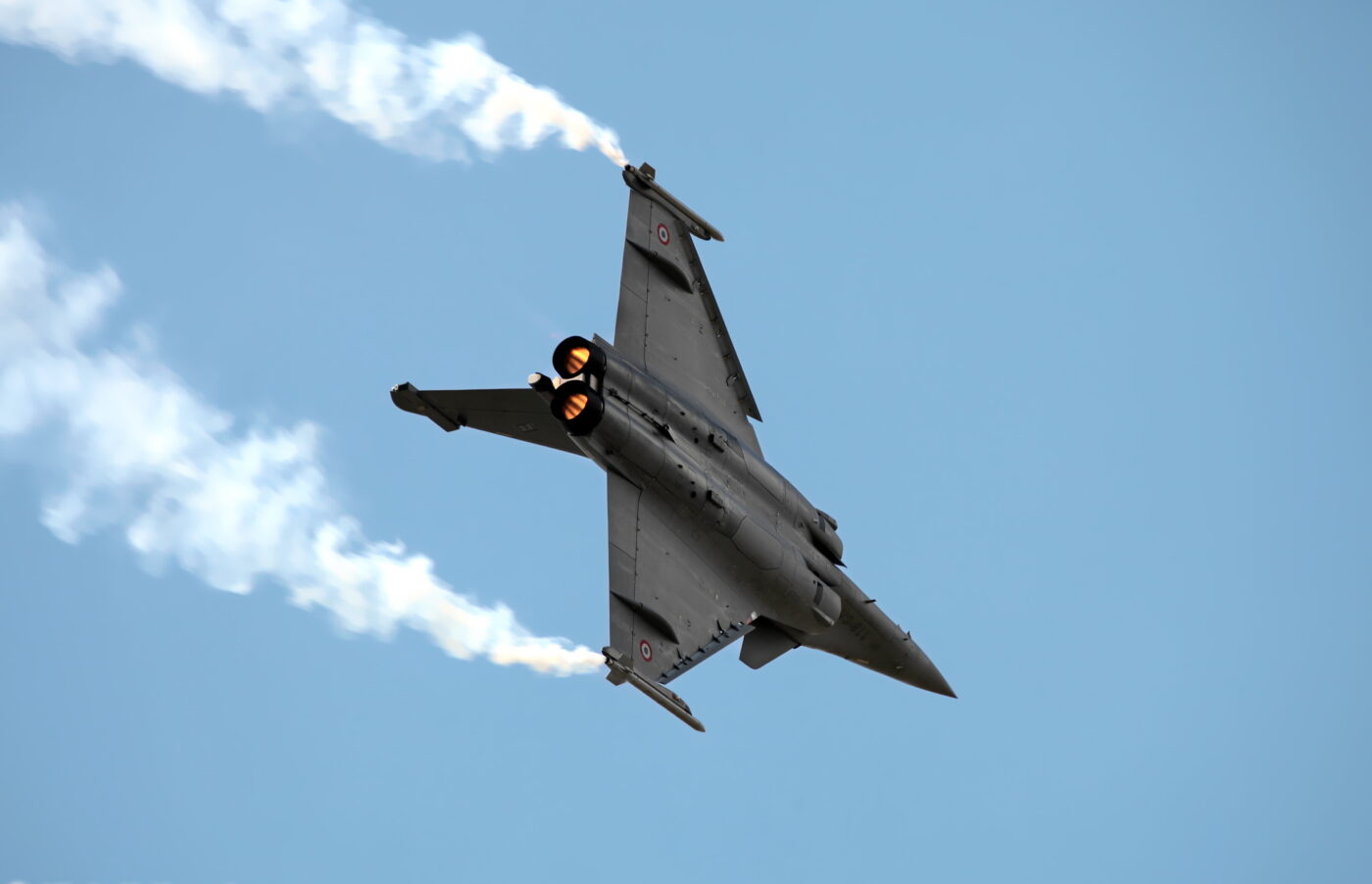
HANOI – Vietnam is reportedly assessing France’s Rafale multirole fighter for its air force, according to a French report published on February 4, 2026, which also said Vietnamese officials had an opportunity to quietly evaluate the jet in 2018 during an Indo‑Pacific stopover.
The potential move comes as regional militaries add advanced combat aircraft amid tensions in the South China Sea, where China contests maritime claims with several Southeast Asian states, including Vietnam. Any Vietnamese decision to acquire a Western combat aircraft would mark a further shift away from long‑standing dependence on Russian systems and deepen security ties with Western partners at a time when Hanoi is carefully balancing relations with Beijing, Moscow and Washington.
“Such a contract would be historic for both countries, more than seventy years after the end of the Indochina War,” the report stated.
What’s reported and why it matters now
– The February 4 report said Vietnam could be among the Rafale’s next customers and referenced a 2018 stopover in which two Rafales transited the country, giving Vietnamese officials a discreet opportunity to examine the aircraft on the ground.
– If Hanoi proceeds, it would be the second Southeast Asian air arm to opt for the French fighter, after Indonesia, reinforcing France’s push to position Rafale as a leading non‑U.S. option in the Indo‑Pacific market.
Any future contract would sit within Vietnam’s broader defense‑policy framework, which publicly emphasizes “three‑nos” – no military alliances, no siding with one country against another, and no foreign bases – while still allowing arms purchases that enhance deterrence and protect its maritime claims under the 1982 UN Convention on the Law of the Sea.
Regional acquisitions and deliveries
Indonesia has ordered 42 Rafales and received the first three aircraft in January. “Three Rafale fighter jets have arrived in Indonesia and are now at Roesmin Nurjadin Air Base,” Brigadier General Rico Sirait, head of Indonesia’s Defence Information Bureau, said on January 27, underscoring that deliveries are now underway rather than hypothetical.
Current Rafale customers cited in the report:
– Egypt
– India
– Qatar
– Greece
– Croatia
– United Arab Emirates
– Serbia
– Indonesia
Additionally, Ukraine signed a letter of intent with France in November 2025 for up to 100 Rafales over the coming decade, signaling that Paris intends to sustain production and export support for the aircraft well into the 2030s. That long pipeline is an important factor for any new buyer weighing training, sustainment and interoperability over the life of the fleet.
Competing U.S. offer and other regional decisions
The report notes two years of speculation that Vietnam had been weighing U.S.-made F‑16s as an alternative path to modernizing its fighter force, in parallel with improving ties to Washington:
– October 2023: Reports suggested Vietnam was considering F‑16s amid closer defense ties with the United States, following high‑level visits and the upgrading of bilateral relations.
– April 2025: Some reports stated Vietnam had reached an agreement with the U.S. government to acquire 24 F‑16s; Vietnam did not confirm the purchase, and no contract has been publicly announced.
– The Vietnam People’s Air Force received its first batch of Beechcraft T‑6C Texan II trainer aircraft from the United States, the first U.S. fixed‑wing induction since the Vietnam War, indicating that Hanoi is already opening its inventory to U.S. platforms at the training level.
Elsewhere in Southeast Asia, the report situates Hanoi’s deliberations within a broader competition between Western fighter offerings:
– The Philippines obtained authorization to buy F‑16 Block 70/72 fighters but paused a potential 20‑jet acquisition in September 2025 due to budget constraints and competing defense priorities.
– Thailand selected the Saab Gripen over the F‑16, underscoring that price, industrial offsets and political risk are driving diverse choices in the region rather than a single default U.S. solution.

Alleged influence operations around Rafale sales
According to French military and intelligence officials cited in the report, China used its embassies to cast doubt on the Rafale’s effectiveness after a four‑day India‑Pakistan clash in May 2025, promoting narratives through video‑game style depictions, AI‑generated content, edited images of alleged Rafale debris, and viral social media posts. These assertions are presented as the officials’ claims and have not been independently verified.
French officials argue that such alleged information campaigns are intended to undercut Paris’s export prospects in key markets where China is also seeking influence or arms sales. For governments in the region, the episode highlights the extent to which major arms deals now intersect with disinformation, social media manipulation and diplomatic messaging as well as traditional price‑and‑performance calculations.
Vietnam’s current fleet and security context
The report describes Vietnam’s air force inventory as rooted in Soviet and then Russian systems, with Su‑30s, MiG‑21s, Su‑27s, older Su‑22s, and Yak‑130 jet trainers acquired in 2019. Many of these airframes are ageing and rely on Russian supply chains that have come under strain since Moscow’s full‑scale invasion of Ukraine, adding a practical incentive for Hanoi to diversify suppliers.
Interest in upgrading capability is linked in the report to China’s patrols near Vietnamese‑controlled reefs, periodic harassment of fishing vessels, and pressure on energy exploration in the Spratly and Paracel islands. Any move toward Rafale or F‑16s would be intended to strengthen Vietnam’s ability to police its exclusive economic zone, respond more quickly to incidents at sea and participate more fully in combined exercises with partners.
The report also references an internal Vietnamese military document discussed publicly by Project88, in which Vietnam prepares for the possibility of a “second US Invasion plan.” Ben Swanton, co‑director of Project88 and the report’s author, told The Associated Press: “There’s a consensus here across the government and across different ministries. This isn’t just some kind of fringe element or paranoid element within the party or within the government.” According to Project88’s assessment, there is “little risk of a war,” while urging vigilance against any pretext for intervention. Vietnamese authorities have not publicly commented on the document, but its reported existence illustrates how threat perceptions inside the system can differ from the government’s more measured public messaging.
Decision process, governance and timelines
Major defense purchases in Vietnam typically require Politburo sign‑off and coordination between the Ministry of National Defence, the Ministry of Finance and other agencies, a process that can stretch over years and is conducted largely behind closed doors. Any future Rafale or F‑16 agreement would also need to comply with export‑control regimes and financing conditions set by the supplying governments; in France’s case, such deals are overseen domestically under the framework of the French defence procurement and export‑control system administered by the Ministry for the Armed Forces.
Key dates and documents cited
– 2018: Report says two Rafales transited Vietnam, allowing a discreet look at the aircraft.
– October 2023: Reports suggest Vietnam considered F‑16s from the United States.
– 2019: Vietnam acquired Yak‑130 jet trainers.
– April 2025: Some reports state Vietnam reached an agreement to acquire 24 F‑16s; no official confirmation followed.
– May 2025: India‑Pakistan clash; subsequent claims by French officials of Chinese efforts to undermine Rafale sales.
– September 2025: Philippines pauses potential F‑16 purchase over cost.
– November 2025: Ukraine signs letter of intent for up to 100 Rafales.
– January 27, 2026: Indonesia confirms arrival of three Rafales.
– February 4, 2026: French report says Vietnam could be among the Rafale’s next customers.
As of February 6, 2026, no Vietnamese or French authorities have publicly announced a Rafale contract for Vietnam, and Hanoi has not confirmed a fighter selection. Until a government‑to‑government agreement is disclosed or a formal notification is filed with export‑control bodies such as the U.S. Congress for American systems, Vietnam’s next‑generation fighter choice remains unconfirmed and subject to change.
Keep reading
