
Le Court Claims Breakthrough Tour of Britain Women Title as Wiebes Rewrites Sprinting Record
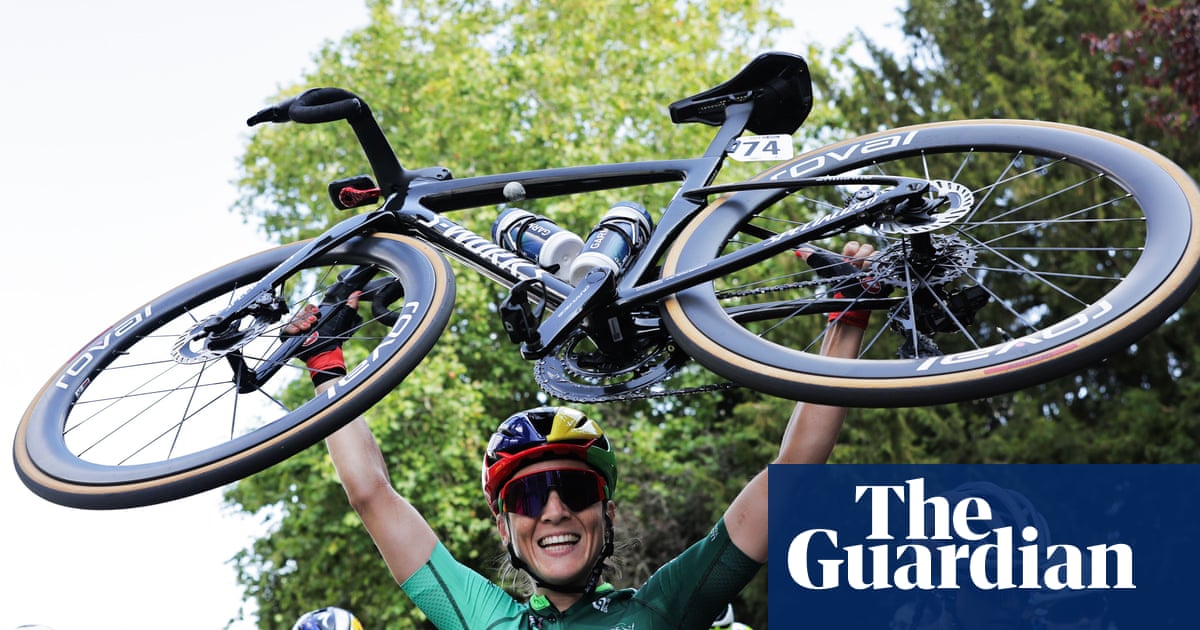
Kim Le Court sealed overall victory in the Tour of Britain Women in Royal Leamington Spa, confirming the most significant win of her career and underlining the growing competitive depth of the women’s stage-race calendar. Lorena Wiebes completed the week as the dominant sprinter, taking a fourth stage win in this year’s race and the 11th Tour of Britain stage victory of her career, the highest total by any rider in either the men’s or women’s editions.
The race, held under the umbrella of the Union Cycliste Internationale, has become a key fixture for teams fine-tuning their rosters and strategies around major stage races. For Le Court and Wiebes, it provided both a proving ground and a platform: one for general classification authority, the other for continued sprint supremacy.
Mauritian milestone built on Great Orme attack
Le Court, riding for AG Insurance Soudal, based her overall success on a decisive solo victory on Friday’s uphill finish to the Great Orme, overlooking Llandudno. That long-range attack on a selective summit, coming shortly after she had won a stage and finished ninth overall at the Tour de France Femmes earlier this month, gave her a time cushion that proved unshakeable through to Royal Leamington Spa.
For the 30-year-old, the Tour of Britain Women overall title represents a new level of recognition. Already established as a major one‑day and stage‑race performer, she called it “my first general classification win and it is a first GC win for me in a team”. The result consolidates her evolution from stage hunter to fully fledged overall leader, a transition that carries weight within WorldTour team hierarchies where GC riders typically shape recruitment, support roles and race calendars.
“This win is really special. This is my first general classification win and it is a first GC win for me in a team. People had questioned if I am a GC rider or not, and it is good to know that the mental state is still quite high and I’m glad I could achieve that for me and the team,” the AG Insurance Soudal rider said.
From “dead last” to overall champion
Le Court’s relationship with the British race has been anything but straightforward. She described a “chequered” history at the event, and her record backs that up. In 2015 she finished dead last on general classification, an early chapter that shaped her perception of stage racing in Britain.
A decade on, the same race has become a benchmark of resilience. She returned in 2025, winning the opening stage but crashing out on day two, a setback that left unfinished business at the event. “I had a bad experience last year and I just wanted to redeem myself after that,” she said of that 2025 edition, framing the 2026 title as both sporting and psychological redemption.
Her reflections also highlighted the delicate balance top riders must strike in a congested women’s calendar that now features multiple marquee stage races. “In 2015 I came here and I was dead last, so I didn’t have a good experience of the Tour of Britain in the past. I think the challenge is not to carry the form [from the Tour de France Femmes] but to carry the recovery process and make sure you are recovering mentally and physically, so you don’t burn out.”
A survivor at the top of the sport
Le Court’s route to the top tier of professional cycling has been defined by more than just race results. As a child she was placed in an induced coma as a result of malaria, an early health crisis that underscores the scale of her progression from Mauritian prospect to major European race winner.
She has since worn the yellow jersey at the Tour de France Femmes, won stages in both the Tour and the Giro d’Italia, and claimed the prestigious one‑day Classic Liège‑Bastogne‑Liège. Adding the overall title at the Tour of Britain Women strengthens a palmarès that already spans three of the most valued pillars of the elite women’s road calendar: Grand Tour stages, a Monument‑style Classic and a national‑level stage race overall victory.
For teams and national federations, such a profile matters beyond individual prestige. Riders capable of winning across these formats often become central reference points when federations allocate leadership roles for major championships, and when trade teams design season‑long programmes that must align with UCI calendar demands and Olympic qualification considerations.
Wiebes’s four wins underline sprinting dominance
If Le Court emerged as the most complete rider over the week, Wiebes again demonstrated that she remains the standard‑setter in bunch sprints. The Dutch rider took four stage wins at this Tour of Britain Women and finished second overall, only days after winning two stages at the Tour de France Femmes.
In doing so she surpassed Mark Cavendish’s career mark of 10 Tour of Britain stage wins and now stands alone with 11, the most victories recorded by any rider in either the men’s or women’s version of the event. That statistic further elevates her status within a discipline where consistency across different course profiles and lead‑out structures is highly prized.
“It feels pretty good because last year we expected way more from the Tour of Britain, but this year it was really successful,” Wiebes said. “I’m happy to finish this week off with four victories, and the team worked hard for it.”
While the overall title was never her stated ambition, Wiebes acknowledged that her position on the general classification evolved over the week. “When I crossed the finish line on stage three and was still third on GC, I knew we could fight for second,” she said. That shift illustrates how sprint specialists can increasingly shape stage‑race GC narratives on flatter or rolling courses, especially when bonus seconds and reduced time gaps keep them in contention.
Lorena Wiebes powers to a fourth stage win and second place overall in the Tour of Britain. Photograph: Pete Goding/GodingImages/Shutterstock
Final stage: breakaway ambition, sprint inevitability
The closing stage into Royal Leamington Spa provided a clear illustration of how team tactics, terrain and race regulation combine late in a week‑long event. With the general classification largely defined by Le Court’s Great Orme ride, the final day presented a familiar tactical question: whether a committed breakaway could resist the sprint teams on a rolling course.
Three riders – Sara Martín of Movistar, British rider Alice Towers and Eva van Agt, who rides alongside 2026 Tour de France Femmes winner Demi Vollering at FDJ United‑Suez – moved clear with around 110km remaining. They worked cohesively to build an advantage approaching two and a half minutes, establishing a genuine threat to the stage result if not the overall standings.
The course’s key climbs, Sun Rising Hill and Burton Dassett, gradually eroded the trio’s strength as the peloton increased the pace behind. In a frenzied final 20km the lead shrank steadily; even with under 5km to go the breakaway still held around half a minute, a margin that forced sprint teams to commit fully on the approach to the Warwickshire spa town.
Their resistance ended inside the final kilometre, as the bunch finally made the catch and Wiebes once more imposed herself in the dash to the line. For the sprinters’ teams, the successful chase reinforced the value of coordinated control over breakaways in stage‑race finales, especially where time bonuses and stage wins intersect with sponsor visibility and UCI points.
Career and calendar implications
For Le Court, this first general classification success at a prominent stage race is likely to strengthen her status as a protected leader in future multi‑day events. With a résumé that already includes the yellow jersey at the Tour de France Femmes, stage victories in the Tour and Giro d’Italia, and a win at Liège‑Bastogne‑Liège, adding the Tour of Britain Women overall title rounds out a profile that teams can build entire race strategies around.
Wiebes’s record‑breaking 11 Tour of Britain stage wins reinforce her position as the most reliable finisher in the current women’s peloton. Four stage victories and second overall within days of multiple wins at the Tour de France Femmes underline a capacity to maintain top‑end speed deep into a demanding block of racing, a quality that shapes how both sprint trains and rival teams plan their line‑ups.
Taken together, the week in Britain captured two converging trends in elite women’s road cycling: the rise of complete GC riders emerging from diverse backgrounds and the continuing professionalisation of sprint structures, within a calendar that is now integrated into global high‑performance planning via the UCI’s WorldTour framework and national federation objectives.
Related reading
