
A giant DNA virus turns up in a Tokyo-area pond
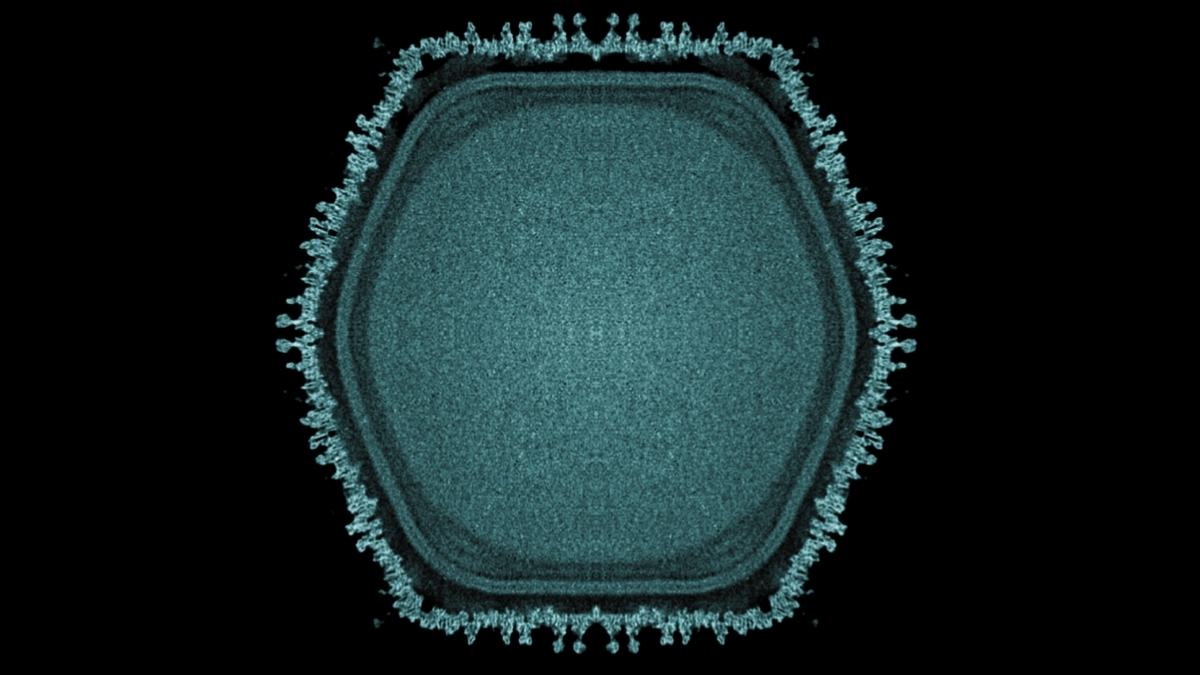
A team in Japan has identified a previously unknown giant DNA virus infecting a freshwater amoeba just northeast of Tokyo. The virus, named ushikuvirus after the Ushiku-numa pond in Ibaraki Prefecture, targets Vermamoeba vermiformis and expands the fast-evolving catalog of nucleocytoplasmic large DNA viruses that co-opt single-celled hosts yet echo traits of complex eukaryotic cells.
Giant viruses were missed for decades because of their size and unusual genetics. As sampling technologies and sequencing improved, these outsized pathogens were found to be widespread across water, soil, and built environments. The latest find adds a distinct replication strategy and morphology to that picture, offering new evidence relevant to long-running debates over how eukaryotic cells came to be.
“Giant viruses can be said to be a treasure trove whose world has yet to be fully understood,” Masaharu Takemura says. “One of the future possibilities of this research is to provide humanity with a new view that connects the world of living organisms with the world of viruses.”
Inside the cell: a different playbook from related giants
Ushikuvirus departs from close relatives in how it commandeers its host. Rather than preserving the amoeba’s nucleus while it copies itself, the virus forms a membrane-bounded “factory” in the cytoplasm and disrupts the host’s nuclear envelope. It also induces abnormal cell enlargement and presents capsid spikes with distinctive caps and fibrous features, even as its overall spiky geometry recalls medusaviruses.
These behaviors matter because they map to questions about the evolution of eukaryotic compartmentalization. Virus-induced factories can resemble proto-organelles in how they spatially organize genome replication, transcription, and protein assembly. Seeing where different giants converge or diverge on this architecture helps reconstruct possible evolutionary routes from prokaryotic simplicity to eukaryotic complexity.
How ushikuvirus compares with two well-studied giants
| Attribute | Medusaviruses | Clandestinovirus | Ushikuvirus |
|---|---|---|---|
| Typical host amoeba | Acanthamoeba spp. | Vermamoeba spp. | Vermamoeba vermiformis |
| Replication site | Preserves and uses host nucleus | Preserves and uses host nucleus | Builds cytoplasmic viral factory; disrupts nuclear membrane |
| Capsid morphology | Icosahedral with prominent spikes | Icosahedral | Spiky with unique caps and fibrous features |
A fresh data point for the origin-of-nucleus debate
The find lands squarely in a debate that has gathered empirical support over the past two decades: whether the eukaryotic nucleus might descend from a large DNA virus that took up residence in an ancestral prokaryote. Giant DNA viruses build specialized factories inside cells, sometimes membrane-bounded, that mirror core nuclear functions such as compartmentalized transcription and DNA replication. The diversity of strategies across giants-including nucleus-preserving and nucleus-disrupting modes-offers comparative leverage to test which viral traits could plausibly give rise to a proto-nucleus.
Ushikuvirus, by combining a factory-building program with the collapse of the host nuclear barrier, highlights how viral and cellular boundaries may have been negotiated during early eukaryotic evolution. The work was published in the Journal of Virology, expanding the reference set for phylogenomics and structural analyses that probe the roots of eukaryogenesis.
What the new virus reveals at a glance
- Host range: Infects Vermamoeba vermiformis, extending giant-virus sampling beyond the most common amoebal hosts.
- Cellular remodeling: Triggers abnormal host-cell enlargement and dismantles the nuclear membrane.
- Factory-first replication: Assembles a cytoplasmic viral factory rather than relying on an intact nucleus.
- Capsid innovation: Exhibits spiky caps with distinctive caps and fibrils, adding morphological diversity within giant DNA viruses.
- Comparative value: Offers contrasts with medusaviruses and clandestinovirus that sharpen evolutionary hypotheses.
Methods and infrastructure that make discoveries like this possible
The Ushiku discovery also showcases the infrastructure that now underpins advanced pathogen surveillance. Japan’s research institutes routinely couple field sampling with centralized high-containment and imaging facilities, a model that other countries are beginning to treat as part of their critical research and public-health infrastructure.
- Environmental isolation: Iterative co-culture of field samples with amoebal hosts to fish out cytopathic effects consistent with giant viruses.
- Genome resolution: Combined long- and short-read sequencing to assemble repeat-rich, megabase-scale viral genomes with minimal gaps.
- Capsid visualization: Electron microscopy and tomography to resolve spike geometry and surface fibers at nanometer scales.
- Comparative genomics: Gene-content networks and ortholog clustering to infer relatedness across giant-virus lineages.
- Data standards: Deposition of assemblies and metadata following community schemas such as Minimum Information about any (x) Sequence (MIxS) to enable reproducibility and downstream re-use.
- Compute footprint: High-memory nodes and GPU-accelerated image pipelines for assembly polishing, annotation, and particle classification.
Biosafety, biosecurity, and governance considerations
Although ushikuvirus does not infect humans, its isolation feeds into the same governance architecture that applies to higher-risk agents. Policymakers increasingly treat even non-pathogenic environmental viruses as test cases for how well laboratory rules, access-and-benefit-sharing agreements, and cross-border shipment controls are working in practice.
- Risk level: Amoeba-infecting giant viruses identified to date are not human pathogens and are typically handled under Biosafety Level 2 with organism-specific risk assessments.
- Institutional oversight: Workflows involving environmental sampling, cell culture, and viral concentration are reviewed by institutional biosafety committees to align with standard laboratory biosafety manuals and national implementing measures under the Cartagena Protocol on Biosafety.
- Access and benefit-sharing: Field collection of biological materials engages national regulations under access-and-benefit-sharing frameworks, including permit regimes derived from the Nagoya Protocol.
- Cross-border movement: Shipment of live cultures and nucleic acids follows material transfer agreements and harmonized customs classifications to prevent mislabeling as human-pathogenic agents.
- Data stewardship: Public release of assembled genomes is balanced with responsible metadata sharing to avoid inadvertent disclosure of sensitive sampling locations when local ecosystems are at risk.
Why this matters for technology and society
Giant viruses blur lines between simple and complex biology, and that ambiguity is now a driver of technology development. Imaging platforms that can capture transient virus factories, assemblers that cope with ultra-large viral genomes, and AI models trained to predict capsid proteins outside canonical motifs are all shaped by these discoveries. The same toolchains also improve environmental surveillance and early-warning systems for pathogens, even when the immediate targets are benign to humans.
For research funders and regulators, ushikuvirus is another reminder that “exotic” basic science can have downstream policy implications. Decisions on how to prioritize sequencing capacity, how strictly to govern cross-border sharing of environmental samples, and how to design education programs that demystify viruses for the public are all influenced by a steadier flow of such findings.
There is also a deeper payoff. Horizontal gene transfer mediated by viruses has long influenced the trajectory of life, and remnants of ancient retroviruses now occupy a measurable fraction of the human genome. Findings like ushikuvirus refine the catalog of viral strategies that could have helped bootstrap the eukaryotic nucleus, recalibrating how we think about the flow of information between viruses and cells.
“The discovery of a new Mamonoviridae-related virus, ‘ushikuvirus,’ which has a different host, is expected to increase knowledge and stimulate discussion regarding the evolution and phylogeny of the Mamonoviridae family,” Takemura says. “As a result, it is believed that we will be able to get closer to the mysteries of the evolution of eukaryotic organisms and the mysteries of giant viruses,” he says.
