
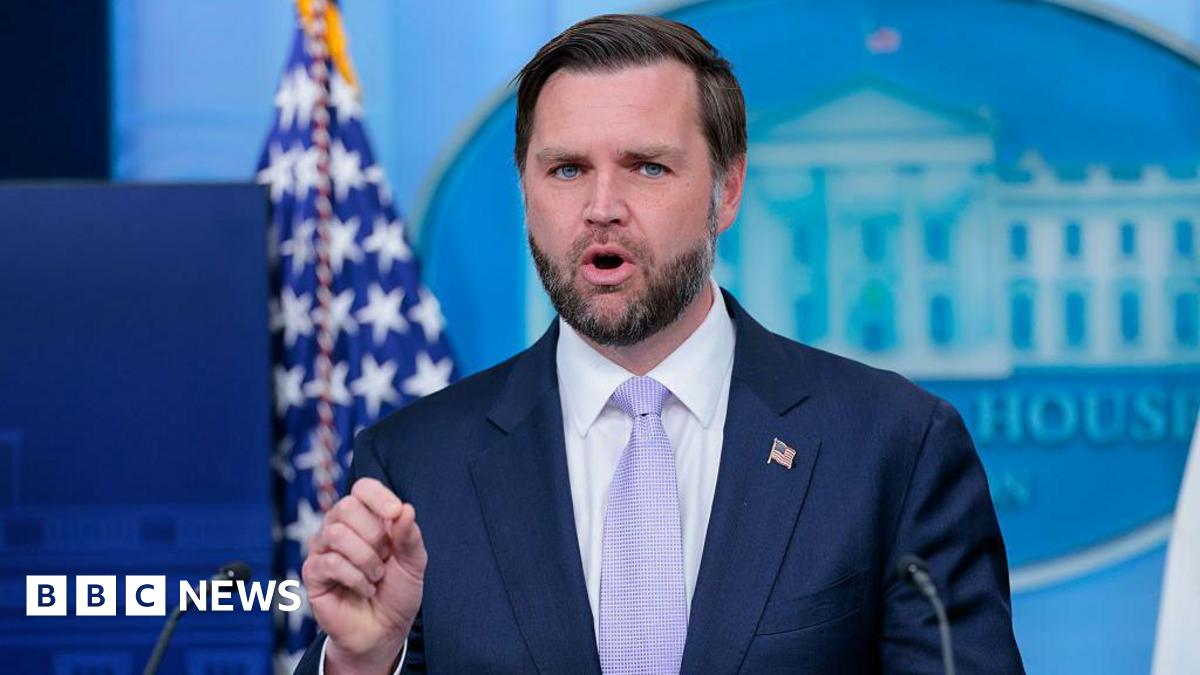
WASHINGTON – Vice President JD Vance has defended the Trump administration’s establishment of a $1.8 billion fund designed to compensate individuals who the Justice Department claims were “unfairly” investigated by previous administrations.
The initiative, framed by the administration as a corrective measure against the “weaponisation” of the federal legal system, has sparked an intense institutional debate over the independence of the U.S. Department of Justice (DOJ) and the precedent of using public treasury funds for legal reparations.
For international observers and diplomatic partners, the move signals a fundamental shift in the American executive’s relationship with the judiciary. The creation of a multibillion-dollar mechanism to remedy perceived political persecution challenges long-standing norms of prosecutorial independence and mirrors a global trend where populist governments seek to redefine the boundaries between legal enforcement and political loyalty.
Administrative Framework and Scope
The fund is intended to provide financial restitution to citizens who believe they were targeted by political motivations during investigations led by prior administrations. In recent statements, Vice President Vance aligned his position with that of acting Attorney General Todd Blanche, arguing that the program is designed to be non-partisan and operates within the Justice Department’s existing appropriations authority.
The administration maintains that the fund’s eligibility is open to any citizen, regardless of political affiliation. To illustrate this point, Vance stated that even Hunter Biden, the son of the former president, could apply for compensation, casting the program as a broader redress mechanism rather than a vehicle for rewarding supporters.
However, the administrative structure of the fund has become a primary point of contention. The distribution of the $1.8 billion is overseen by a five-member commission, characterized by a high concentration of executive power:
- Four of the five commission members are appointed directly by the Attorney General.
- The current acting Attorney General, Todd Blanche, previously served as Donald Trump’s personal defense attorney.
- The commission holds the final authority on who qualifies as having been “unfairly” investigated, with decisions not subject to routine judicial review.
Administration officials say the commission will publish baseline eligibility criteria and reporting on awards, but they have not committed to real-time disclosure of individual beneficiaries. That lack of clarity has added to unease among career DOJ officials, who typically operate under internal guidelines intended to insulate prosecutorial decisions from political influence and under the broader guarantees of due process and equal protection contained in the U.S. Constitution.
Political and Legal Opposition
Democratic lawmakers and legal scholars have sharply criticized the fund, characterizing it as a mechanism for political patronage rather than judicial correction. They argue that existing remedies – including civil suits under the Federal Tort Claims Act and statutory provisions governing wrongful convictions – already provide avenues for those who can demonstrate that the government violated their rights.
“Slush fund,”
Democrats have described the initiative in these terms, alleging that the money will be diverted to Trump’s political allies, specifically those who were charged or convicted in connection with the January 6, 2021, riot at the U.S. Capitol.
Critics argue that by allowing the Attorney General-a political appointee-to select the vast majority of the commission, the administration has ensured that the “non-partisan” nature of the fund exists only in theory. They contend that the structure creates an inherent conflict of interest, particularly given Todd Blanche’s previous legal representation of the President.
Some former Justice Department officials warn that channeling federal money to individuals whom juries, grand juries or prior administrations deemed lawfully charged could blur the line between legal accountability and political redress. They note that under ordinary practice, the DOJ’s role is to defend past prosecutions in court, not to revisit their legitimacy through an executive-controlled compensation scheme.
Global Institutional Precedents
The deployment of such a fund represents a departure from traditional U.S. legal remedies. Typically, individuals exonerated or wronged by the state seek damages through civil lawsuits under the Federal Tort Claims Act or through formal pardon and commutation processes overseen by the executive clemency power. Outside the criminal context, federal agencies operate under administrative and judicial review frameworks set by laws such as the Administrative Procedure Act, which are designed to provide transparent, appealable mechanisms for contesting government action.
The shift toward an executive-managed compensation fund reflects a broader international discourse on “lawfare”-the use of legal systems to damage or delegitimize political opponents. As the U.S. frequently advocates for the rule of law and judicial autonomy in emerging democracies, the internal conflict over the $1.8 billion fund creates a complex diplomatic narrative regarding the consistency of American institutional standards. Foreign ministries and multilateral partners that track U.S. governance practices as benchmarks for judicial independence are now confronted with a model in which the political branches play a direct role in assigning monetary remedies for alleged investigative overreach.
Comparative constitutional scholars point out that similar compensation schemes in other countries have often been created by statute, with parliamentary oversight, independent ombuds bodies, or judicial review built in from the outset. By contrast, the Trump administration’s initiative relies heavily on internal DOJ discretion, raising questions about long-term safeguards if future administrations seek to expand or repurpose the fund.
The fund remains active under the direction of the Justice Department, with the commission’s appointment process currently underway. Congressional committees are weighing potential oversight hearings and legislative responses, including proposals to require public reporting of awards or to sunset the fund after a fixed term. Those decisions will determine whether the initiative remains an isolated experiment in executive redress or becomes a more durable instrument reshaping the balance between law enforcement, politics and public finance.
Related reading
- Global Food Security Alliances: How Climate-Resilient Agricultural Corridors Are Stabilizing Wheat and Rice Supplies
- Cross-Border Renewable Energy Grids: North Sea and Mediterranean Subsea Cable Networks Enter Phase Two
- Carlos Alcaraz defends ATP 500 title in Tokyo after wrist injury layoff (archysport.com)
