
WASHINGTON – President Donald Trump has signaled a fundamental shift in United States strategy toward Tehran, framing a newly proposed agreement as a superior alternative to the diplomatic framework established under his predecessor.
The pivot marks a transition from the technical nuclear constraints of the Obama era to a security-driven model of conflict containment, following a period of direct military escalation between Washington and Tehran.
This strategic realignment comes at a moment of extreme volatility in the Middle East, where the collapse of previous diplomatic norms has been replaced by kinetic warfare and systemic economic shocks. The current administration’s approach suggests that the U.S. no longer views nuclear non-proliferation as a standalone goal, but as a byproduct of broader regional stability and military dominance.
The Rhetoric of Cost and Compensation
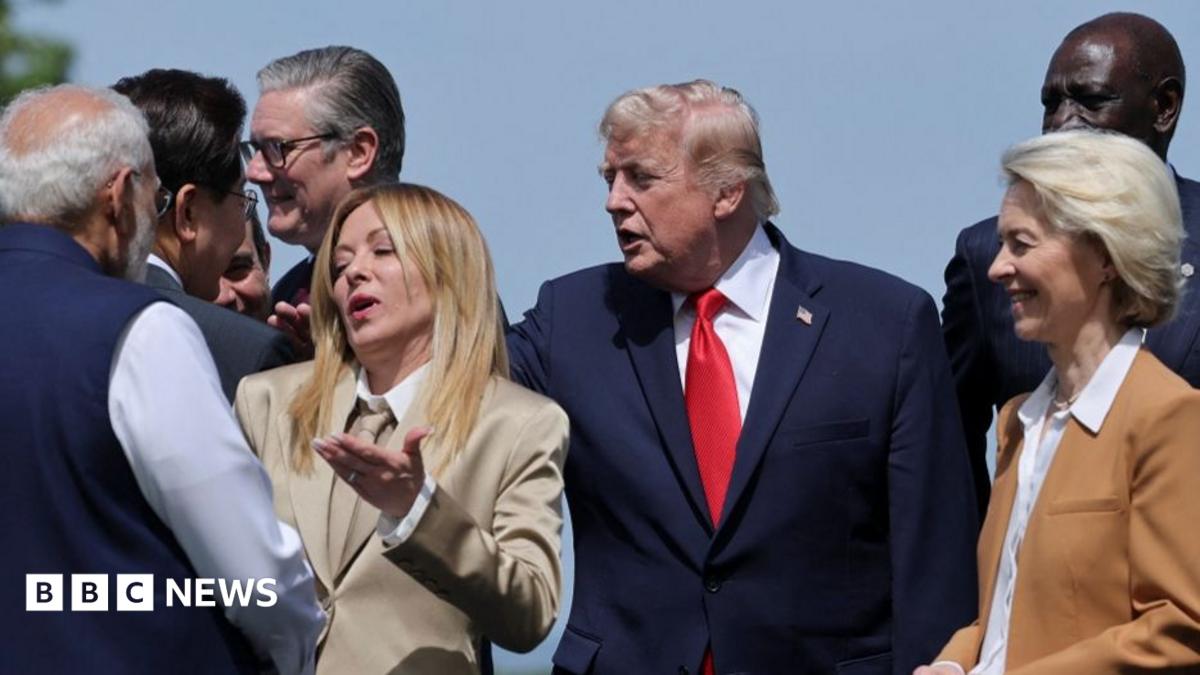
Speaking at the G7 summit in France, President Trump explicitly contrasted his current negotiations with the 2015 Joint Comprehensive Plan of Action (JCPOA), the multilateral accord under which Iran accepted verifiable limits on its nuclear program in exchange for sanctions relief.
“We didn’t pay for it like Obama did. He paid billions of dollars,” President Trump told reporters.
The reference points to the Obama administration’s strategy of sanctions relief and the unfreezing of Iranian assets-mechanisms designed to incentivize Tehran’s compliance with nuclear limits under the terms endorsed by the UN Security Council. While the current White House maintains that any future sanctions relief or unfreezing of funds will be strictly contingent on Iran meeting its obligations, the underlying mechanism of financial leverage remains a central component of the negotiations.
Advisers say the administration is determined to avoid the perception of making large up‑front financial concessions, a political vulnerability that has shaped congressional oversight and domestic debate over Iran policy for more than a decade. Confusion persists regarding the scale of potential financial commitments. Reports have circulated concerning a proposed $300 billion fund intended to assist in the reconstruction of Iran, though President Trump has dismissed these reports as “fake news,” and officials have not detailed what level of economic support, if any, might be tied to a final agreement.
Kinetic Action and Nuclear Degradation
The primary divergence between the two administrations lies in the use of direct military force. While the JCPOA relied on international inspections, technical monitoring and diplomatic pressure to prevent the development of a nuclear weapon, the Trump administration opted for a kinetic strategy designed to reset the military balance before returning to the table.
The U.S. has conducted targeted strikes on Iranian soil, which the administration claims have successfully destroyed a significant portion of the country’s nuclear facilities and buried critical stockpiles of uranium. Independent verification of the precise damage has been limited, in part because international inspectors have faced restricted access since the escalation began.
This aggressive posture has fundamentally altered the leverage at the negotiating table, moving the conversation away from the technical minutiae of centrifuge counts and toward a cessation of hostilities, deconfliction arrangements and guarantees against future attacks on U.S. forces and partners. Inside the administration, officials frame the approach as using force to create space for diplomacy, rather than diplomacy to avoid the use of force.
Regional Destabilization and Economic Fallout
The shift toward military intervention has not occurred without systemic costs. The escalation triggered a series of retaliatory actions from Tehran, extending the conflict beyond the U.S.-Iran bilateral relationship and pulling in regional actors with competing security interests.
The fallout includes:
- Increased Iranian aggression against regional neighbors, including targeted attacks on Israel and Gulf infrastructure.
- A heightened state of volatility across the Levant and the Persian Gulf, complicating U.S. security commitments and alliance management.
- The strategic closure of the Strait of Hormuz, a critical maritime chokepoint for global energy supplies.
The closure of the Strait of Hormuz, through which a significant percentage of the world’s petroleum and liquefied natural gas passes, created an immediate global economic ripple. The disruption led to sharp increases in energy prices and a spike in the cost of fertilizers, impacting global food security and industrial production. Central banks and finance ministries have been forced to factor sustained geopolitical risk premiums into inflation and growth forecasts, underscoring how decisions taken in Washington and Tehran cascade through domestic economic policy far beyond the region.
Containment Over Proliferation
Because of these externalities, the first phase of the deal being announced this week differs sharply from the JCPOA. Where the Obama deal was a granular roadmap for nuclear limitation-rooted in technical caps, inspection regimes and reporting obligations-the Trump framework is primarily a mechanism for conflict containment and crisis management.
According to officials familiar with the draft, the initial phase is expected to focus on verifiable limits to further Iranian strikes, phased reopening of key shipping lanes and a structured timetable for reintroducing international monitoring, rather than on the comprehensive set of nuclear parameters that defined the original accord. The current priority is the stabilization of global energy markets and the prevention of a full-scale regional war, rather than the long-term diplomatic integration of Iran into the international community.
Notably, neither the Obama-era agreement nor the current proposal has addressed the internal political environment of Iran or the systemic lack of civil liberties for the Iranian population. Human rights and democratic reform, long raised by advocacy groups and some members of Congress, remain largely bracketed off from the core security bargain.
The administration has signaled that additional phases could follow if the initial containment objectives are met, potentially including renewed talks under the broader nonproliferation architecture set out in the Nuclear Non-Proliferation Treaty. For now, though, officials are framing this week’s expected announcement as a narrow but urgent effort to arrest a spiraling conflict.
The first phase of the agreement is scheduled for formal announcement later this week.
Keep reading
- Global Food Security Alliances: How Climate-Resilient Agricultural Corridors Are Stabilizing Wheat and Rice Supplies
- Cross-Border Renewable Energy Grids: North Sea and Mediterranean Subsea Cable Networks Enter Phase Two
- Jay Clayton named White House AI czar by Trump to lead task force (globallypulse.com)
