
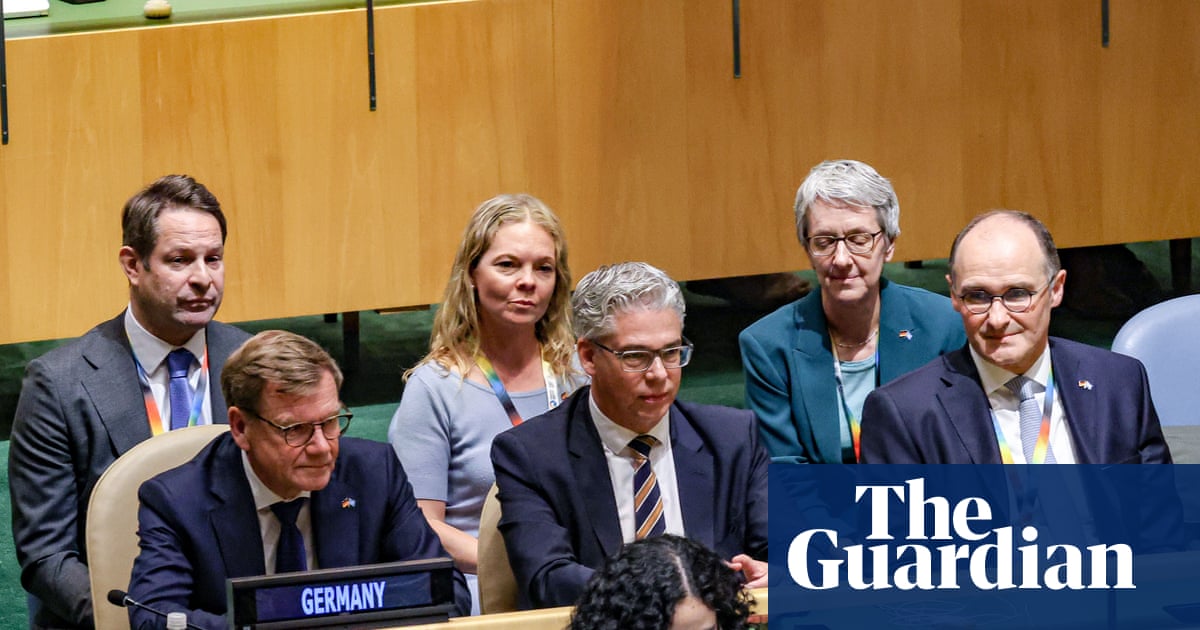
BERLIN – Germany has suffered a significant diplomatic blow after failing to secure a rotating seat on the United Nations Security Council, an outcome that has triggered intense soul-searching within the Chancellery and cast doubt on the international standing of Chancellor Friedrich Merz.
The defeat marks a rare failure for Europe’s largest economy to translate its financial and political weight into institutional influence. For a government that has explicitly sought to position Germany as a primary European voice on the global stage, the loss is not merely a procedural setback but a public rejection of Berlin’s current foreign policy trajectory.
The election of non-permanent members to the 15-member council is conducted via secret ballot in the UN General Assembly, requiring a two-thirds majority of member states under rules set out in the UN Charter provisions governing the Security Council. While Berlin expressed confidence hours before the vote, the final tally revealed a stark disconnect between Germany’s self-perception and its standing among the broader assembly.
Portugal secured its seat with 134 votes and Austria followed closely with 131. Germany garnered only 104 votes, falling well short of the 127-vote threshold required for election. Portugal and Austria will now serve two-year terms alongside Trinidad and Tobago and Zimbabwe, representing their respective regional groups in a carefully balanced system of rotational representation.
The Geopolitical Cost of Alignment
The results highlight a growing friction between the Western-led “rules-based order” and a diversifying bloc of nations in the Global South, who increasingly view Germany’s diplomatic positions as overly aligned with Washington and skewed toward specific strategic interests.
Foreign Minister Johann Wadephul, who led the lobbying effort for the seat, described the result as a “bitter defeat.” He attributed the loss to Germany’s uncompromising stances on two of the world’s most polarizing conflicts: the war in Ukraine and the crisis in the Middle East.
“We have always taken a clear stance on certain issues, and these are positions that not all member states share,” Wadephul told reporters. He noted that it is “no secret” that Russia, a permanent member of the council, had actively campaigned against Germany, which currently serves as Kyiv’s biggest national provider of military aid.
“There is our firm support for Ukraine; the fact that [permanent member] Russia does not want such a voice at the security council,” Wadephul said.
Beyond the conflict in Eastern Europe, Germany’s unwavering support for Israel-a cornerstone of its national identity and foreign policy as atonement for the Holocaust-was cited as a primary factor in the loss of support from non-aligned nations.
“The fact that Germany must always assume a special responsibility for Israel in the Middle East conflict may also have cost votes,” Wadephul added. He maintained that Germany would continue to stand by Israel, despite the government’s voiced criticisms regarding military strikes in Lebanon, West Bank settlements, and actions in Gaza.
The debate has exposed broader accusations of double standards in Berlin’s approach to international law and humanitarian norms.
“Anyone who claims to be the guardian of the rules-based international order must not apply double standards when it comes to international law,” Adis Ahmetović, foreign policy spokesperson for the Social Democrats, told Spiegel.
Competing Visions of Diplomacy
The success of Portugal and Austria underscores a shift in what the General Assembly appears to value in its rotating representatives. While Germany leaned on its status as a global power and major donor, the winners offered perceived neutrality, bridge‑building roles and fewer entrenched positions in ongoing conflicts.
- Austria: Benefited from its status as a non-NATO member, emphasizing a tradition of neutrality and mediation between East and West.
- Portugal: Leveraged its deep linguistic and diplomatic ties across Africa and Latin America, cultivating support among countries seeking a voice less closely associated with Washington or Brussels.
For Germany, the defeat exposes the limits of “chequebook diplomacy.” As the second-largest contributor to the UN budget, Berlin has historically used financial leverage and development aid to maintain influence. However, in a multipolar era, financial contributions are proving insufficient to offset perceptions of diplomatic rigidity, especially when votes in the General Assembly are increasingly shaped by solidarity among Global South coalitions and grievances over Western crisis management.
Internal Fractures in Berlin
The UN defeat arrives at a moment of extreme vulnerability for Chancellor Friedrich Merz. Since taking office last May, Merz has led a fragile right-left coalition government characterized by internal ideological clashes over defense spending, migration, and the balance between values-based and interest-driven foreign policy.
While Merz has attempted to project strength through a sharp increase in military spending and a more assertive global posture, his domestic popularity has plunged. The Security Council failure has provided ammunition to critics across the political spectrum who argue that his government has failed to convert rhetorical ambition into diplomatic trust.
The opposition Greens characterized the loss as an “embarrassing defeat.” Deputy parliamentary group leader Agnieszka Brugger argued that the government failed to “underpin this bid with modern ideas” regarding development aid, climate protection, and the international rules-based order, suggesting Berlin had relied too heavily on its economic profile instead of offering a forward-looking policy agenda.
From the right, Alice Weidel, co-leader of the Alternative für Deutschland (AfD), used the result to argue that Germany is in a state of national decline.
“One embarrassment follows the next: while Merz had intended to bring our country ‘back on to the international stage’ at the start of his chancellorship, Germany now finds itself without a seat on the UN security council,” Weidel posted on X.
The Social Democrats, the junior partners in Merz’s coalition, warned that the vote was “not a mere hiccup, but a warning sign” that Germany’s claim to moral leadership is being tested-and, in some regions, rejected.
The Struggle for Global Stature
The failure to secure a rotating seat is particularly painful given Germany’s long-term ambition to secure a permanent seat on the Security Council-a goal shared by Japan, India, and Brazil in the G4 group. Berlin has long argued that the current composition of the council no longer reflects geopolitical realities or the economic weight of contemporary powers.
Manuel Fröhlich, a political scientist at the University of Trier, noted that the high-profile nature of the campaign made the failure more damaging.
“The government would certainly have celebrated it as a success, and in that sense it will no doubt have to take responsibility for this defeat,” Fröhlich told public broadcaster Phoenix. “In that sense, it is a significant setback.”
The loss also complicates Merz’s relationship with the United States. The Chancellor recently drew the ire of President Donald Trump after describing the U.S. campaign in Iran as “humiliated” due to poor preparation, following an initial period of hesitation regarding Trump’s military attacks in Venezuela. Diplomats in Berlin fear that a weakened German bid for multilateral influence could reduce its leverage in transatlantic negotiations on security, trade and sanctions policy.
Germany has served six previous terms on the Security Council, most recently from 2019 to 2020. The country now remains outside the council’s inner circle as the new term begins, forced to recalibrate how it exerts influence on issues from Ukraine to the Middle East through the General Assembly, specialized agencies and coalitions of like‑minded states rather than through a seat at the top diplomatic table.
Keep reading
- Global Food Security Alliances: How Climate-Resilient Agricultural Corridors Are Stabilizing Wheat and Rice Supplies
- Cross-Border Renewable Energy Grids: North Sea and Mediterranean Subsea Cable Networks Enter Phase Two
- Why the Social Security COLA Is Announced in October (daybreakwire.com)
- Is Russia’s UN Security Council Seat Legal (archyde.com)
