
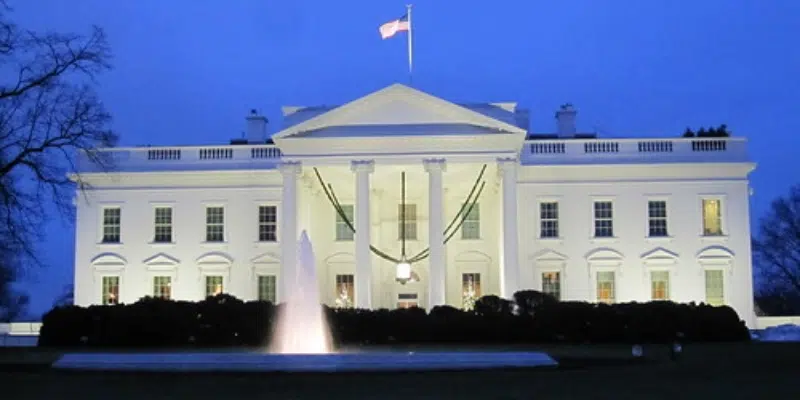
WASHINGTON – Denmark and Greenland officials opened what both governments described as “high-stakes” talks in Washington on Wednesday, convened as Donald Trump intensifies calls for the United States to take control of Greenland, a semiautonomous part of the Kingdom of Denmark that is home to a critical U.S. missile‑warning and space‑tracking installation. Greenland’s prime minister said the island’s 57,000 people would prefer to remain within the Danish Realm rather than “become Americans,” calling the standoff a “geopolitical crisis.” (apnews.com)
An alliance test in the High North
The talks carry immediate implications for NATO cohesion and international law. Greenland is part of the Kingdom of Denmark-a founding member of NATO-and thus falls under the Alliance’s collective defense commitments; NATO’s treaty framework covers “islands under the jurisdiction of any of the Parties in the North Atlantic area north of the Tropic of Cancer,” a category that includes Greenland. Any use of force against the island would reverberate across the Alliance and test the credibility of the rules‑based order (nato.int).
For Washington, the episode is also a test of how far a U.S. administration is prepared to push against the settled understanding that territorial changes among NATO members require the consent of the populations concerned and of the sovereign government, not unilateral pressure from an ally. Danish officials have privately warned that any attempt to force the issue would raise questions about U.S. commitment to the very treaty architecture it helped design.
Trump has argued that the United States “needs” Greenland for security reasons and, in recent comments, has entertained acquiring it “one way or another,” rhetoric that Danish and Greenlandic leaders condemned as unacceptable. Their pushback has been unusually blunt for two close U.S. allies and set the stage for Wednesday’s engagement with senior U.S. officials (time.com).
What Greenland is-and isn’t
Greenland is not a U.S. territory and is not for sale. Its modern status rests on layered Danish‑Greenlandic arrangements: Home Rule in 1979 and the 2009 Act on Self‑Government, which recognizes the Greenlandic people’s right to self‑determination under international law and enables the transfer of additional powers from Copenhagen to Nuuk. Defense and foreign affairs remain competencies of the Danish Realm, in consultation with Greenland’s elected institutions. The self‑government framework also makes clear that any future change in Greenland’s constitutional status would have to be initiated by Greenlanders themselves, through their parliament and a referendum, rather than by external demand (en.wikisource.org).
Those arrangements sit alongside Greenland’s practical realities: a vast, sparsely populated Arctic territory whose economy still depends heavily on fisheries, grants from Denmark and, increasingly, carefully managed foreign investment. For lawmakers in Nuuk, the current crisis is not only about sovereignty in the abstract, but about preserving the political space to decide how and when to expand that economic base without turning Greenland into a bargaining chip among larger powers.
Why the island matters to Washington
The United States has operated in Greenland continuously since World War II under bilateral agreements with Denmark, culminating in a 1951 defense pact concluded within the NATO framework. Today, the Department of Defense’s northernmost installation-Pituffik Space Base, renamed from Thule Air Base in 2023-provides early‑warning radar for intercontinental and submarine‑launched missiles and supports space surveillance for the U.S. and NATO (avalon.law.yale.edu).
For Pentagon planners and NATO commanders, Pituffik underpins missile‑defense calculations and space tracking across the North Atlantic and Arctic approaches. Any disruption to that posture-whether through political rupture or a contested change in sovereignty-would force difficult and expensive adjustments to North American and transatlantic defense planning.
Beyond hard security, Greenland sits astride emerging Arctic sea lanes and holds world‑class deposits of critical minerals. But the harsh environment, infrastructure gaps and environmental safeguards have kept rare‑earth mining largely at the proposal stage; a 2021 law banning extraction from deposits with high uranium content has stalled a flagship project at Kvanefjeld and triggered litigation (nsenergybusiness.com). As ice cover retreats and commercial interest grows, Greenland’s regulators are under pressure to reconcile climate commitments, Indigenous rights and the strategic appetite of larger economies-including the United States, China and European states-for secure supplies of rare earths.
History keeps repeating
American interest in acquiring Greenland is not new. In 1946, President Harry Truman formally offered Denmark $100 million in gold to purchase the island, citing Cold War strategic imperatives. Copenhagen declined, and Washington instead anchored its presence through defense agreements that endure to this day (time.com).
- 1867-1940s: U.S. strategists intermittently float the idea of acquiring Greenland in the wake of the Alaska purchase, framing it as an extension of North American security.
- 1941: A wartime agreement permits U.S. forces to defend Greenland while Denmark is under occupation, effectively internationalizing its defense for the duration of World War II.
- 1946: Truman makes a formal $100 million purchase offer; Denmark refuses, affirming Greenland’s place within the Danish Realm.
- 1951: Denmark and the U.S. sign the Defense of Greenland Agreement within the NATO framework, locking in long‑term basing and shared defense responsibilities.
- 2023: Thule Air Base is officially renamed Pituffik Space Base, reflecting both its role in the U.S. Space Force and Greenlandic heritage.
For diplomats in Copenhagen and Nuuk, that history underlines a key point to Washington: the United States has secured its strategic interests on the island for decades without owning it, through treaties, investment and cooperation rather than annexation.
Canada’s Arctic calculus
Ottawa is watching closely. Greenland’s status sits at the intersection of North American defense, Indigenous rights and Arctic sovereignty-areas where Canada and the United States cooperate through NORAD and where precedent matters. In 2022, Canada, Denmark and Greenland peacefully ended a decades‑long dispute over tiny Tartupaluk/Hans Island by drawing a land border and modernizing maritime boundaries-an approach held up by officials as a model for the Arctic (canada.ca).
For Canadian policymakers, the current confrontation is a live‑fire case study in how powerful states treat the territory of smaller Arctic neighbors. If a U.S. administration appears willing to challenge the settled sovereignty of a fellow NATO member, it could complicate Canada’s own efforts to assert control over its Arctic archipelago, manage continental defense with the United States and uphold negotiated arrangements with Indigenous communities whose traditional territories span borders.
The United States and Canada also train with Danish and Greenlandic authorities out of Pituffik under NORAD to defend the continent’s northern approaches. Military planners in Ottawa caution that any destabilization of Greenland’s status would not only affect a distant island but could upend the integrated radar, aviation and emergency‑response networks that underpin daily operations across the North American Arctic.
Greenland’s message to Washington
At a joint appearance ahead of the meeting, Danish and Greenlandic leaders reiterated that sovereignty over Greenland is not a bargaining chip, underscoring that the island’s defense rests with Denmark and NATO. Greenland’s prime minister framed the moment starkly: “We are now facing a geopolitical crisis” (time.com).
Officials from Nuuk have also emphasized that they want a larger say in how U.S. activities on the island are governed-on issues ranging from environmental standards around bases to benefits for local communities-but within the existing constitutional order. The message, as one senior Greenlandic official put it privately, is “more partnership, not a transfer of the deed.”
“On the one hand, this would be a major change…in U.S. policy, far more than in say intervening in Venezuela or in Iran, but the implications of it, if it does happen, would be far more catastrophic for American alliances and for Canadian foreign policy.” – Lucian Ashworth, political scientist at Memorial University (vocm.com)
The road ahead
Diplomats from Denmark and Greenland say they are open to deeper security and economic cooperation with the United States in Greenland-within existing legal frameworks and without altering sovereignty. Ideas under discussion include expanded Arctic infrastructure, closer consultation on missile‑defense upgrades at Pituffik and new mechanisms for ensuring that local Greenlandic communities share in the benefits of any additional U.S. presence.
As of Wednesday, January 14, 2026, no joint readout had been published from the Washington talks (apnews.com). But participants on all sides acknowledge that what began as an off‑hand presidential remark has turned into a real‑time stress test of how the United States treats the sovereignty of its allies at a moment when Arctic governance, climate policy and great‑power competition are colliding at the top of the world.
