
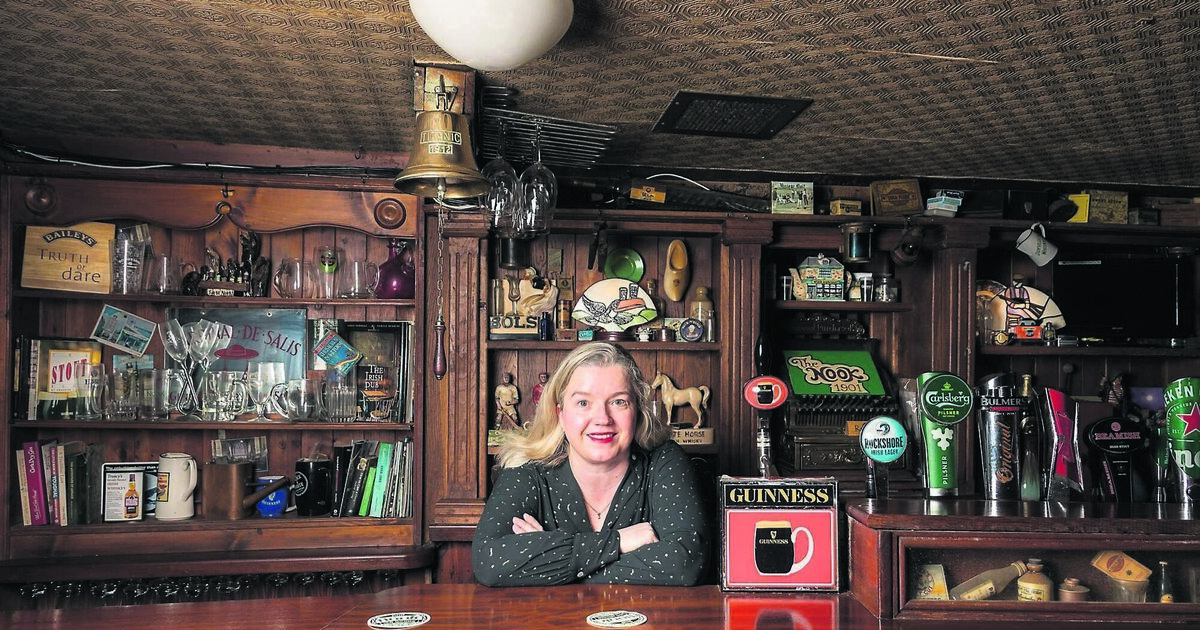
At a 125-year-old pub on Youghal’s North Main Street, a cloud-era operating model is quietly reshaping the rhythm of a coastal institution. Proprietor Anne Barry has returned from a London finance career to steer The Nook through a decade of change without losing the local character that made it a social anchor for generations. “The Nook was always part of my life,” she says. “I miss the buzz of a big city sometimes,” she adds. “But Youghal is home.”
Hospitality heritage meets a cash‑lite, compliance‑heavy reality
The Irish on-trade has shifted decisively toward digital point-of-sale, card and wallet payments, and a compliance stack that now reaches from the counter to the cloud. Since the EU’s revised Payment Services Directive hardwired Strong Customer Authentication and clearer liability rules into card rails, even small pubs operate within a regulatory perimeter once reserved for banks and processors. Even where cash remains welcome, contactless norms and wallet-supported Strong Customer Authentication shape how small venues settle tabs, reconcile VAT, and manage staff tips. “People come here from Cork, Dungarvan, Waterford,” Anne says. “The Nook seems to be part of people’s outings to enjoy a pint or to meet up. We are lucky with our fabulous locals too. They are reassured that we are open seven days a week from 10am onwards.”
- Payment flow: NFC cards and device wallets at the terminal; wallet SCA for higher-value taps; PIN fallback when cumulative limits trigger.
- POS stack: cloud-based EPOS, inventory and recipe costing for cakes and lunch service, integrated tip allocation aligned with Irish wage and tips legislation.
- Data guardrails: PCI DSS for terminals; data minimisation for digital receipts; secure deletion policies for customer emails collected for bookings or preorders.
- Operational traceability: end-of-day digital Z-reports mapped to VAT rates on food vs alcohol; audit trails for discounts, voids, and refunds.
The move from ledger books to live dashboards brings with it modern governance burdens as well as resilience gains: more screens, but also cleaner audit trails when revenue inspectors, health officers, or labour authorities call. Anne’s daily routine captures the tempo of that convergence: “The cleaning and cooking is done and we are ready to roll by 10am.”
Connectivity is now a utility for pubs
Kitchen printers, handhelds, ePOS, and payment terminals all cascade from one dependency: stable broadband. What began as a convenience has quietly become a utility service on which tax, safety, and licensing compliance depend. In tourist towns like Youghal, predictable connectivity underpins service during summer surges and bank holidays, but it also ensures real-time reporting to suppliers and regulators.
Ireland’s rural build-out under the National Broadband Plan has steadily pushed gigabit-capable access outward, but venue networks still need local hardening to withstand storms, outages, and crowded festival days.
- Network design: dual-WAN or LTE failover; segmented Wi‑Fi (guest, payment/EPOS, back office); WPA3 for staff SSIDs.
- Latency-sensitive devices: card terminals and handhelds prioritised via QoS; POS traffic firewalled from guest devices.
- Continuity planning: offline-ticketing mode for EPOS; queued transactions on terminals; printed QR menus cached locally for use during dropouts.
Strong Customer Authentication without the friction
Wallet-native SCA has reduced checkout friction compared with chip‑and‑PIN while keeping fraud controls intact. That matters for bars and cafés where average order value swings from a morning scone to a multi-round tab, and where staff must apply rules consistently at pace. For staff, the rules are simpler when wallet biometrics satisfy SCA and allow seamless taps above the contactless card cap, keeping queues moving on match days or during live music sessions. An accessible explainer for consumers and merchants is published by Ireland’s central bank for Strong Customer Authentication, anchoring the consumer-protection logic behind what can otherwise feel like a technical requirement at the till.
- Card tap vs wallet tap: card taps may hit cumulative limits; wallet taps generally inherit device biometric SCA and bypass the cap.
- Fallbacks: chip‑and‑PIN or manual keyed entry only on terminal-compliant risk checks; receipts marked for SCA method used.
- Chargeback hygiene: itemised receipts, staff IDs on orders, and digital tip trails reduce disputes and support evidence in case of chargebacks.
Back‑of‑house: sensors, stock, and sustainability
While regulars swap stories at the counter, the back room is where data makes margins. Temperature probes in fridges and cold rooms, line-cleaning schedules for draught systems, and batch costing for bakes all tighten quality and reduce waste. They also create a verifiable record for environmental health officers when inspections land unannounced.
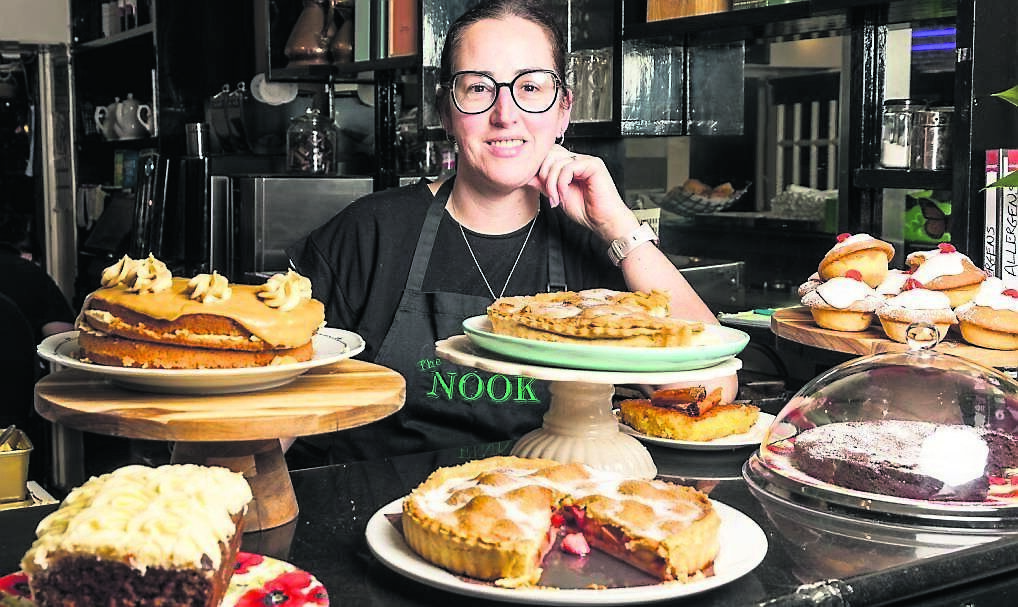
Eavan Foley’s daily output signals how craft meets system: “My mother Phyliss had a B&B,” she says. “I have no formal qualifications. I never went to Ballymaloe Cookery School, for example. I didn’t do any cookery courses.” What underpins her kitchen today is a structure of recipes, allergen logs, and energy monitoring that translates instinctive cooking into repeatable, documentable processes.
| Operational layer | System design | Risk controls |
|---|---|---|
| Cold chain & draught | Wireless probes; flow meters on lines; cleaning schedules logged in POS | Alerts for temp drift; keg-level variance checks; supplier batch traceability |
| Bakery & prep | Recipe management; allergen tagging; batch cost roll‑ups | Allergen matrices; cross-contact SOPs; recall-ready labelling |
| Energy | Smart plugs/meters on high‑draw kit; off‑peak scheduling | Threshold alarms; maintenance prompts; outage recovery scripts |
Privacy, cameras, allergens, and tips: the modern rulebook
Compliance now touches everything from a doorway camera to a card terminal. For a single pub, the relevant playbook stretches across data protection, food safety, alcohol licensing, and employment law. The practical checklist for small venues is long but manageable with the right defaults baked into systems and clear lines of responsibility between owner, suppliers, and staff.
- GDPR/CCTV: clear signage; retention periods; restricted access; documented lawful basis for recording; no audio capture without explicit justification.
- Food safety & allergens: HACCP plans; staff training; written allergen information for non‑prepacked foods available on request; kitchen change logs when recipes alter.
- Tips & gratuities: digital tips allocated transparently; staff statements available; no netting tips against base pay, reflecting evolving Irish rules on fair distribution.
- Age checks: passport/driver licence verification at the till; refusal logs; consistent challenge policies across bar and garden areas.
From ballroom nights to data‑driven weekends
The Nook’s past carries through in how Anne frames change. “Grandad Joe had great vision. He always made the right changes at the right time to progress. He had great gimmicks.” Some of those gimmicks would still work-just with a dashboard attached. “He’d put up a bottle of whiskey for the best singer on the night,” she recalls. “It was a baby bottle of whiskey,” she laughs.
Weekend trade is more concentrated than it once was, which makes forecasting and labour scheduling tools matter not only for margins but for staff wellbeing and predictable hours. “I think people don’t socialise in the pub as much as before,” Anne says. “Young people spend money to go out for one good night at the weekend, which is good. People don’t tend to go out during the week, which is understandable. The smoking ban changed pub trends a lot. The pub business can be challenging with the high cost of rates for instance.”
Human texture, digitally amplified
Technology can smooth orders and balance books, but it’s the human signals that keep a room warm and justify the regulatory effort to keep such spaces open and safe. “Meeting up again with all the old-timers, the familiar locals, the many day-trippers coming to Youghal was fantastic. There was plenty music played, songs sang, and stories told.” That spirit shows up in micro‑moments, too: “The cráic is still good!”
Inside the door, the counter doubles as a community bulletin-fresh bakes beside the terminal. “Mum is a great baker,” Eavan says. Team culture holds the rest together. “I love working here,” says Cameron Smyth. “We are like a small family.”
Anne’s vision links the archive to the upgrade path. “The front was a grocery store,” she says. “In the late 1970s, it changed to an off-licence. When the big supermarkets came to town we set up the food business, serving toasties, lunch, cakes, and desserts.” That same instinct now points toward smarter networks, tidier data, and calmer service during rushes-small but telling shifts in how local enterprises interpret national policy on digitalisation, payments, and work.
A practical playbook for small venues modernising without losing soul
- Choose EPOS built for hospitality: recipe costing, course timing, digital tips, and granular VAT mapping that aligns with local tax rules.
- Design your network first: segregate guest/staff/payment traffic; plan LTE failover; document device inventories and passwords and review them regularly.
- Default to privacy by design: minimise customer data capture; set CCTV retention; restrict access and log audits so compliance checks are routine, not reactive.
- Operationalise allergen info: maintain up‑to‑date matrices; train for cross‑contact; surface allergens on menus and at point of order.
- Align payments with SCA: enable wallet taps; prepare offline modes; capture staff attribution on every order to cut disputes and support fair tip allocation.
- Track what matters: temperature, line cleaning, wastage, labour hours, and energy-then adjust orders and staffing from signals, not hunches, to weather shocks from energy prices or changing night-time economies.
For Anne, the destination remains local, even as the stack upgrades. “There is no place quite like Youghal,” she says.
Worth a look
