
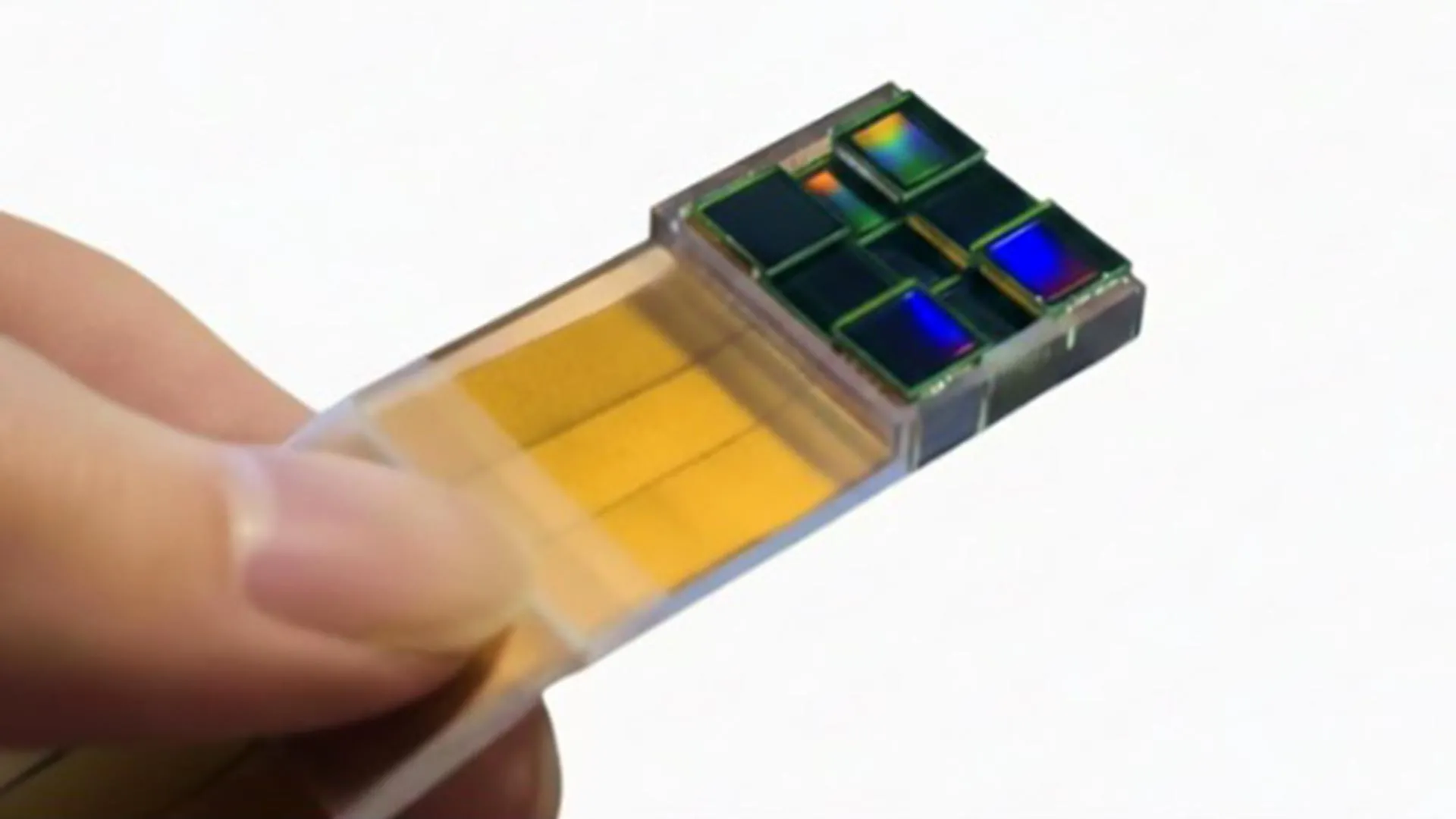
Software-synchronized optics aims to unlock wide-field, sub-micron imaging
A new study in Nature Communications introduces a lens-free, software-first imaging architecture that could reframe how scientists and engineers design optical systems. Led by Guoan Zheng, a biomedical engineering professor and director of the UConn Center for Biomedical and Bioengineering Innovation (CBBI), the work proposes a Multiscale Aperture Synthesis Imager (MASI) that trades precision mechanics for post-capture computational synchronization.
The idea tackles a long-standing gap between radio and optical regimes. Aperture synthesis transformed radio astronomy, culminating in the Event Horizon Telescope imaging a black hole, but optical wavelengths demand path-length control at sub-wavelength scales-an engineering barrier for multi-sensor arrays operating outside strictly interferometric labs.
“At the heart of this breakthrough is a longstanding technical problem,” said Zheng. “Synthetic aperture imaging-the method that allowed the Event Horizon Telescope to image a black hole-works by coherently combining measurements from multiple separated sensors to simulate a much larger imaging aperture. MASI takes that principle and makes it practical at optical wavelengths by shifting the hardest part of the alignment problem into software.”
What MASI changes in the optical playbook
MASI departs from conventional optics on two fronts. It removes lenses and it decouples measurement from synchronization. An array of coded sensors-placed at different positions within a diffraction plane-records raw diffraction patterns rather than focused images. Those patterns contain amplitude and phase information that can be computationally recovered, digitally propagated back to the object, and aligned across sensors via iterative phase optimization.
The result is a virtual aperture larger than any individual sensor, yielding sub-micron detail over a wide field of view at working distances measured in centimeters. In early demonstrations, the team reports sub-micron resolution across centimeter-scale fields using a compact, lensless stack more reminiscent of an image sensor module than a laboratory interferometer. By moving alignment into software, MASI avoids rigid interferometric baselines while still assembling a coherent reconstruction from independently captured data.
For system designers, that separation between inexpensive, repeatable hardware and a tunable reconstruction pipeline opens the door to application-specific trade-offs: resolution versus field of view, speed versus energy use, and local versus cloud processing-all determined after capture rather than hard-wired into glass.
Under the hood: architecture and compute path
- Sensor array: multiple coded detectors capture diffraction patterns from different lateral positions, effectively sampling distinct portions of the same optical wavefront.
- Phase retrieval: per-sensor complex wavefields are reconstructed using iterative algorithms that recover phase from intensity-only measurements, incorporating priors and constraints specific to the scene or use case.
- Numerical propagation: reconstructed wavefields are digitally propagated to the object plane to synthesize a consistent scene estimate at a chosen reconstruction distance.
- Global phase synchronization: software aligns relative phases among sensors via optimization, increasing coherence and concentrating signal energy in the final image while suppressing inconsistent contributions.
- Virtual aperture synthesis: fused wavefields form an effective aperture spanning the sensor ensemble, extending accessible spatial frequencies and pushing beyond the resolution limit of any single element.
This architecture makes MASI look less like a traditional camera and more like an integrated sensing-and-compute platform, where algorithm updates can materially improve system performance without touching the hardware.
How it compares to today’s optical strategies
| Approach | Optics & Setup | Alignment burden | Working distance | Field of view scaling | Typical constraints | Common uses |
|---|---|---|---|---|---|---|
| High‑NA objective microscopy | Precision lenses, tight tolerances | Moderate (mechanical focus, aberration control) | Millimeters | Narrower at higher NA | Short working distance, depth of field | Cellular imaging, metrology |
| Optical interferometric arrays | Beam combiners, delay lines | Extreme (sub‑wavelength path control) | Meters to kilometers | Limited; narrow isoplanatic patch | Vibration, turbulence, stability | Astronomy, precision metrology |
| Fourier ptychography | Programmable illumination + sensor | Low to moderate (scan/illumination control) | Millimeters to centimeters | Large via tiled, synthetic NA | Long acquisition, motion sensitivity | Computational microscopy |
| Coded‑aperture lensless imaging | Mask + sensor | Low (mainly calibration) | Centimeters | Moderate to large | Noise, reconstruction artifacts | Security, compact cameras |
| MASI | Multi‑sensor, lens‑free diffraction plane | Shifted to software (post‑capture phase sync) | Centimeters (sub‑micron detail) | Wide; scales with array extent | Compute, calibration, coherent sampling | Forensics, diagnostics, inspection, remote sensing |
Taken together, MASI occupies a middle ground: it borrows coherence and array concepts from astronomy, the reconstruction mindset from computational microscopy, and the compact form factor of lensless cameras, while promising manufacturability closer to semiconductor packaging than to bespoke optics.
Governance, compliance, and dual‑use considerations
Because MASI is inherently a software-defined imaging platform, many of the most consequential questions sit less in the lab and more in regulatory, evidentiary, and export-control policy. Institutions contemplating deployment will need to treat the reconstruction pipeline as part of the device, not an afterthought.
- Medical use: diagnostics or clinical decision support would require device clearance, quality management for software, and validation of reconstruction accuracy and failure modes. In the United States, that places MASI-based systems squarely in the remit of the Food and Drug Administration’s medical device and software-as-a-medical-device framework, with corresponding obligations for risk management and post-market surveillance.
- Forensics: evidentiary imaging must maintain chain of custody, reproducibility, and audit logs; computational pipelines should preserve non-destructive processing histories so that defense and prosecution experts can independently review the same data trail.
- Remote sensing: high-resolution terrestrial imaging can trigger licensing and tasking restrictions in certain jurisdictions; operators should assess applicable commercial remote-sensing rules and national security carve-outs before scaling deployments.
- Export controls: advanced imaging assemblies, sensors, and reconstruction software may be subject to dual-use controls; component-level disclosure and classification are necessary for cross-border deployments, particularly where resolution or sensitivity thresholds intersect existing control lists.
- Privacy and surveillance: wide-area, high-detail capture raises governance questions around proportionality, retention, and access control, especially in public-space monitoring or industrial settings. Organizations adopting MASI-class systems will need policies that explain not just what is captured, but how long reconstructed volumes are kept and who can re-process them.
Security and data integrity for computational imaging
As with other AI- and software-heavy sensing stacks, MASI’s credibility will depend on whether institutions can prove that what viewers see corresponds to what sensors actually captured.
- Provenance: embed cryptographic signing of raw sensor frames and reconstruction parameters to ensure traceability from capture to output and to support later audits or legal challenges.
- Tamper resistance: store raw wavefields and intermediate volumes in append-only formats with integrity checks, allowing investigators or regulators to re-run reconstructions under independent conditions.
- Model robustness: quantify reconstruction uncertainty and artifact likelihood; flag low-confidence regions to prevent over-interpretation in safety-critical workflows such as pathology reads or structural inspections.
- Edge acceleration: use FPGAs/ASICs or GPUs for on-sensor phase retrieval; avoid transmitting reconstructable raw wavefields off-premises when policy or contract requires local processing.
- Access control: apply role-based permissions and, where appropriate, differential privacy when datasets include identifiable biomedical, workplace, or forensic content.
Performance boundaries and practical risks
Despite the promise, MASI is not a drop-in replacement for all optics. Its performance envelope is shaped by illumination physics, motion, calibration discipline, and compute budgets.
- Coherence budget: illumination bandwidth and temporal coherence limit the recoverable spatial frequencies and array extent; drifting outside that budget erodes the very gains MASI seeks to deliver.
- Motion sensitivity: scene or platform motion between sensor exposures can desynchronize phase; motion-compensated solvers, active stabilization, or faster capture are needed to mitigate drift in dynamic environments.
- Calibration: per-sensor pixel response, positioning, and mask coding (if used) require periodic calibration to control systematic errors, particularly in regulatory or evidentiary settings where reproducibility is scrutinized.
- Compute footprint: global phase optimization is iterative and data-heavy; throughput and energy use become design constraints at scale, especially for continuous monitoring or high-frame-rate applications.
- Artifact management: ringing, phase wraps, and algorithm-induced hallucinations can mimic real features; standardized benchmarks and blind-test datasets are needed so that buyers and regulators can compare reconstruction quality across vendors.
Potential deployment paths and buyers
Near-term commercial interest is likely to cluster where MASI’s mix of wide field, fine detail, and flexible working distance solve a clear bottleneck-especially where traditional high-NA optics are too fragile, too close-range, or too expensive to scale.
- Industrial inspection: line-scan or tiled MASI arrays for non-contact, wide-field defect detection in electronics, batteries, and precision manufacturing, with reconstruction tuned to specific defect signatures.
- Biomedical research: benchtop systems delivering large fields of view with sub-cellular detail for slide-based assays and organoid studies, enabling labs to screen more samples without investing in multiple high-end objective lenses.
- Forensic labs: high-detail surface analysis at working distances compatible with evidence handling protocols, where software-traceable reconstructions can be introduced in court alongside conventional microscopy.
- Remote sensing: distributed ground arrays for atmospheric or terrestrial targets where maintaining strict interferometric hardware is impractical, and where software-aligned sensors can be upgraded or replaced incrementally.
“The potential applications for MASI span multiple fields, from forensic science and medical diagnostics to industrial inspection and remote sensing,” said Zheng. “But what’s most exciting is the scalability-unlike traditional optics that become exponentially more complex as they grow, our system scales linearly, potentially enabling large arrays for applications we haven’t even imagined yet.”
Why this matters for the optics supply chain
Lenses concentrate decades of manufacturing know-how into precision glass. MASI shifts value toward sensors, compute, and algorithms, potentially reducing dependence on high-NA objectives for wide-field, high-resolution tasks. If scalable, the approach could diversify supply chains, open new vendors for modular sensor tiles, and move differentiation into software-driven reconstruction-where update cycles, cybersecurity posture, and model governance may determine competitiveness as much as optics themselves.
For policymakers and institutional buyers, that shift poses new questions: how to certify imaging systems whose performance can change with a software update, how to align procurement with emerging standards for trustworthy AI and digital evidence, and how to ensure that the same computational tools that sharpen our view of the world do not outpace the frameworks meant to keep them accountable.
Worth a look
