
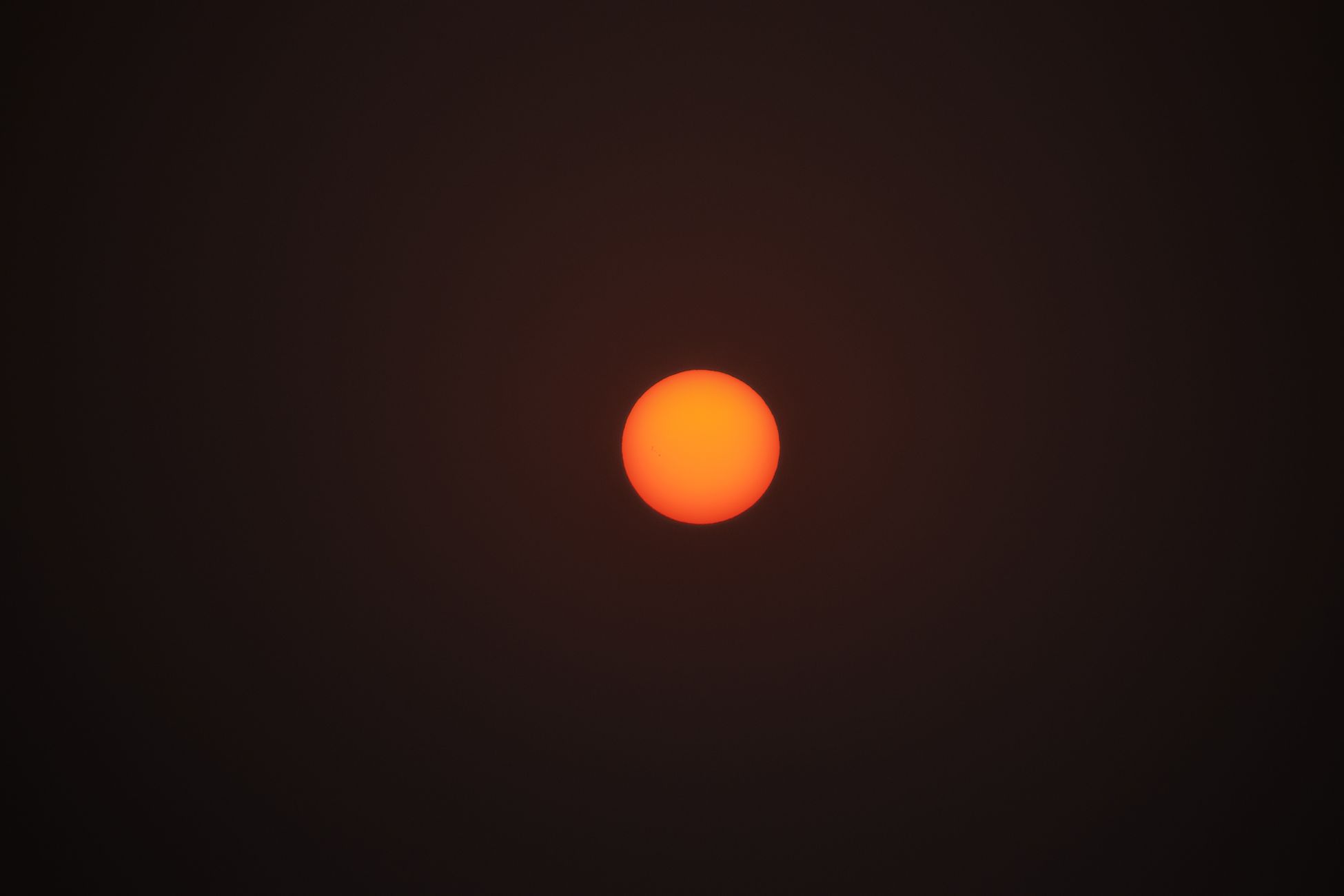
On July 23, 2012, a coronal mass ejection (CME) of unprecedented intensity tore away from the Sun, hurtling through space at speeds reaching 3,000 kilometers per second. While the Earth remained oblivious to the threat, NASA’s STEREO-A spacecraft-positioned far ahead of our planet in its solar orbit-bore the full brunt of the impact. This event provided the first and only in-situ measurement of a Carrington-class storm in the modern era, offering a terrifying blueprint of what happens when extreme space weather intersects with a hyper-connected, electrified civilization.
The data captured by STEREO-A has effectively replaced historical guesswork with empirical evidence. For decades, risk models for solar storms relied on telegraph records and ice-core samples from 1859. Now, engineers and policy-makers have a ground-truth dataset detailing the exact plasma density and magnetic field topology of a storm capable of triggering a global infrastructure collapse.
The Orbital Geometry of a Near-Miss
The Solar Terrestrial Relations Observatory Ahead (STEREO-A) was designed to provide a stereoscopic view of the Sun, working in tandem with its twin, STEREO-B, to track CMEs in three dimensions. By July 2012, STEREO-A had drifted into a position where it could view the solar surface from an angle invisible to Earth-based observatories.
The July 23 eruption occurred because an active solar region had rotated past the central meridian of the Sun. Had this rotation occurred just a week earlier, the CME would have been aimed directly at Earth. Instead, the storm struck STEREO-A, which was sitting in the exact coordinates the eruption targeted. The spacecraft survived, but its instruments recorded a magnetic field spike several times stronger than those typically seen during severe geomagnetic storms at 1 AU.
This specific alignment revealed a critical characteristic of extreme solar events: the “snowplow” effect. The 2012 event consisted of two CMEs in rapid succession. The first cleared a low-density path through the solar wind, allowing the second to accelerate almost unimpeded, maximizing its kinetic energy and destructive potential.
Systemic Vulnerabilities and Grid Failure Risks
A Carrington-class event does not destroy electronics via a “bolt of lightning” effect, but rather through the induction of low-frequency currents. When an extreme magnetic cloud hits Earth’s magnetosphere, it creates geomagnetically induced currents (GICs) that flow through the ground and enter high-voltage power grids through transformer neutrals.
The risk is not merely a temporary blackout, but the physical destruction of the hardware that enables the grid. The 2012 STEREO-A data suggests that a direct hit would lead to widespread transformer saturation, where the magnetic core of the transformer becomes overloaded, leading to overheating and permanent failure. Because extra-high-voltage transformers sit at the heart of national transmission networks, sustained damage would immediately shift from an engineering problem to a national security and continuity-of-government issue.
| Failure Layer | Mechanism of Action | Potential Impact |
|---|---|---|
| Power Infrastructure | GIC-induced transformer saturation | Permanent failure of hundreds of high-voltage transformers; cascading blackouts across multiple regions |
| Satellite Networks | Atmospheric drag and Single Event Upsets (SEUs) | Orbital decay, attitude-control anomalies, and critical avionics failure |
| Global Telecommunications | Ionospheric disturbance | Total loss of HF radio, severe GPS degradation, and disruption of aviation and maritime navigation |
| Undersea Cables | Voltage surges in cable repeaters | Intercontinental internet fragmentation and loss of redundancy on key data routes |
In many advanced economies, regulators already treat this as more than a theoretical risk. In the United States, for example, bulk-power operators work under mandatory reliability standards overseen by the Federal Energy Regulatory Commission, which has directed the development of specific geomagnetic disturbance rules requiring utilities to assess GIC exposure, harden critical assets and maintain operating plans for extreme solar storms.
The Economic Scale of a Solar Strike
The financial implications of a Carrington-class event are catastrophic because of the long lead times required to manufacture and replace large-scale power transformers. These components are not off-the-shelf items; they are massive, custom-engineered machines often produced by a small number of global suppliers.
Economic impact assessments utilizing the STEREO-A input estimate first-year damages between $1 and $2 trillion. More concerning than the immediate cost is the recovery timeline, which is projected to span four to ten years. This timeline accounts for the logistical nightmare of replacing critical infrastructure while the very power grids needed to run factories are offline. For finance ministries, central banks, and insurers, the 2012 dataset has quietly become a reference point in stress tests and resilience planning, shaping decisions on grid redundancy, stockpiling of key components, and public-private investment in space-weather monitoring.
Defining the Threshold of Continental Disaster
The difference between a manageable solar event and a societal collapse is measured in hours of warning. Current early-warning systems, such as the Deep Space Climate Observatory (DSCOVR), provide a narrow window to initiate defensive protocols-such as shedding grid loads or powering down vulnerable transformers-before the shock front arrives. That window can be as short as 15 to 60 minutes between a warning at the L1 Lagrange point and impact on Earth, compressing complex operational and governmental decisions into a single briefing cycle.
STEREO-A remains a vital asset in this defense strategy. Despite the loss of its twin, STEREO-B, in 2014, STEREO-A continues to operate on a 22-month orbital cycle. By periodically moving outside the Sun-Earth line, it provides a vantage point that allows scientists to observe the trajectory of coronal mass ejections before they become threats to Earth’s orbit. Together with L1 monitors and national space-weather centers, this constellation underpins the playbooks used by grid operators, aviation authorities and emergency managers when the solar wind turns hostile.

The 2012 event serves as a canonical reference, much like an ice core in climate science. It proved that Carrington-class events are not historical anomalies but statistical certainties, with a 10-15 percent probability of occurring in any given decade. The only reason this data exists is that a single spacecraft sat in the “wrong” place at the right time, capturing a blast that would otherwise have been a footnote in a catalog, and providing the necessary intelligence to safeguard the global infrastructure of the 21st century. For governments now writing climate and resilience strategies, the STEREO-A near-miss is no longer a curiosity of heliophysics, but a boundary condition for how modern societies survive a direct hit.
Keep reading
