
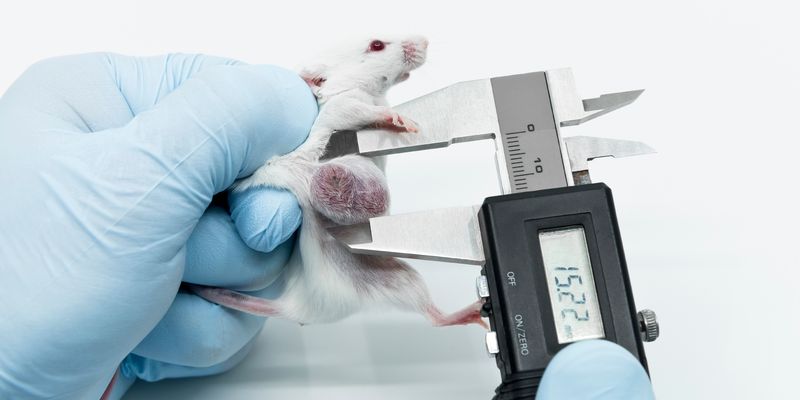
Early-stage oncology programs now hinge on whether preclinical models capture real human biology. Patient-derived xenografts (PDX) and organoids derived from those xenografts (PDXO) are emerging as a complementary system that can surface responsive tumor subsets, expose resistance trajectories, and build translational confidence before the first patient is dosed.
What these models actually buy you
PDX models preserve histopathology, clonal diversity, and genomic architecture by engrafting fresh human tumor tissue into immunocompromised mice. PDXOs, grown directly from PDX tissue, keep tumor-intrinsic features while enabling scalable in vitro experimentation, including for tumor types where 2D cell lines have historically underperformed. Comparative studies have reported close alignment between matched PDX and PDXO pairs across morphology, gene expression, mutational profiles, and drug-response patterns, supporting the use of organoids as an efficient proxy for in vivo signals when derived and maintained rigorously. See recent evidence of biological equivalence in peer-reviewed work.
A practical stack: from bench to biomarker
- Screen broadly in PDXOs to rank compounds across diverse genotypes and phenotypes, and to identify early non-responders that may never justify in vivo testing.
- Interrogate mechanism and adaptive resistance with longitudinal organoid assays and controlled perturbations, including combination regimens and treatment holidays.
- Validate translation-critical hypotheses in PDX, capturing pharmacokinetics, pharmacodynamics, and whole-organism tolerability under dosing schedules that mirror intended clinical use.
- Triangulate: prioritize effects that converge in the original patient tumor, its derivative PDX, and its matched PDXO, and deprioritize signals that fail to reproduce across this trio.
Feature comparison at a glance
| Dimension | 2D Cell Lines | PDXO | PDX |
|---|---|---|---|
| Throughput | High | Medium-High | Low |
| Retention of intra-tumoral heterogeneity | Limited | Moderate-High | High |
| Time to decision | Days | Weeks | Months |
| Immune context | Absent | Absent (unless co-cultured) | Absent in standard; partial with humanized mice |
| Cost per study | Low | Moderate | High |
| Use cases | Mechanism, target validation | Ranking, SAR, resistance discovery | PK/PD, efficacy, tolerability |
Where AI and automation fit
- High-content imaging plus machine learning to quantify organoid morphodynamics and subtle phenotypes that precede overt growth changes, supporting earlier go/no-go calls.
- Automated liquid handling and microfluidics to standardize dosing schedules and minimize batch effects across large PDXO panels, turning what were bespoke experiments into repeatable workflows.
- Active-learning loops that propose the next most informative experiment, reducing the number of wet-lab iterations before committing to in vivo validation and helping sponsors allocate limited PDX capacity where it matters most.
- Multi-omic integration pipelines that link functional response with genomic, transcriptomic, and spatial data to seed biomarker hypotheses and stress-test them against real-world molecular diversity.
Regulatory and governance signals teams cannot ignore
- The FDA Modernization Act 2.0 (December 2022) explicitly enables nonclinical approaches beyond traditional animal studies for IND-enabling packages, opening doors for organoids and microphysiological systems when scientifically justified and appropriately validated; the agency’s own guidance resource is now a reference point for sponsors and regulators alike.
- Institutional review boards and biobank governance: ensure documented consent covers xenografting, long-term storage, and downstream data sharing, including secondary research use and potential commercial partnerships.
- Privacy and data protection: genomic datasets linked to patient-derived models are subject to de-identification standards and access controls compatible with HIPAA in the United States and GDPR in the European Union, as regulators scrutinize how “anonymous” molecular data can be re-identified.
- Standards for reproducibility: adopting minimal information checklists (for example, PDX model characterization, passage history, and engraftment site) improves portability across labs and sponsors and will increasingly be expected by regulators, payers, and ethics committees reviewing first-in-human designs.
Risks and safeguards in the model pipeline
- Genetic drift and clonal selection across passages
- Safeguard: low-passage banking; periodic whole-exome or targeted sequencing to confirm model identity and stability, coupled with clear documentation of passage number at the time of key readouts.
- Stromal replacement in PDX and loss of microenvironment cues in PDXO
- Safeguard: orthotopic engraftment where feasible; co-culture with cancer-associated fibroblasts or immune components for question-specific assays, particularly when studying metastasis or immuno-oncology combinations.
- Matrix variability in organoid culture
- Safeguard: lot-qualified ECM, defined media, and assay controls to detect matrix-driven artifacts, with predefined criteria for discarding or repeating compromised experiments.
- Pathogen contamination (e.g., mycoplasma)
- Safeguard: routine screening, quarantine before expansion, and vendor qualification, backed by incident reporting procedures that flag contamination across shared repositories.
- Overfitting to a single model or lineage
- Safeguard: prespecify a diversity panel spanning driver mutations, lineage, prior therapies, and demographic representation, and report negative as well as positive findings to avoid publication bias.
Market structure and infrastructure reality
- Public repositories now maintain well-annotated PDX resources and associated omics, supporting independent replication and cross-study meta-analyses and giving regulators and health technology assessors a clearer view of how robust a preclinical signal really is.
- Specialist CROs offer end-to-end services-from rapid PDXO derivation and automation to humanized PDX efficacy-shortening lead times for sponsors without in-house vivarium capacity, but also concentrating critical know-how in a small number of commercial platforms.
- Cloud LIMS and data commons allow model pedigree tracking, assay versioning, and secure cross-institutional data sharing under role-based access controls, aligning scientific operations with emerging expectations around auditability and data integrity.
Designing studies for decisions, not just data
- Explicit decision gates: define which organoid signals (effect size, dose-response slope, biomarker association) justify escalation to PDX, and document those thresholds prospectively so they can be scrutinized by internal governance and, ultimately, by regulators.
- Clinical-aligned endpoints: map preclinical readouts to endpoints that matter in the clinic (time on treatment, depth and duration of response, acquired resistance patterns), reducing the risk that a statistically “clean” preclinical win turns out to be clinically irrelevant.
- Biomarker maturation: pre-specify candidate biomarkers and confirm assay robustness in both PDXO and PDX before inclusion in first-in-human protocols, so that early clinical trials can double as prospective tests of stratification strategies rather than post hoc fishing exercises.
- Statistical discipline: use hierarchical models to integrate multi-model evidence and quantify uncertainty across tumor subsets, and ensure that governance bodies understand how that uncertainty feeds into dose, schedule, and indication selection.
Indicative timelines and resource planning
- PDXO derivation and primary screens: typically weeks from tissue access to ranked hits, enabling investment committees to make earlier calls on program continuation or deprioritization.
- PDX engraftment and efficacy: typically months from implantation to interpretable tumor growth inhibition data, which must be factored into regulatory filing timelines and critical-path decisions.
- Biomarker assay fit-for-purpose validation: runs in parallel; plan for multiple cycles as signatures are refined, with clear ownership between translational, clinical, and quality teams to avoid late-stage surprises.
What better early models change downstream
Well-orchestrated PDX/PDXO strategies narrow uncertainty around target validity, dose selection, and indication focus. By resolving heterogeneity at the level where clinical outcomes are determined-the patient-teams can graduate beyond average effects, elevate the strongest biomarker-linked hypotheses, and avoid over-committing to signals that will not survive contact with real-world tumor biology. For regulators and payers under pressure to demand stronger preclinical justification for risky early trials, that matters: higher-fidelity models make it easier to defend trial design, inclusion criteria, and dose selection. The net effect is fewer false starts, tighter trial designs, and a higher probability that promising science becomes meaningful benefit for people living with cancer.
Related reading
