
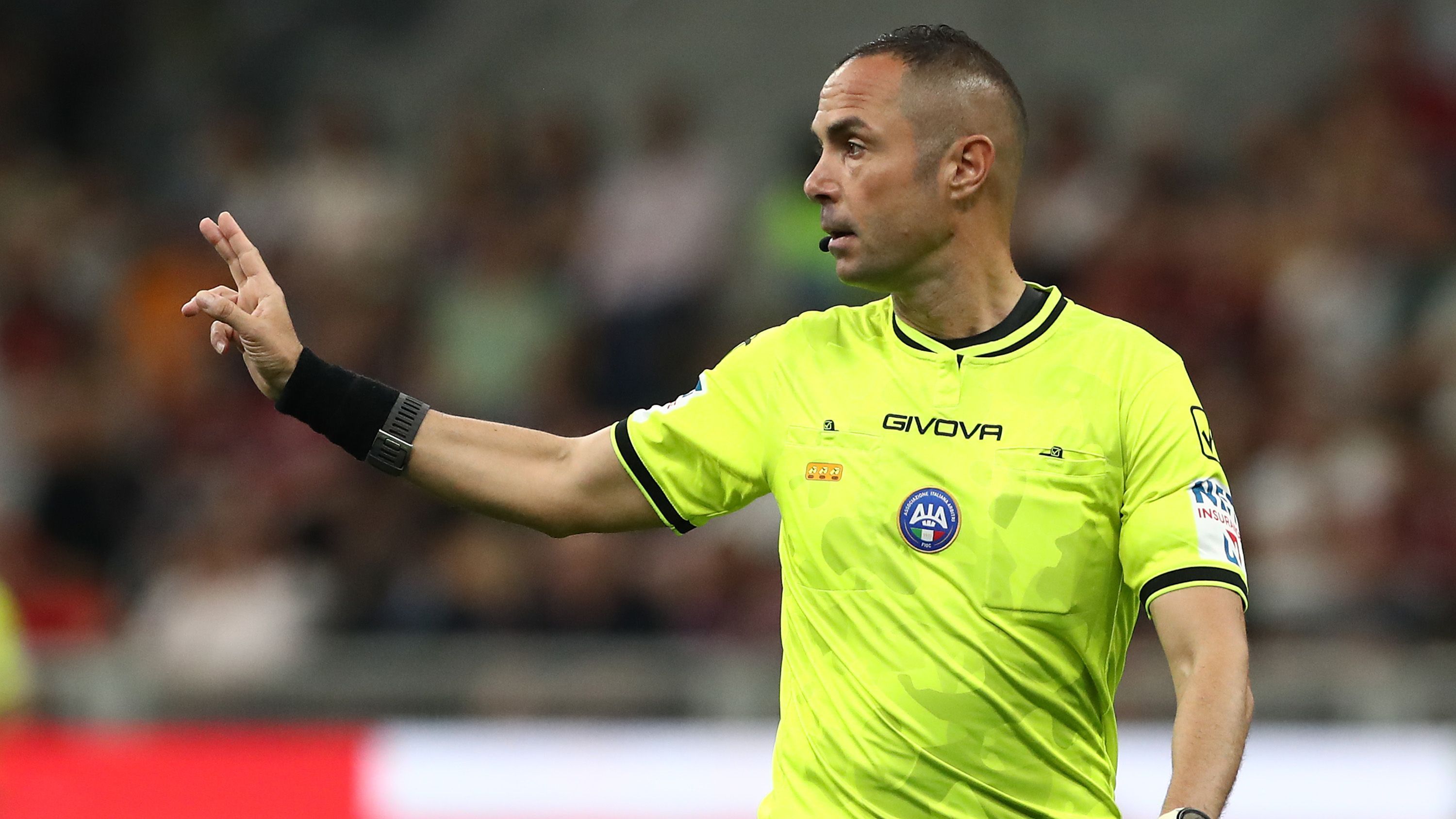
High-Stakes Serie A Matchday 10 Puts Spotlight on Referees and Title Contenders
Barely through the midweek round, Serie A clubs are already turning their focus to a crucial 10th matchday of the 2026/2027 season. With the league table beginning to take shape, two fixtures stand out as early markers in the title and European qualification race: the Milan derby between AC Milan and Inter, and Juventus-Napoli in Turin.
Both matches bring together clubs used to operating at the top end of Italy’s top flight, where head-to-head results often become decisive in tie-breakers and momentum swings over a long campaign. In this context, refereeing choices and video review management are more than administrative details; they form part of the competitive framework that clubs must navigate.
Orsato’s New Role and the Importance of Appointments
At the Italian Referees Association (AIA), newly installed refereeing appointments chief Daniele Orsato has been tasked with deciding who will take charge on the pitch and who will work in the VAR room for this high-pressure weekend. His selections come under immediate scrutiny, as they will guide two fixtures likely to influence not only the top of the table but also the balance of power among Italy’s leading clubs.
Refereeing appointments for Serie A are made within the broader regulatory framework of Italian and European football, overseen domestically by the Lega Serie A. Assignments typically seek to balance experience, recent form, and geographical neutrality, especially when matches feature clubs with a history of close title races or dramatic encounters.
Experienced Guida for a Derby with Fine Margins
For the Milan derby, Orsato has turned to experience. Marco Guida, from Torre Annunziata, will referee AC Milan vs Inter for the fifth time. His previous four derbies have produced a perfectly balanced record: two AC Milan wins, two Inter wins and one draw.
In a match where intensity is almost guaranteed, that record matters. Both clubs know they are working with an official who has navigated this rivalry repeatedly and has already overseen a range of outcomes between them. For players and coaches, that familiarity can shape how aggressively they press, how they manage tactical fouls, and how they approach the penalty area, knowing Guida’s style and thresholds from past meetings.
The derby’s significance extends beyond local pride. With the season’s first third approaching, direct clashes between likely contenders can determine which side gains a psychological and points advantage. A single refereeing decision in such a context – a penalty, a red card, a marginal offside – can shift narratives about momentum and stability around both Milan clubs.
Sozza Returns for Juventus-Napoli
In Turin, Juventus-Napoli offers another fixture with potential implications for the top positions and European qualification places. Simone Sozza, from Seregno, has been appointed to referee this match for the second time in his career. The only previous Juventus-Napoli he officiated ended in a 1-1 draw.
That earlier meeting, decided under his control, provides a reference point for both teams. While each match develops its own story, clubs often adjust their tactical risk and appeals to the referee based on prior experience. Sozza’s return suggests confidence in his ability to manage a match that combines high technical level with significant competitive stakes.
For Juventus and Napoli, who routinely set ambitions around the top four and beyond, this head-to-head comes at a stage of the season where dropped points can quickly widen or close gaps to rivals. A balanced, predictable refereeing performance becomes essential in maintaining trust in the competition’s integrity and in ensuring that the spotlight remains on tactical choices and execution rather than on officiating controversy.
Refereeing, VAR and the Structure of Decision-Making
Beyond the names on the team sheets, the officials on the pitch and in the VAR room form part of the decision-making structure that underpins every Serie A weekend. VAR, implemented under the global protocol established by football’s law-making bodies, is designed to intervene only in clear and obvious errors in four defined situations: goals, penalties, direct red cards and cases of mistaken identity.
For matchday 10, Orsato’s choices will define which referees are entrusted with on-field decisions and which are tasked with reviewing them on video. That division of responsibilities can influence how quickly matches resume after reviews, how willing on-field officials are to use pitchside monitors, and how players respond in moments immediately following contentious incidents.
In matches such as Milan-Inter and Juventus-Napoli, where small margins can separate victory and defeat, that officiating framework becomes central to how coaches prepare. Staff will brief players not only on opponents’ pressing schemes and set-piece patterns, but also on how best to adapt in a refereeing environment increasingly shaped by video assistance and centralized oversight.
Matchday 10 as an Early Reference Point
With the 10th round arriving swiftly after a midweek schedule, clubs at the top, middle and bottom of the table face a demanding sequence of fixtures and short recovery windows. Heavy rotations, tactical adjustments and fatigue management all come into play.
- Milan derby (AC Milan vs Inter) – a traditional benchmark for both clubs’ ambitions, where head-to-head form often signals which side is better positioned to sustain a title or top-four push.
- Juventus vs Napoli – a clash between two teams accustomed to competing for European places, where even an early-season meeting can shape perceptions of stability, progress and pressure on the technical staff.
Elsewhere across the fixture list, the same officiating framework will apply, with Orsato’s broader set of appointments helping define how consistently the laws of the game are interpreted from one stadium to another. For clubs battling to climb the table or escape early pressure, that consistency is critical to maintaining confidence in the competition’s fairness.
A Weekend Under the Microscope
As the 2026/2027 Serie A season advances into a phase where trends become harder to dismiss as mere form swings, matchday 10 offers a concentrated look at how Italy’s top clubs respond when fixture congestion, direct rivalries and refereeing scrutiny converge.
With Guida again at the center of the Milan derby and Sozza returning for Juventus-Napoli, the weekend will test not only the squads’ tactical depth but also the capacity of the officiating system to manage intensity at the very top of the league. For an international audience following Serie A’s evolution on and off the pitch, this round provides an early indication of how the competition’s governance and decision-making structures are shaping its sporting outcomes.