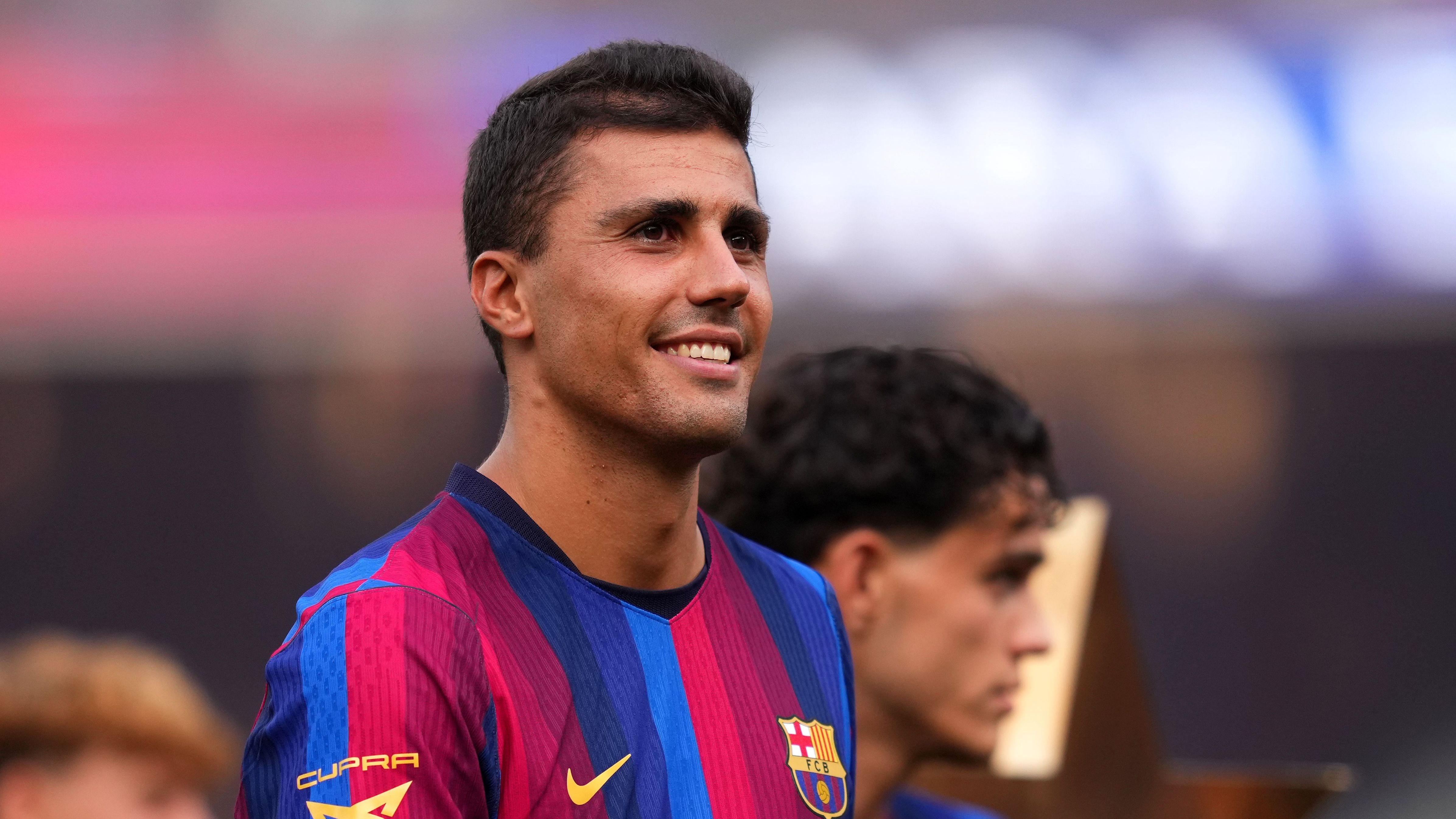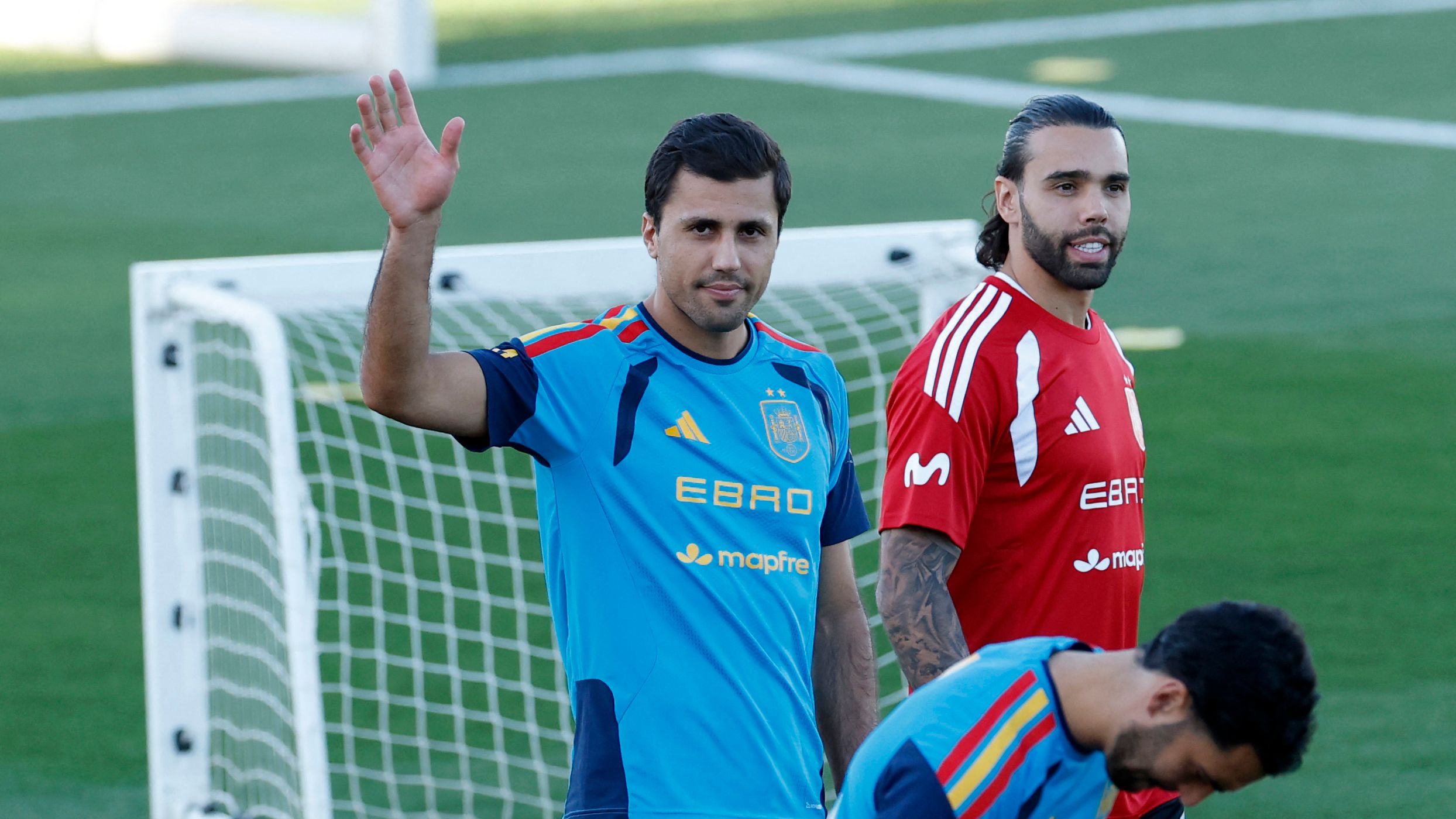
Rodri Backs Barcelona Project Over Madrid Interest: “Just Football” at the Heart of His Call
Despite Madrid’s strong pursuit, Rodri insisted his decision was based entirely on footballing style, tactical fit, and Barcelona’s long-term project. He felt his understanding of positional play aligned perfectly with Barcelona’s philosophy and their emerging generation of young talent.
The Ballon d’Or winner added that guiding a young squad as a senior leader strongly appealed to him.
“It was a footballing decision about where I believed I could develop best,” Rodri explained. “It was about how I relate to the game and the vision of a generation that will give people a lot to talk about at Barca. Zero sentimental issues, zero money issues, just football.”
Footballing Identity Over Rivalry and Finance
Rodri’s stance places the focus firmly on sporting identity rather than the traditional power dynamics of Spanish football’s biggest rivalry. At a time when elite players are often scrutinised through the lens of transfer fees, wages and commercial value, his emphasis on “just football” signals a deliberate alignment with a specific style of play and development model.
Barcelona’s game model is deeply rooted in positional play, with an emphasis on structured possession, angles of support and collective pressing. That approach has been embedded over decades through the club’s academy and senior team and is framed domestically by the competitive demands of LaLiga, where long seasons and tight title races reward tactical coherence over multiple campaigns.
By stressing his affinity with that philosophy, Rodri presents his decision less as a rejection of Madrid and more as a commitment to a way of understanding the sport, one that he believes will maximise his influence on the pitch.
Leadership Role in a Young Barcelona Core
The appeal of guiding a youthful squad is central to how Rodri himself characterises the move. Rather than stepping into a fully established dressing room with a fixed hierarchy, he is positioning himself as a senior reference point for players still consolidating their place in elite competition.
That leadership takes several forms:
- On the pitch, helping to organise pressing triggers and possession structures so younger teammates can operate with clarity in complex matches.
- Off the pitch, offering day-to-day standards in training and preparation that can shape how emerging players adapt to the demands of top-level football.
- Across a season, providing continuity in high-pressure moments that often define league and cup campaigns.
For Barcelona, having a Ballon d’Or winner explicitly embrace that responsibility reinforces the club’s message that development and competitiveness are not mutually exclusive. It also underlines how institutional planning at top clubs now extends beyond recruitment into questions of dressing-room balance and leadership distribution.
Strategic Implications for Domestic and European Competition
Rodri’s choice sits within a broader strategic context shaped by domestic and continental competition formats. At national level, Spanish clubs operate under the regulatory and competitive framework overseen by the Royal Spanish Football Federation, which governs major domestic competitions and sets standards that influence squad construction, fixture congestion and player workload.
In that environment, a player who prioritises tactical clarity and long-term project stability can be pivotal. Over a full league season, consistency in structure and identity typically determines whether a club can sustain title challenges, secure European qualification or absorb dips in form without losing competitive ground.
Internationally, Barcelona’s approach is also measured against Europe’s leading sides, where control of space, rhythm and transitions often decides knockout ties. By choosing a club whose philosophy he believes mirrors his own view of the game, Rodri increases the likelihood that his individual qualities will be fully integrated into a collective system built for those demands.
Reframing the Modern Transfer Narrative
Rodri’s public explanation also cuts against some of the prevailing assumptions that surround the game’s biggest moves. By explicitly ruling out sentiment and financial considerations in his own account of the decision, he puts the spotlight back on sporting criteria: coaching ideas, squad profile, and alignment with a long-term vision.
For Barcelona, that message supports an institutional narrative built on continuity of style and investment in young talent. For Madrid, the episode highlights how competition between Europe’s superclubs is increasingly fought not only in the transfer market, but in the realm of ideas about how the game should be played.
Ultimately, Rodri frames his choice as a bet on footballing coherence over short-term gain. If Barcelona’s project delivers sustained performances and tangible success, his decision – and the reasons he has given for it – will be viewed as a statement of how top players evaluate their careers in an era defined by both financial power and tactical sophistication.