KUALA LUMPUR —
Social videos circulating in late January 2026 claim that the Malaysian ringgit is being rejected by money changers in Thailand, the Philippines, and Saudi Arabia as Indonesia’s rupiah “strengthens.” The claim is false: there is no official ban on the ringgit in those markets, and acceptance remains a commercial decision by licensed exchangers subject to routine anti–money laundering checks. In fact, the ringgit outperformed most Asian currencies in 2025 and has extended gains into 2026, while the rupiah has come under renewed pressure this year. (thestar.com.my)
What the videos claim
“Malaysia is in shock. The ringgit is rejected worldwide, while the rupiah is in high demand in Saudi Arabia,” wrote several accounts.
The narrative mirrors older social posts that periodically resurface, often filming a single booth that declines a trade and extrapolating that into a nationwide ban. The latest clips typically provide no names of operators, no documentation of central bank directives and no evidence that the refusal goes beyond an individual counter’s policy.
Similar rumors first flared in 2016 and were promptly denied by large Bangkok money changers and operators in Jakarta, who said they had “no problem” buying or selling ringgit. Saudi Arabia’s Tabung Haji also stated at the time that ringgit was accepted by most money changers in Makkah and Madinah. (thestar.com.my)
- 2016 — Thai and Indonesian exchangers publicly deny “ringgit rejected” claims; Tabung Haji says ringgit is accepted in the holy cities. (thestar.com.my)
- 2022 — New social posts revive the allegation, citing isolated experiences; local media headlines amplify the topic. (kosmo.com.my)
- 2026 — Fresh videos repeat the claim across TikTok, Instagram and Facebook, again without evidence of any regulatory ban. (thestar.com.my)
The pattern illustrates how anecdotal complaints, especially around peak travel seasons, can be repackaged into broader claims about national economic standing and then fed into domestic political narratives.
How currency acceptance actually works
Money changers are private businesses. They make day‑to‑day decisions on which banknotes to stock based on demand, liquidity, verification costs, and regulatory compliance. That means one kiosk can refuse a currency—or a worn or older‑series note—while another nearby accepts it. Inventory choices also reflect seasonality: operators increase exposure to currencies associated with current tourist flows and pare back those they expect to move more slowly.
Adhitya Wardhono, a lecturer at the University of Jember, said the narrative lacks a policy basis, noting that no authority has issued a blanket prohibition on ringgit transactions. “It could also be because the outlet limits transactions to certain currencies,” he said. He added: “This does not align with the narrative that the ringgit is widely rejected or considered worthless.”
Those operational choices exist within well‑established rules. Financial regulators require a risk‑based approach to currency exchange and remittance services; operators may impose tighter checks or decline notes if they cannot confidently verify authenticity or provenance. Thailand’s central bank, for example, reminds the public that counterfeit handling is illegal and sets documentation expectations for larger foreign‑exchange transactions, while global standards from the Financial Action Task Force embed risk‑based controls across the sector.
There is also no legal basis for a “ringgit ban” abroad. Malaysia’s framework governs how much cash can be carried across borders—not whether foreign changers may deal in ringgit. Under Malaysian Customs’ cross‑border currency rules, travelers may carry ringgit notes up to the equivalent of US$10,000 without prior approval, with routine declarations for larger cross‑border cash movements, while the broader Foreign Exchange Policy notices issued by Bank Negara Malaysia set out how banks and businesses manage ringgit and foreign‑currency flows.
On the ground, ringgit remains part of the currency menus of licensed operators in the Philippines and is commonly quoted by major Bangkok chains. Palawan Pawnshop, one of the Philippines’ largest money changers, lists Malaysian ringgit among its tradable currencies, and Thailand’s best‑known booths publicly affirmed ringgit acceptance when the rumor last spiked. (palawanpawnshop.com)
What markets are signaling
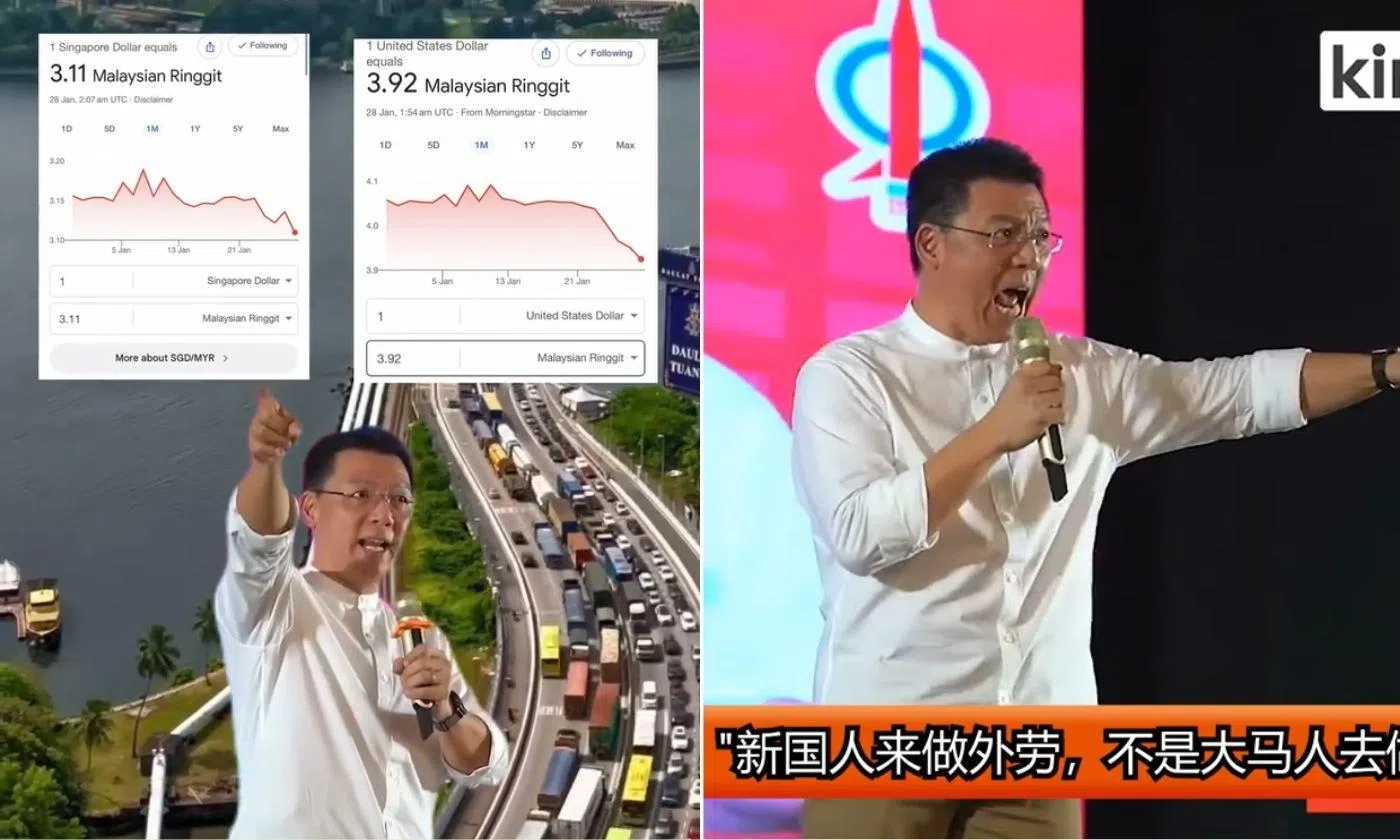
The social‑media storyline also misunderstands recent currency moves and central‑bank signaling. Malaysia’s ringgit was among Asia’s best performers in 2025, buoyed by improved fiscal communication from the government, steady capital inflows and a softer U.S. dollar; policymakers and research houses entered 2026 expecting further, albeit slower, appreciation. As of early February 2026, the ringgit was trading near RM3.95 to the U.S. dollar. (thestar.com.my)
By contrast, Indonesia’s rupiah has struggled early this year amid domestic policy uncertainty and capital‑flow jitters, ranking among the region’s weaker performers in January even as the dollar eased. “This has caused capital outflows from Indonesia,” said Teuku Riefky, a macroeconomic and financial‑market researcher at the University of Indonesia. Reuters reported the rupiah hit an all‑time intraday low near Rp16,985 per dollar on January 20, 2026. (investing.com)
The bilateral rate underscores the point: on February 6, 2026, 1 Malaysian ringgit bought roughly Rp4,270—evidence that the rupiah had weakened against the ringgit over the past year rather than the other way around. (investing.com) For policymakers, those levels matter not because of any viral video, but because they influence trade competitiveness, tourism flows and how central banks in the region calibrate interest‑rate and intervention decisions.
Travelers: what to expect at the counter
For individual travelers, the practical question is simpler than the online debate suggests. Licensed money changers can decline specific notes for practical reasons: poor condition, older series, limited storage or tight inventory for a particular currency. Thailand’s operators, for instance, are vigilant on counterfeits and increasingly ask for documentation on larger foreign‑currency transactions. In all three countries cited in the videos, acceptance of ringgit is a matter of the exchanger’s risk and inventory policy—not a sovereign ban.
As of February 16, 2026, no central bank or financial regulator in Thailand, the Philippines, Saudi Arabia or Malaysia has issued any order prohibiting licensed money changers from dealing in Malaysian ringgit. Cross‑border cash‑carriage thresholds and anti‑money‑laundering and counter‑terrorism‑financing documentation requirements remain in force under existing rules, but they apply to all currencies and are designed to safeguard the financial system rather than to single out the ringgit.