
Fantasy Basketball Week 3: Navigating a Growing Injury Crisis and Finding Value on the Wire
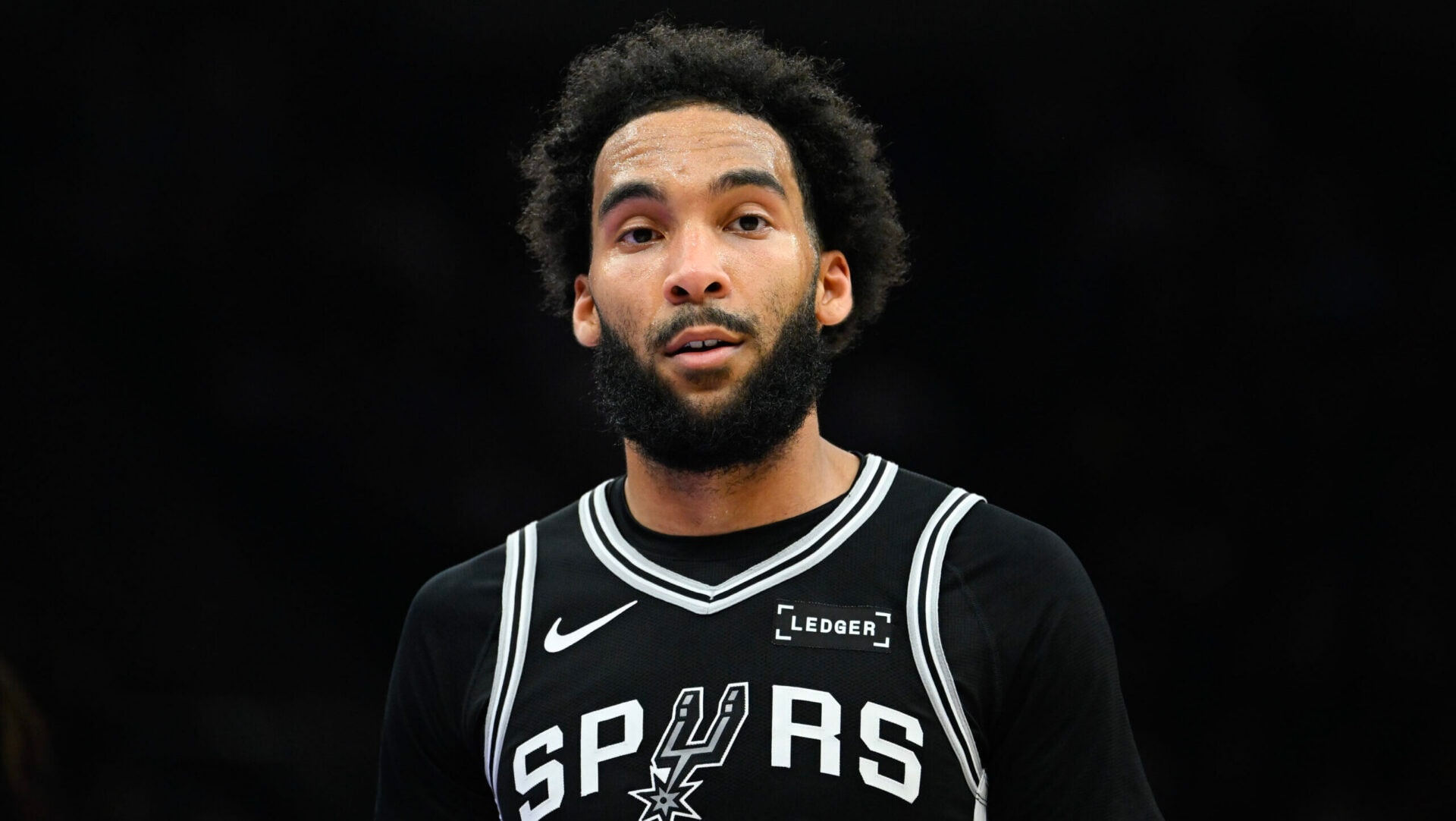
Julian Champagnie is playing over 28 minutes a night and has emerged as one of the league’s top 3-point specialists.
As Week 3 of the fantasy basketball season begins, managers are dealing with an unusually heavy run of injuries to frontline stars. Ja Morant has a Grade 2 hamstring strain and will miss at least four weeks. Anthony Edwards underwent knee surgery on Thursday and could be sidelined for two months or more. Jaren Jackson Jr. tore his MCL and is facing a six-to-eight-week recovery. Chet Holmgren is out eight-to-10 weeks with a small patellar tendon tear in his right knee. Kawhi Leonard (knee) is expected to miss three-to-four weeks, and Tyrese Haliburton will be out at least two weeks with a hamstring issue.
In real-world terms, this cluster of injuries affects playoff positioning and workload management across multiple franchises in the NBA. In fantasy formats, it forces managers to rethink roster construction earlier than usual and to lean into depth charts that are shifting on an almost nightly basis.
There is some positive news at the margins. Coby White (calf) is off the injury report for Monday, offering backcourt stability for Chicago and a potential usage bump for fantasy managers who held through his absence. Brandon Ingram (Achilles) has been assigned to the Clippers’ NBA G League affiliate, a standard practice within the league’s development structure that signals a managed return-to-play process rather than an immediate first-team workload.
Against that backdrop, Week 3 becomes less about headline names and more about identifying undervalued rotation pieces. This guide focuses on players rostered in under 50% of Yahoo leagues, where attentive managers can gain an edge through volume, category targeting and schedule leverage.
Strategy for a Compressed Week
One structural wrinkle shapes all streaming decisions this week: there are no games on Tuesday due to Election Day in the United States. With the playing calendar compressed around that dark day, streaming early carries opportunity cost. In daily-change leagues, making short-term moves before Wednesday risks burning a transaction on a player who will sit on your bench during already crowded slates.
The most efficient approach is to preserve flexibility until lineups are actually constrained. With Thursday, Saturday and Sunday offering the clearest path to squeezing extra games into active slots, the managers who time their pick-ups around those lighter days will generally extract more total minutes – and, by extension, more counting stats – from the same number of moves.
Core Rotation Targets in Shallow Leagues (50-30% Rostered)
Perimeter playmaking in Miami: Pelle Larsson (SG/SF, Miami Heat – 33% rostered)
Pelle Larsson profiles as a stabilising option in 9-category formats. He enters Monday ranked 86th, averaging 11.8 points, 3.5 rebounds, 4.0 assists and 1.2 steals against just 1.0 turnover in 29.5 minutes. His shooting efficiency – 49% from the field, 40% from three and 89% from the line, with a 67% true shooting percentage – underpins that value.
From a basketball standpoint, those numbers reflect a wing who can fit alongside high-usage stars without sacrificing spacing or ball security. For fantasy managers, the key detail is role stability. Miami plays four times this week, including lighter slates on Thursday and Sunday, and also faces a Wednesday-Thursday back-to-back where veterans could be managed. Even if Klay Thompson continues to start, Larsson’s two-way reliability and efficiency give him a path to sustained minutes, making him a rational hold beyond a pure streaming role.
Multi-category rookie impact in Dallas: Zaccharie Risacher (SF, Dallas Mavericks – 36% rostered)
The former No. 1 overall pick in the 2024 NBA Draft has looked revitalised in Dallas. With head coach Dusty May handing him meaningful minutes and a defined role, Zaccharie Risacher ranks sixth in total “stocks” (combined steals and blocks), averaging 3.7 per game. Added to that are 6.0 rebounds and close to 10 points in 30 minutes a night.
Those contributions translate into top-60 value in 9-cat and top-90 in points leagues. Crucially, they are built on defensive activity and rebounding rather than hot shooting alone, which typically makes such production more sustainable over a long season. Dallas plays four games this week, but his combination of minutes, stocks and boards suggests an asset who should be rostered with a medium-term horizon rather than as a single-week rental.
Short-term scoring punch in Toronto: Ja’Kobe Walter (SG/SF, Toronto Raptors – 39% rostered)
Ja’Kobe Walter has stepped directly into Kawhi Leonard’s vacated minutes and usage. Over four games since Leonard’s knee injury, he has averaged 14.0 points, 4.0 rebounds, 1.3 steals and 3.5 made threes in about 31 minutes. That profile has produced top-50 value in 9-cat formats, driven by three-point volume and defensive peripherals.
Toronto only plays three times this week, which slightly reduces his raw counting-stat ceiling in weekly formats, but Leonard’s multi-week absence anchors Walter’s role. For managers dealing with injuries on the wing, he serves as both a short-term replacement and a potential longer-term depth piece if the Raptors maintain his starting slot and developmental priority.
Volume shooting in San Antonio: Julian Champagnie (SF/PF, San Antonio Spurs – 31% rostered)
Julian Champagnie has seen his role expand with Tobias Harris sidelined by a calf injury. Logging more than 28 minutes per game, he has emerged as one of the league’s most productive three-point specialists. His 3.3 made threes per game rank 11th in the NBA, while his three-point percentage sits 21st in the league.
The surprise has been his defensive output: 1.2 steals and 1.0 block per game. That combination of volume threes and defensive counting stats is rare in mid-roster players, particularly at forward. With San Antonio playing four times this week and Harris not appearing close to a return, Champagnie offers managers both floor-spacing and category balance, especially in formats that reward efficiency and defensive versatility.
Backcourt organisation in Phoenix: Collin Gillespie (PG, Phoenix Suns – 43% rostered)
Collin Gillespie is best framed as a schedule-driven add with structural upside. Phoenix plays four games this week, including Thursday and Saturday, which are among the lightest nights for fixtures. As the primary playmaker behind Devin Booker, Gillespie leads the Suns in assists despite coming off the bench and operates with a 19% usage rate – a healthy figure for a reserve guard.
He is averaging 9.0 points, 5.8 assists, 3.0 steals and 2.3 made threes in 26.5 minutes. In points formats, that blend of assists and threes is particularly valuable; in 9-cat, his steals and relatively contained turnovers stand out. For managers in “High Score” or similar leagues where field-goal percentage and turnovers are de-emphasised, that statistical mix becomes even more attractive over a four-game week.
Bench scoring in New Orleans: Saddiq Bey (SF/PF, New Orleans Pelicans – 33% rostered)
Saddiq Bey’s most recent performance – 25 points on 9-for-13 shooting with 4 steals in 26 minutes off the bench against Atlanta – highlights his ceiling when his shooting is in rhythm. On the season, he is averaging 15.2 points without having eclipsed 26 minutes in any game, underlining his scoring efficiency in a constrained role.
New Orleans’ bench currently lacks high-volume scorers beyond Bey, which supports his continued deployment as a key reserve. The Pelicans’ four-game week amplifies his value, especially in 9-cat leagues where he sits just inside the top 100 on a per-game basis. For managers needing points and opportunistic steals from a forward spot, Bey is a credible short-term solution with the potential to stick as a rotation mainstay on fantasy rosters.
Guard depth in Minnesota: Terrence Shannon Jr. (SG/SF, Minnesota Timberwolves – 29% rostered)
With Anthony Edwards unavailable, Minnesota has moved to secure its wing depth by exercising Terrence Shannon Jr.’s team option. That institutional decision signals an organisational commitment that aligns with his current on-court opportunity. Despite coming off the bench and enduring a couple of quieter offensive outings, Shannon is providing three-pointers with moderate rebounds and assists in around 20 minutes.
The Timberwolves play four times this week, and his usage is projected to remain in the 18-20% range. For managers in deeper or competitive 12-team leagues, that makes him a viable depth option where injury-hit rosters need supplementary scoring and perimeter production without sacrificing flexibility.
Deep-League Options Under 30% Rostered
Opportunity at point guard in Portland: Scoot Henderson (PG, Portland Trail Blazers – 16% rostered)
Scoot Henderson has moved into the starting lineup, recording 14 points, 3 rebounds and 3 steals in 31 minutes in Saturday’s game at Utah. Previously buried in the rotation, his pathway has been opened by Ja Morant’s absence. In his first game without Morant available, Henderson exceeded 30 minutes, which is the critical threshold for fantasy relevance at the guard position.
If he continues to start, Henderson becomes a priority add, particularly in points leagues where efficiency is less punitive and usage volume is king. Structurally, a young guard stepping into extended minutes on a team recalibrating its hierarchy tends to see his role expand rather than contract, provided basic performance standards are met.
Targeting light nights with Golden State: De’Anthony Melton (SG, Golden State Warriors – 31% rostered)
Golden State only has three games on the slate this week, but two of them fall on lighter nights – Thursday and Saturday – where fantasy lineups are less likely to be fully stacked. De’Anthony Melton fits particularly well as a midweek acquisition for those days.
He recently delivered 21 points on 6-for-8 three-point shooting with 6 rebounds, 3 assists and 2 steals in 27 minutes in a win over the Clippers, with Stephen Curry resting. That level of usage is unlikely to be the norm when the Warriors are at full strength, but Melton has consistently provided two-way impact as a bench guard. On lighter slates, that profile makes him a useful plug-in for managers chasing threes and defensive counting stats.
Backcourt flexibility in Brooklyn: Nolan Traore (PG, Brooklyn Nets – 9% rostered)
The Nets have exercised Nolan Traore’s option, confirming their investment in his medium-term development. With Mikel Brown Jr. (17% rostered) resting and Egor Dëmin (ankle) set to be re-evaluated in one week, Traore has stepped into a larger role. He posted 16 points, including 4 made threes, and 6 assists in 30 minutes against Indiana on Sunday.
Brooklyn plays four times this week, closing with a Saturday-Sunday back-to-back. The likelihood that Brown sits at least one of those games raises Traore’s streaming appeal, particularly in deeper leagues. Managers should monitor Brooklyn’s injury report, but as long as backcourt absences persist, Traore offers meaningful upside in assists and threes.
Guard streaming in Phoenix: Jordan Goodwin (PG/SG, Phoenix Suns – 4% rostered)
Jordan Goodwin is a deeper-cut option tailored specifically to schedule exploitation. Phoenix’s presence on Thursday and Saturday gives him a clear lane into fantasy lineups on nights when benches are in play. The combo guard is currently averaging 8.8 points, 3.8 rebounds, 2.8 assists, 2.3 made threes and 1.8 steals in 21 minutes, placing him inside the top 90 in 9-cat leagues.
For managers in 12-plus team formats, Goodwin’s low roster rate means he is likely to be available as a late-week addition. His balanced stat profile – touching points, threes, rebounds, assists and steals – allows him to patch multiple category deficits from a single roster slot, which is particularly valuable in tight head-to-head matchups.
Players to Monitor Rather Than Rush to Add
Several names sit just outside universal add territory but warrant close observation, especially in leagues with deeper benches or injured-reserve flexibility:
- Aday Mara, C, Oklahoma City Thunder (39% rostered)
- Jusuf Nurkić, C, Utah Jazz (44% rostered)
- Cam Spencer, PG/SG, Memphis Grizzlies (13% rostered)
- Isaiah Stewart, PF/C, Memphis Grizzlies (10% rostered)
- Keaton Wagler, SG, LA Clippers (35% rostered)
- Daniss Jenkins, PG/SG, Detroit Pistons (17% rostered)
- Obi Toppin, SF/PF, Indiana Pacers (24% rostered)
Each sits in a situation where minutes could expand quickly due to injuries, rotation tweaks or strategic rest management by coaches. For managers in competitive leagues, having a watchlist queue ready – rather than reacting only after a breakout box score – is often the difference between securing and missing the next wave of mid-season value.
Week 3 Schedule: Calendar as Competitive Advantage
This week’s fixture grid is as important as any individual player profile. No games are scheduled on Tuesday because of Election Day. Thursday is the lightest active day, with only two games (Orlando at Phoenix and Miami at Golden State). Saturday and Sunday each feature seven games and act as secondary streaming windows. Every team plays on Monday, and 28 teams take the floor on Wednesday, creating heavy slates where fringe players may be left on fantasy benches.
- Monday: 15 games
- Tuesday: 0 games
- Wednesday: 14 games
- Thursday: 2 games
- Friday: 9 games
- Saturday: 7 games
- Sunday: 7 games
In practice, that means managers gain the most by avoiding early-week churn. Unless there is a major injury or a high-upside role change, waiting until after Wednesday to make streaming moves typically ensures that incoming players are used on nights when lineups have spare capacity.
Teams and Profiles to Target on Lighter Nights
Thursday-centric streaming: Suns, Magic, Warriors, Heat
Only four teams play on Thursday – the Phoenix Suns, Orlando Magic, Golden State Warriors and Miami Heat – and each also appears on either Saturday or Sunday. That makes their fringe rotation pieces disproportionately valuable this week.
- Miami Heat: Beyond established stars, Klay Thompson (10% rostered) serves as a deep-league three-point specialist on light slates. Pelle Larsson’s current role further strengthens Miami’s status as a key target.
- Golden State Warriors: Brandon Williams (4% rostered) and Gui Santos (12% rostered) are options for managers willing to speculate on bench usage when the schedule opens up minutes.
- Phoenix Suns: In addition to Collin Gillespie and Jordan Goodwin, Luke Kennard (2% rostered) offers a narrow but useful profile built around three-point shooting. Dillon Brooks (44% rostered) provides a more all-around statistical line where available.
- Orlando Magic: While no specific fringe player is highlighted here, Orlando’s mere presence on Thursday means any emerging rotation piece there will carry elevated streaming value during the week.
Four-game teams with broad utility
Eighteen teams play four games this week, granting their role players more opportunities to aggregate value over volume:
- Atlanta Hawks
- Boston Celtics
- Brooklyn Nets
- Cleveland Cavaliers
- Dallas Mavericks
- Los Angeles Lakers
- Miami Heat
- Milwaukee Bucks
- Minnesota Timberwolves
- New Orleans Pelicans
- Oklahoma City Thunder
- Philadelphia 76ers
- Phoenix Suns
- Portland Trail Blazers
- Sacramento Kings
- San Antonio Spurs
- Utah Jazz
- Washington Wizards
For fantasy managers, those teams become primary hunting grounds for high-minute role players like Champagnie, Risacher, Bey and Henderson, whose production scales with additional opportunities. From a real-league perspective, teams leaning on their depth through this stretch may also reveal how they intend to manage workloads ahead of later-season congestion, including back-to-backs and travel-heavy weeks set by the league’s central schedule office.
Managing Risk in an Injury-Heavy Environment
The current wave of injuries to Morant, Edwards, Jackson Jr., Holmgren, Leonard and Haliburton underlines a broader strategic reality: fantasy success increasingly depends on exploiting institutional structures as much as individual talent. With the league’s calendar tightly regulated and medical staffs prioritising cautious timelines, absences of multiple weeks are now often planned into team strategy rather than treated as isolated disruptions.
For fantasy managers operating within formats shaped by those same schedules and rest protocols, the most effective response is to think like a front office – valuing durable rotation pieces, paying attention to organisational decisions such as exercised options and G League assignments, and timing waiver moves to match the underlying calendar rather than the day’s headlines.
In Week 3, that means using Tuesday’s dark slate and the heavy Monday-Wednesday load as context, then turning toward the Thursday, Saturday and Sunday windows with a clear plan built around the four-game teams and emerging contributors outlined above.