
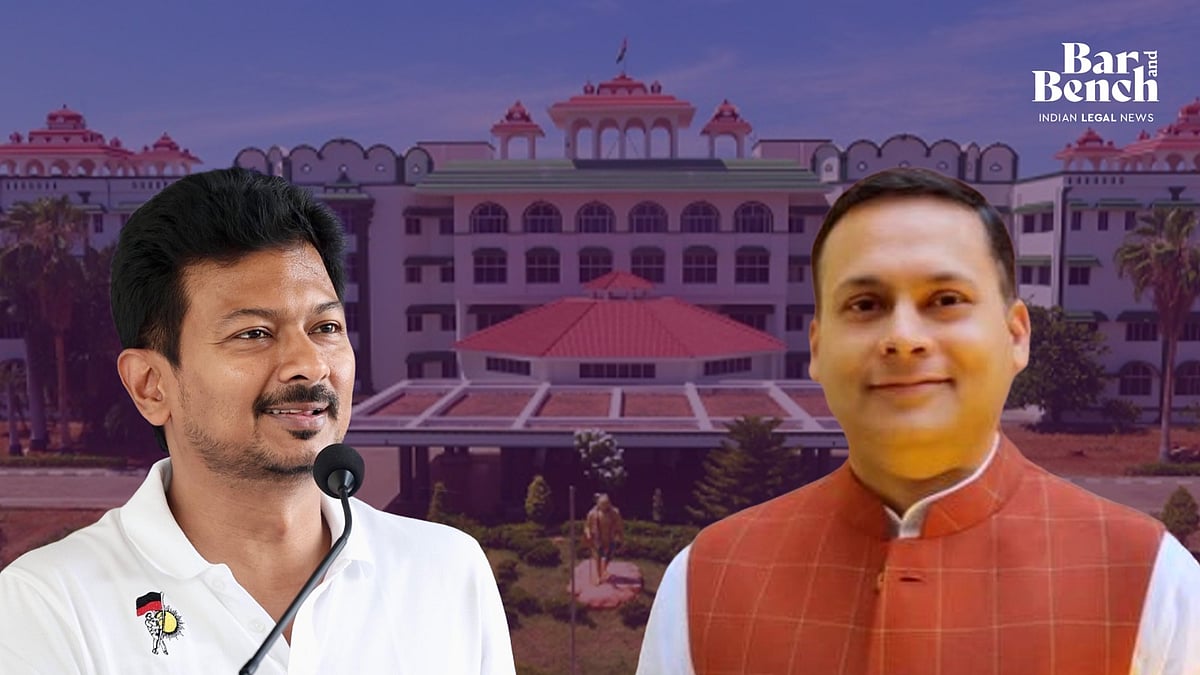
Justice Srimathy, in a court order, rejected the State’s attempt to defend a Minister’s remarks by invoking a roster of historical and spiritual figures as alleged critics of Sanathana Dharma, calling the reliance misinformed. The Court held that those figures cannot be portrayed as opposing the tradition.
The ruling turns on how the State characterized widely known leaders and thinkers. By correcting the record on their stated beliefs, the Court limited the scope of historical references the government may cite to justify a Minister’s comments. The decision, delivered by the Madurai Bench of the Madras High Court in the context of a challenge to an FIR arising from the Sanathana Dharma controversy, also clarifies how constitutional free-speech protections interact with hate-speech standards under Indian law as articulated by the higher judiciary and the Constitution of India.
Court’s assessment of the figures cited
According to the order, the Court made the following determinations about individuals the State cited:
– Mahatma Gandhi: He repeatedly declared himself a Sanathani Hindu, read the Bhagavad Gita, Ramayana, Mahabharata and Manusmriti, and identified ahimsa as his core virtue; Gandhi, the Court held, could not be portrayed as being against Sanathana Dharma.
– K. Kamaraj: A devout Hindu who sang bhajans of Lord Murugan and whose political legacy, the Court noted, did not include calls for dismantling Hindu traditions.
– The Buddha: While critical of certain Vedic practices, he pursued a spiritual path deeply rooted in Indian philosophical traditions and could not be described as opposing Sanathana Dharma.
– Ramanujar: As the proponent of Vishishtadvaita philosophy, he was described as a cornerstone of Sanathana Dharma, having openly propagated the mantra “Om Namo Narayanaya” for universal spiritual benefit.
– Vallalar: He emphasized compassion for all living beings through arulperumjothi and opposed animal slaughter-values the Court said are embedded within Sanathana thought.
By re-situating these figures within the broader intellectual and devotional history of Hinduism, the Court signalled that selective quotations or isolated critiques cannot be used by the State to recast them as opponents of an entire religious tradition.
Boundaries on invoking historical figures
By rejecting the State’s framing, the Court drew a clear line between robust public debate and the mischaracterization of widely recognized figures to defend official speech. The order indicates that institutional records of belief and practice attributed to such figures must be represented accurately when advanced as justification in court, particularly when a government’s defence of a serving Minister’s remarks could influence police action, prosecutorial discretion, and the threshold for registering hate-speech complaints.
For governments and law-enforcement agencies, the ruling underscores that reliance on revered national leaders and religious reformers in court filings is not merely rhetorical: such references will be tested against established historical consensus and documentary evidence. Misstating those records, the Court suggested, cannot be a shield for statements that may otherwise fall foul of constitutional and statutory constraints on hate speech.
Terminology and legal stakes clarified in the order
The Court’s discussion centers on Sanathana Dharma, a Sanskrit term commonly used to denote the broader Hindu tradition. In evaluating the State’s examples, the Court distinguished between internal critique within traditions-such as contesting particular rituals, caste practices or social hierarchies-and opposition to the tradition itself, which in this case was examined in the context of whether a call for the “eradication” of Sanathana Dharma could amount to hate speech.
That distinction is likely to matter for future litigation involving political speech. The judgment effectively instructs State authorities that while criticism of aspects of religion may be protected expression, characterizing an entire faith tradition as something to be eradicated, and then retrospectively recruiting major historical figures to that position, risks crossing into the territory of unlawful incitement as defined by India’s constitutional jurisprudence and criminal law. For readers seeking to understand the broader backdrop, the case sits at the intersection of religious freedom, political rhetoric and hate-speech scrutiny under India’s constitutional framework and the criminal provisions that implement it, particularly as courts continue to test the limits of ministerial speech in public life.
“Except E.V. Ramasamy @ Periyar, none of them had uttered against Sanathana Dharma,” the Court concluded.