
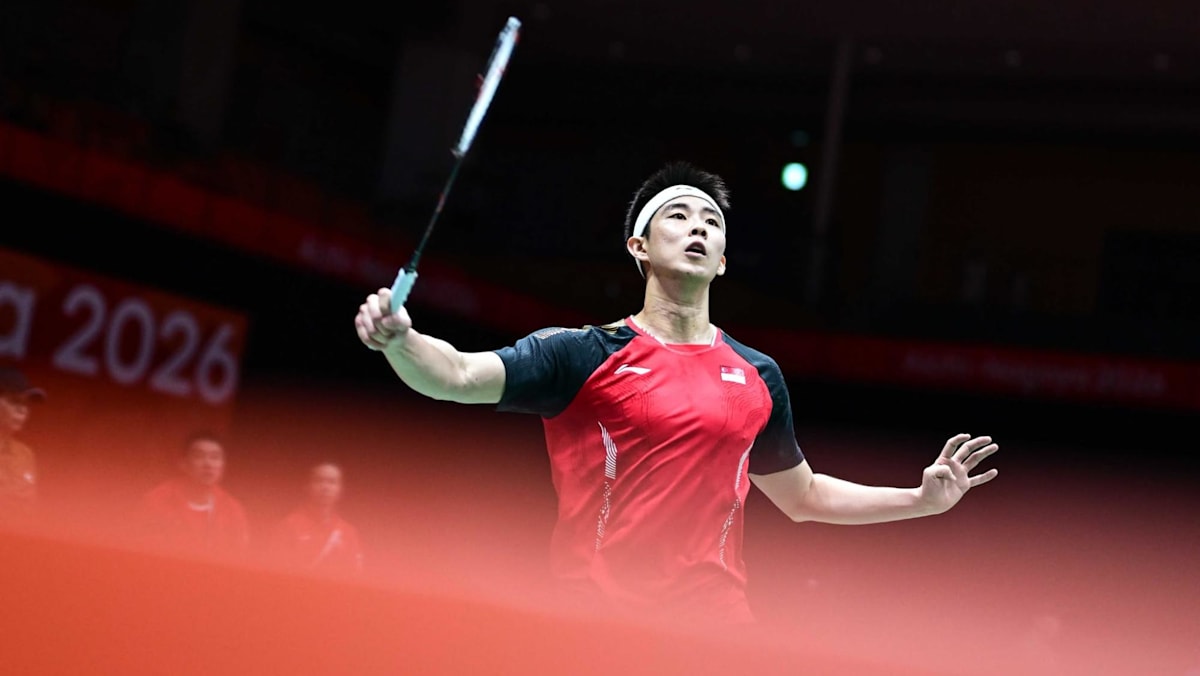
Loh Kean Yew Sends Lakshya Sen Out of Asian Games in Early Upset, Books Place in Last 16
Singapore’s Loh Kean Yew has advanced to the round of 16 in men’s singles badminton at the Asian Games, defeating India’s Lakshya Sen in their second-round meeting and ending the Indian shuttler’s campaign after a three-game battle.
The result gives Loh a winning start to his individual campaign and removes one of the prominent names from the draw, as Sen’s exit adds to a difficult Games for India’s men’s badminton contingent.
High-Stakes Meeting Between Former World Champion and Olympic Medal Contender
Loh, a former men’s singles world champion, and Sen, one of India’s leading singles players in recent seasons, met early in the knockout phase in a tie that always looked likely to shape the tone of the event’s men’s draw.
Reports from the Asian Games detail that:
- Loh Kean Yew defeated Lakshya Sen in their second-round clash in the men’s singles event.
- The match went to a deciding third game, underlining the narrow margins between the two.
- With the win, Loh progressed to the round of 16, while Sen’s individual campaign ended in the second round.
The Asian Games badminton competition is staged under the authority of the Badminton World Federation and the continental multi-sport framework overseen by the Olympic Council of Asia. The men’s singles event follows a straight knockout format, meaning a single defeat eliminates athletes from the draw and amplifies the consequences of early marquee matchups.
Match Context and Tactical Balance
The contest between Loh and Sen was described as a three-game battle, reflecting the best-of-three games system used in international badminton, where each game is played to 21 points under rally scoring.
Within that structure, a match that goes the distance often signals a close tactical contest. For international readers less familiar with the sport, the format places a premium on shifts in momentum: players can recover from a slow start in one game, but must manage pace, shot selection and physical output over potentially three intense games within a compressed time window.
In this context, Loh’s ability to close out the deciding game against an opponent of Sen’s calibre reinforces his standing as a player capable of navigating high-pressure, swing-heavy contests on a major stage.
Implications for the Asian Games Draw
Sen’s exit in the second round removes a significant contender from the top half of the men’s singles field and reshapes the competitive landscape around Loh’s section of the draw.
From a tournament perspective:
- Loh’s progression to the last 16 keeps Singapore in contention for a deep run in men’s singles.
- India loses an established singles presence at a relatively early stage, heightening scrutiny on the remaining members of its badminton squad.
- The result subtly alters paths for other seeded or in-form players, who now avoid facing Sen later in the tournament but may encounter Loh in his current rhythm instead.
With every stage of the Asian Games contributing to national medal tallies and sporting reputations, the balance of results in high-profile sports such as badminton has resonance beyond the court, influencing perceptions of national programmes and their strategic planning cycles between major multi-sport events.
Pressure Point for India as Campaign Setbacks Accumulate
Sen’s defeat has been framed as part of a broader “badminton tragedy” narrative for India at these Games, coming after earlier disappointment involving the men’s pair Satwik and Chirag. Together, these outcomes place additional pressure on the remaining Indian badminton representatives to sustain medal hopes in other draws.
At elite level, early exits at a continental multi-sport Games can have several medium-term effects:
- They feed into internal reviews of preparation cycles, including scheduling, training blocks and load management across the season.
- They may influence selection debates for future team events and multi-sport delegations, as federations weigh performances across World Tour events and Games-time results.
- They can shift resource and coaching emphasis between singles and doubles units, depending on where medal returns appear most resilient.
For fans and administrators in India, where badminton has become a key Olympic and Asian Games medal sport, the combination of Satwik-Chirag’s setback and Sen’s second-round exit will likely intensify discussion around depth, succession planning and the balance between chasing World Tour points and peaking for multi-sport tournaments.
Career and Form Narrative for Loh Kean Yew
For Loh, the win over Sen adds a timely statement result at a Games where continental rivals are also targeting podium places. Given his status as a former world champion, scrutiny around his ability to translate that peak into sustained success at multi-sport events has been a recurring storyline.
A successful run into the business end of the Asian Games would:
- Support his claim to remain among the leading singles players in Asia.
- Strengthen Singapore’s case for continued investment in high-performance badminton structures and athlete pathways.
- Enhance his seeding prospects and reputation heading into future majors held under the same global regulatory framework.
Even without precise scorelines in the public domain here, the established fact that Loh came through a three-game match against a player of Sen’s profile offers a strong performance marker for his current form.
Why This Result Resonates Beyond One Match
Badminton at the Asian Games occupies a particular place in the global calendar: Asia houses many of the sport’s dominant nations, and success at this level is often treated by federations as a benchmark for the health of their programmes.
Within that context, Loh’s victory and Sen’s exit matter for several overlapping reasons:
- They shift immediate medal calculations in a discipline where Asian athletes already dominate the world stage.
- They influence how both Singapore and India evaluate the effectiveness of their national high-performance systems over the current Olympic cycle.
- They contribute to ongoing selection, funding and planning decisions taken by national associations under the sport’s international governance framework.
As the tournament moves into the later knockout rounds, Loh’s continued presence ensures that men’s singles remains a focal point for Singaporean interest, while India’s attention may increasingly tilt toward other draws and future events in its badminton calendar.