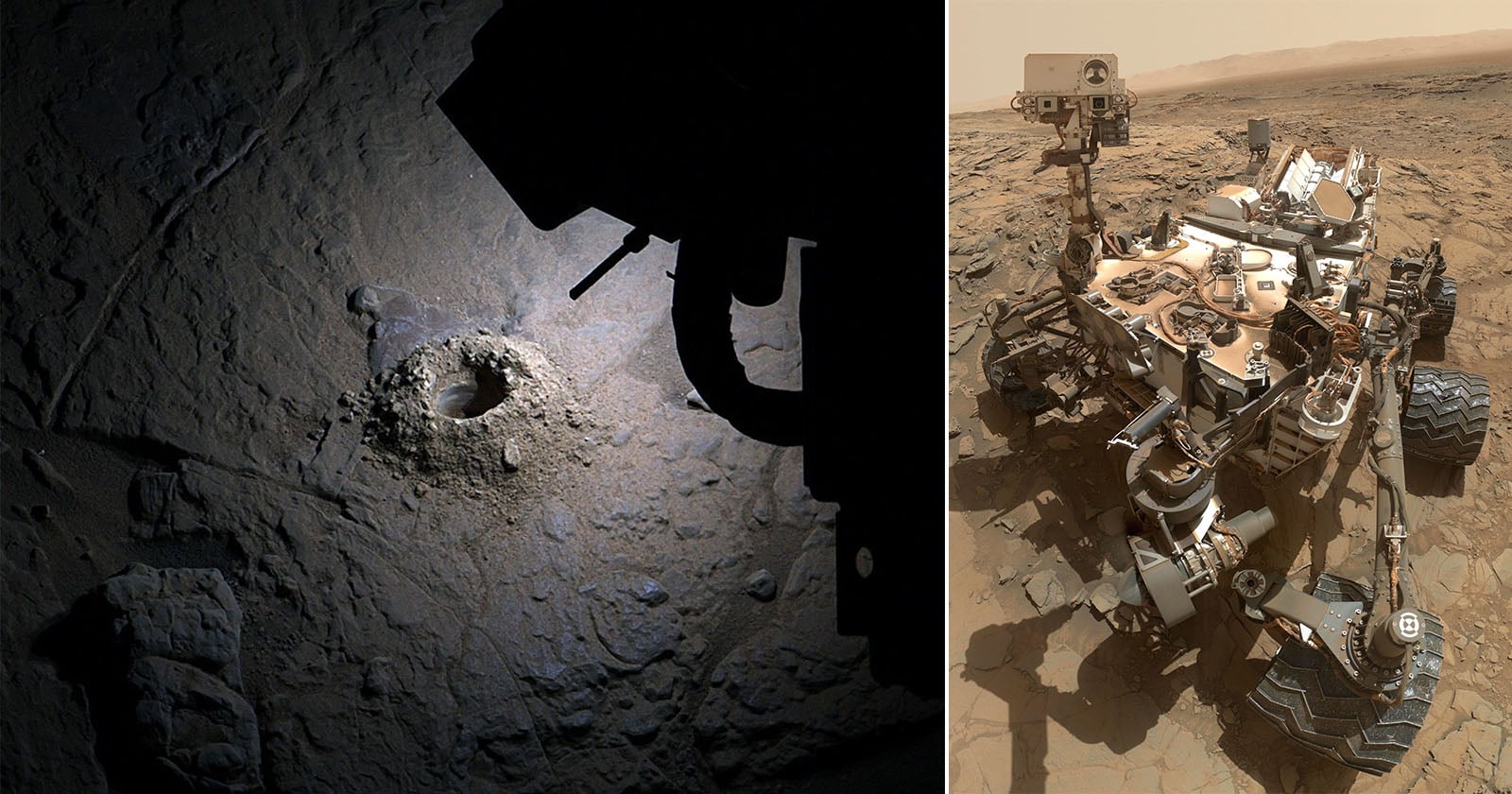
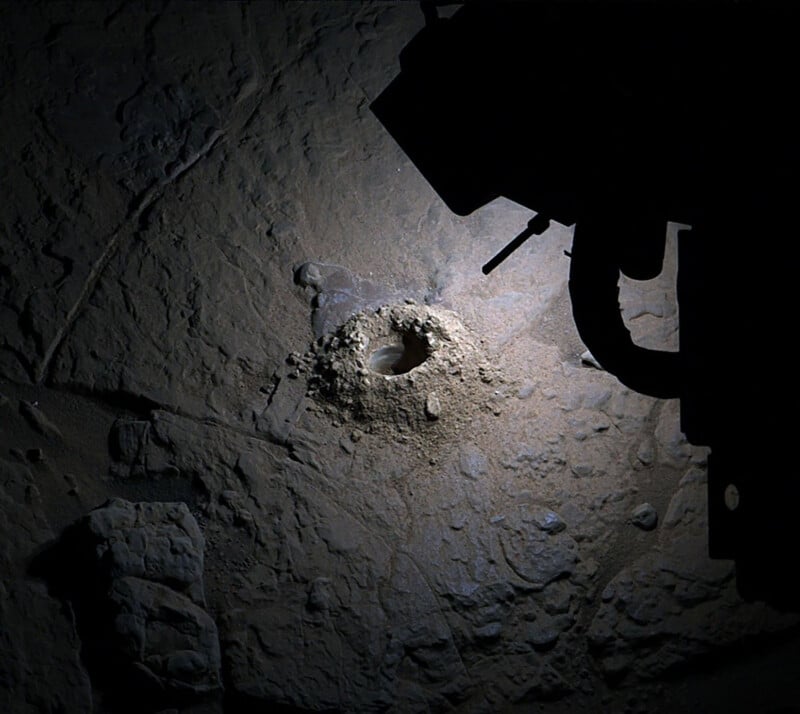
The discovery of diverse organic molecules on Mars marks a pivotal shift in the understanding of the Red Planet’s geochemical history. Utilizing the Curiosity rover, researchers have identified complex carbon-based compounds that suggest the Martian surface once possessed the necessary chemical building blocks for prebiotic chemistry. These findings do not confirm the presence of past or present biological activity, but they establish that the environment was capable of sustaining organic matter over geological timescales.
SAM Instrument Architecture and the TMAH Process
The detection was made possible through the Sample Analysis at Mars (SAM) instrument suite, a sophisticated mobile laboratory designed to analyze the chemical composition of the Martian atmosphere and soil. On board Curiosity, SAM brings together instruments that would normally fill a terrestrial lab and compresses them into a payload that has to survive launch, landing, and years of operation on another world.
To uncover these molecules, the mission employed a specialized chemical technique known as TMAH (Tetramethylammonium hydroxide) pyrolysis. In practice, Martian samples are heated in the presence of TMAH, which breaks down and methylates complex compounds, transforming non-volatile organics into gases that can be separated and identified by SAM’s instruments.
Traditional heating methods often destroy fragile organic compounds or fail to release them from the mineral matrix of the soil. The introduction of TMAH allows for a more gentle chemical extraction, enabling the rover to detect molecules that were previously invisible to its sensors and expanding the mission’s reach beyond the most robust, heat-resistant organics.
| System Component | Function/Specification |
|---|---|
| SAM Suite | Integrated gas chromatograph, mass spectrometer, and tunable laser spectrometer for in situ chemical and isotopic analysis. |
| TMAH Pyrolysis | Chemical catalyst used to volatilize and derivatize organic molecules at lower temperatures, preserving diagnostic structures. |
| Target Analytes | Carbon-based organic molecules (e.g., aromatic compounds, carboxylic acids) and associated isotopic signatures. |
| Analysis Method | Thermal extraction followed by separation and molecular mass identification, combined with isotopic ratio measurements. |
The Biological Ambiguity of Carbon Compounds
While the presence of organic molecules is a prerequisite for life, it is not a definitive biosignature. Carbon-based chemistry occurs frequently through abiotic processes, such as volcanic activity, the delivery of carbon-rich meteorites, or the interaction of water with minerals (serpentinization). The challenge for planetary scientists lies in distinguishing between these geological or cosmochemical artifacts and genuine biological remnants.
The inherent uncertainty of these findings is captured by the scientific community’s cautious approach to the data. Organic molecules can persist for billions of years in the Martian subsurface, acquiring overprints from radiation and chemical alteration that blur their origins. As the analysis continues, the central question remains: “Is it life? We can’t tell”. For now, researchers frame the discovery as evidence that Mars once hosted the right chemistry, rather than proof that it hosted biology.
To resolve this ambiguity, researchers look for specific patterns in the carbon isotopes. Biological processes typically prefer lighter isotopes of carbon, leaving a distinct signature that differs from the distribution found in inorganic mineral deposits. Scientists are also searching for molecular patterns-such as repeating chains, specific ratios of related compounds, and associations with particular minerals-that would be difficult to produce without biology. Any such claim, however, would face an unusually high bar of proof before the global scientific community, and space agencies, would be prepared to declare evidence of life beyond Earth.
Planetary Protection and the Sample Return Pipeline
The discovery of organic materials increases the criticality of strict planetary protection protocols, the standards set internationally through the Outer Space Treaty to prevent harmful contamination of other worlds and of Earth. To avoid “forward contamination”-the introduction of Earth-based microbes to Mars-all rover hardware undergoes rigorous sterilization and bioburden reduction. This ensures that any detected organic molecules are, as far as possible, indigenous to Mars and not remnants of terrestrial contamination.
The current discovery phase is a precursor to a more complex infrastructure goal: the Mars Sample Return campaign led by major space agencies. Because the onboard instruments of a rover have limited sensitivity and resolution, definitive proof of life-or a definitive null result-will likely require the physical transport of carefully selected Martian samples to Earth-based laboratories, where entire suites of high-precision instruments and independent teams can interrogate the same material.
- Containment: Samples must be sealed in hermetic tubes on Mars and remain in controlled, traceable custody throughout transit to preserve both scientific integrity and biological safety.
- Ascent: A dedicated Mars Ascent Vehicle (MAV) is required to launch the samples into orbit, where they can be transferred to an Earth-return spacecraft without exposing the Martian material to open space.
- Bio-containment: Earth-side reception is expected to occur in purpose-built, high-level biosafety and curation facilities operating under national implementation of international planetary protection policy, designed both to protect Earth’s biosphere and to preserve any potential Martian biosignatures.
- Instrument Resolution: Terrestrial mass spectrometers, electron microscopes, and genomic-style sequencing tools offer orders of magnitude more precision and flexibility than rover-mounted hardware, allowing cross-checks that are essential for claims as consequential as life detection.
For policymakers and space agencies, these findings on Martian organics are not just a scientific curiosity; they shape multibillion-dollar decisions on mission architecture, international collaboration, and biosafety standards. As Mars Sample Return moves from concept to hardware, the question raised by Curiosity’s data-whether Mars ever supported life-will increasingly be answered not just in laboratories, but in legislatures and diplomatic forums that govern how humanity explores another potentially habitable world.