
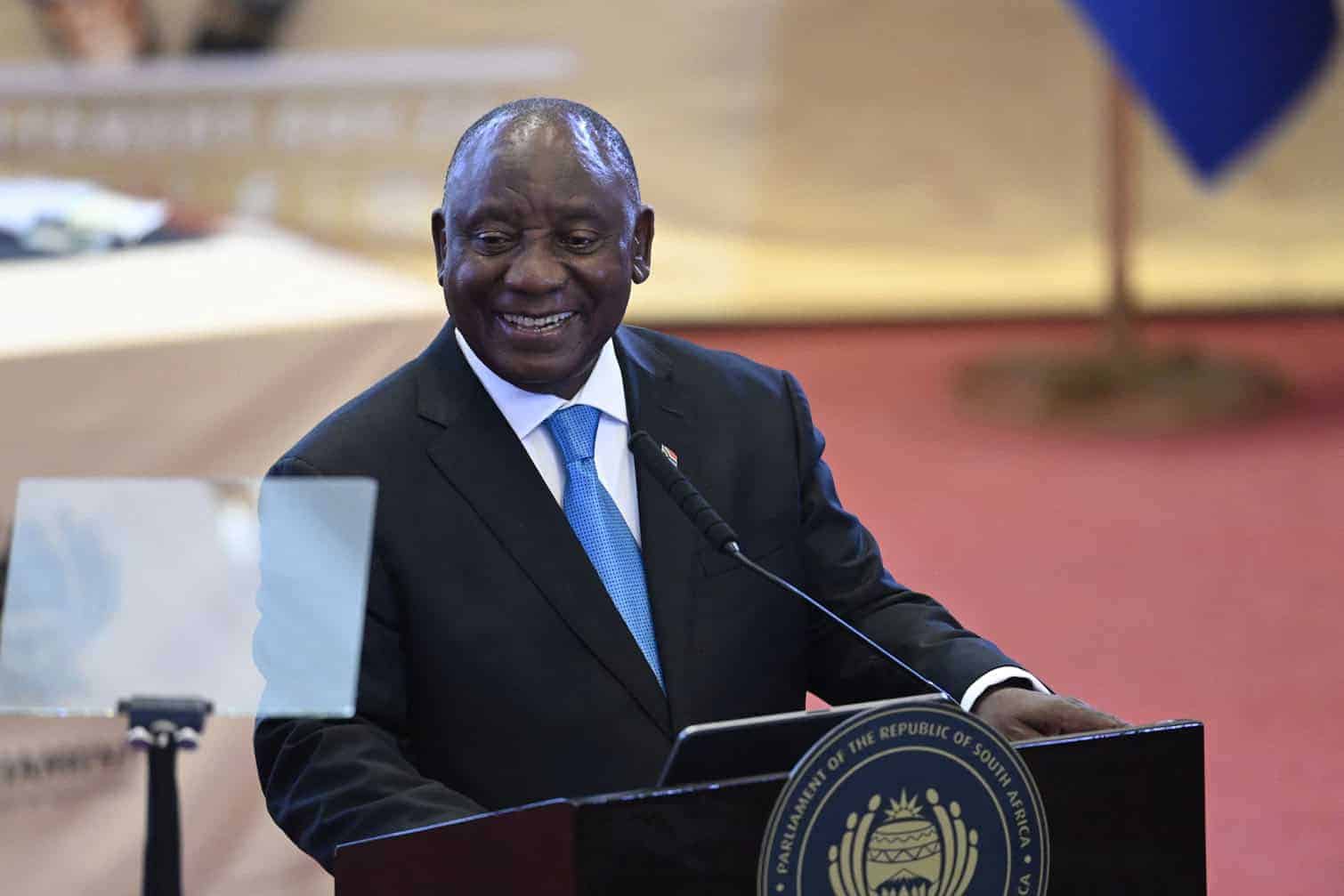
CAPE TOWN — President Cyril Ramaphosa said the government is continuing consultations on a revised White Paper on Local Government during his State of the Nation Address, describing a plan to make municipalities “modern” and “fit for purpose” and to review how local government is funded. He added that the current system is “too complex and fragmented” and promised the paper would be finalised “in the coming months.”
The pledge comes in an election year and amid widespread frustration over basic service failures in many municipalities. It also revives a process first placed on the national agenda in September 2022 and referenced again in last year’s address, raising questions about timing, delivery capacity and what—if anything—has substantively changed.
What the revised white paper seeks to change
The revised policy document is expected to set out how national and provincial governments intend to reshape a sphere that is constitutionally central to day‑to‑day service delivery, but widely seen as the weakest link in South Africa’s governance chain. In broad terms, it aims to:
– Make municipalities “modern” and “fit for purpose,” so residents can access services more easily, including through improved digital systems and more predictable basic services.
– Rework the municipal funding model as many councils struggle to collect revenue, manage debt and maintain service delivery, especially in smaller and predominantly rural municipalities.
– Simplify a system the president described as “too complex and fragmented,” which places heavy responsibilities on small and weak municipalities and blurs accountability between spheres of government.
“Learning from our experience over the past 30 years, we will, in the coming months, finalise a revised white paper on local government. This will provide solutions for an effective local government system. The white paper will reimagine how local government works.
“The current system is too complex and fragmented, expecting even small and weak municipalities to take on many responsibilities,” he said.
While the presidency has framed the document as a long-term blueprint, it will also serve as a reference point for future legislation, funding decisions and oversight of municipalities by national and provincial executives.
Pushback over timelines and capacity
Political analyst Theo Neethling welcomed renewed policy work but argued the plan, as presented, lacked operational clarity and visible urgency.
“Sound policy formulation is always a necessary starting point. Yet it is in the realm of implementation that political intentions are ultimately tested, and where policy success or failure is determined.”
“The ambitions set out in the State of the Nation Address will require three scarce resources: time, funding and administrative competence. South Africa currently enjoys little margin for comfort in any of these areas.”
“Moreover, public patience is increasingly thin. Many citizens are no longer prepared to wait for long-term remedies; they expect tangible improvements in the immediate term,” he said.
Neethling said the absence of firm dates was notable: “Without a sense of urgency and concrete implementation milestones, even well-conceived policy risks remaining aspirational rather than transformative,” he said.
His comments echo a broader concern in the policy community: that another high-level framework, without enforcement mechanisms, clear sequencing and credible monitoring, will struggle to shift entrenched failures in water, electricity distribution, waste management and local roads.
SALGA backs a reset focused on funding model
The South African Local Government Association (SALGA) endorsed the president’s call to fix local government, stressing leadership stability, professionalisation and sustainable financing as preconditions for any white paper to succeed.
“As the sphere closest to communities, municipalities require stable leadership, professionalisation and a sustainable funding model if they are to fulfil their constitutional mandate,” SALGA president Bheke Stofile said.
“The president’s acknowledgement of local government challenges aligns with Salga’s long-standing position that municipalities struggle under the weight of unfunded mandates, governance instability, ageing infrastructure and insufficient capacity,” he added.
SALGA has for several years argued that the design of intergovernmental transfers and the assignment of new responsibilities to councils often outpaces the resources and skills made available to them. A revised white paper, in its view, should clarify who pays for which functions and how chronic under‑collection of municipal revenue will be addressed.
How local government fits into South Africa’s system
Local government’s role is defined in Chapter 7 of the Constitution of the Republic of South Africa, which recognises national, provincial and local spheres of government as “distinctive, interdependent and interrelated.”
Within that framework:
– Municipalities are responsible for core local services, including water and sanitation, local roads, refuse removal, street lighting and other community-facing functions that shape daily life for residents.
– Councils are governed by elected municipal councils that must approve budgets, set tariffs and oversee administrations led by municipal managers.
– Municipal revenue typically combines locally raised income—such as property rates and service charges—and intergovernmental transfers from national and provincial governments; pressure on either side can quickly impact service delivery and maintenance of infrastructure.
Because the white paper will guide how functions, powers and funding are allocated across these spheres, it has implications for future regulatory decisions on water, electricity distribution and spatial planning.
Political context
Ramaphosa’s remarks arrive as service delivery remains a central voter concern and as local government performance is increasingly seen as a test of the governing party’s credibility. Repeated water outages, sewage spills and failing roads in several provinces have sharpened scrutiny of municipal governance and financial management.
The president drew criticism last year for suggesting municipalities run by the Democratic Alliance perform better; he has since clarified his comments. The renewed emphasis on a white paper under discussion since September 2022 places implementation—and proof of near-term improvements—under closer scrutiny.
Opposition parties and civil society groups are likely to judge the process less on the elegance of the policy design than on whether residents in failing municipalities see faster responses to breakdowns, improved billing systems and more consistent enforcement against corruption and maladministration.
Key milestones to date
– September 2022: Review of the White Paper on Local Government placed under discussion by national government, signalling an intention to overhaul a framework first adopted in 1998.
– 2023: The white paper process is mentioned in the president’s State of the Nation Address, with a commitment to extensive consultation with provinces, municipalities and sector bodies.
– Latest address: The president says consultations are continuing and the revised paper will be finalised “in the coming months,” without specifying when a draft will be tabled in Parliament or how it will translate into new legislation and regulations.
Consultations on the white paper are continuing. No detailed timetable was announced in the address. The presidency has not yet indicated when Cabinet will consider the final text, how quickly any legislative amendments will follow, or how progress will be reported to Parliament and the public.
For ratepayers and residents living with repeated service failures, the test will be whether this policy exercise—however ambitious on paper—results in visible changes inside municipal offices, on council balance sheets and, ultimately, in the reliability of basic services.