JOHOR BARU – Malaysia’s Ministry of Transport has implemented a temporary diesel-powered rail solution for the Southern Shuttle service to ensure immediate connectivity for commuters in Johor, bypassing a multi-year wait for new rolling stock.
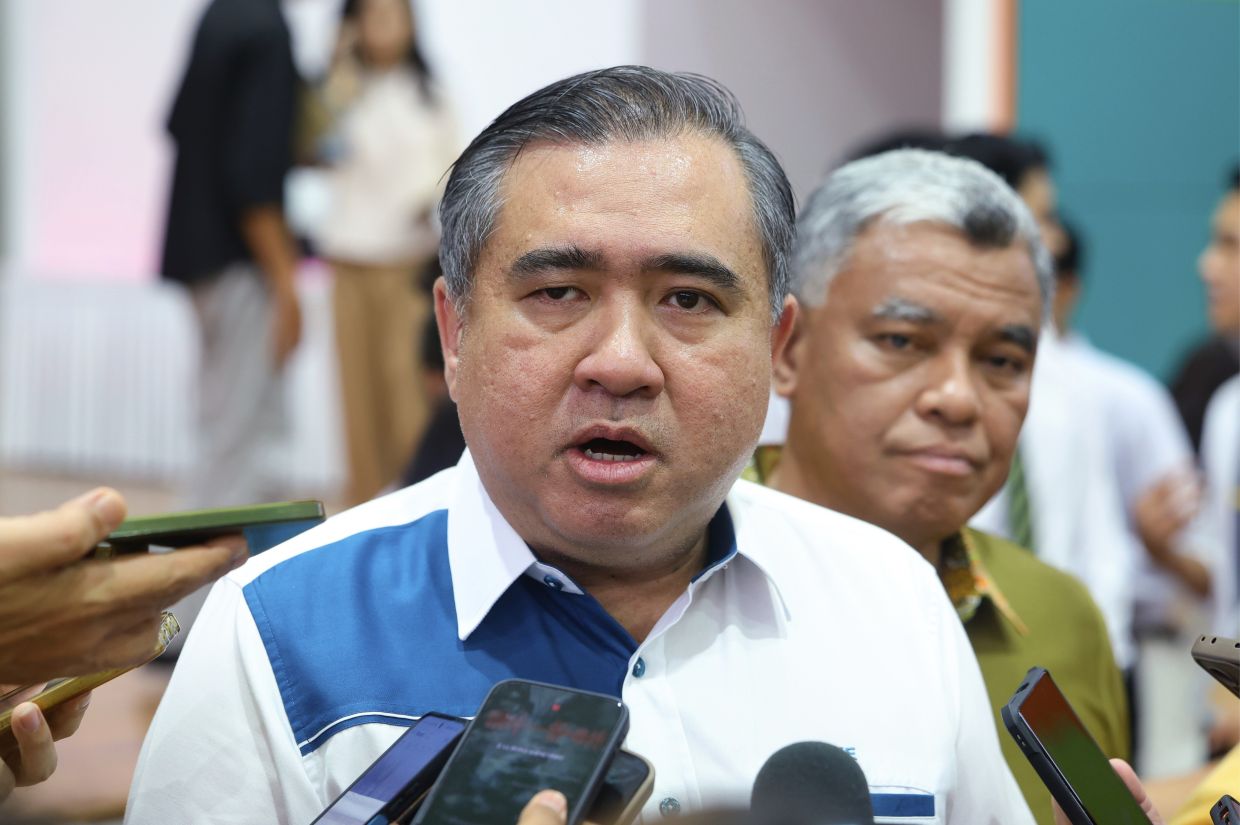
Transport Minister Anthony Loke confirmed that the deployment of diesel trains serves as a bridge until the arrival of 10 new Electric Multiple Unit (EMU) train sets and the completion of critical infrastructure upgrades in the southern corridor.
The move is part of a broader strategic effort to modernize Malaysia’s rail network, specifically the integration of the southern region into the national Electric Train Service (ETS) grid. As Johor Bahru serves as the primary gateway between Malaysia and Singapore, the efficiency of its internal transit systems is viewed as a prerequisite for the success of regional economic initiatives, including the Johor-Singapore Special Economic Zone (JS-SEZ).
At the policy level, the stopgap arrangement also reflects the Ministry’s obligation, under Malaysia’s Land Public Transport Act 2010, to maintain continuity and safety of rail services while longer-term infrastructure works are underway.
Interim Fleet and Route Expansion
The Southern Shuttle currently provides essential links between Kulai, JB Sentral, and Pasir Gudang. The Kulai-to-JB Sentral leg is clocked at approximately 40 minutes, while the journey from Kempas Baru to Pasir Gudang takes between 40 and 45 minutes.
In a significant shift for the region’s logistics and transit patterns, the Kempas Baru-Pasir Gudang route-historically reserved exclusively for freight operations-has been opened to passenger traffic for the first time. Transport planners see this as an early test of how the southern rail spine can support both commuter movements and industrial corridors linked to Johor’s ports once full electrified services commence.
Minister Loke defended the use of older diesel assets to avoid a service vacuum.
“We have two options: either to wait two to three years for 10 new EMU train sets to be completed or to use the existing trains now so that the people of Johor do not have to wait longer,” Loke stated via Facebook on Saturday. “…the new EMU trains will arrive in due time. But if the public can already use the service now, there is no need to wait.”
The Gemas-Johor Bahru Electrification Project
The current reliance on diesel traction is a symptom of the ongoing transition toward a fully electrified double-tracking system. The Gemas-Johor Bahru electrified double-tracking project is the final missing link in the peninsula’s high-capacity electric rail corridor, following earlier upgrades between Padang Besar in the north and Gemas in the south.
Once completed, the project will allow the ETS-Malaysia’s premier intercity electric rail service-to run directly from the capital, Kuala Lumpur, through to Johor Bahru. This will eliminate the need for passengers to switch trains at Gemas, significantly reducing travel time and increasing frequency between the north and south of the country. Federal officials have previously framed the line as a backbone for long-term integration of Johor’s economy with Greater Kuala Lumpur and, by extension, with cross-border flows into Singapore.
The transition involves several key infrastructure milestones:
- The installation and commissioning of overhead catenary systems across the Gemas-JB stretch, together with associated power and signalling works.
- The upgrading and, in some locations, elevation of existing stations to accommodate higher-speed EMU sets and increased passenger volumes.
- The gradual decommissioning or redeployment of diesel-hauled passenger services in favor of energy-efficient electric propulsion, aligned with national emissions and congestion-reduction targets.
According to project briefs, the electrified double track between Gemas and Johor Bahru is intended to complete a continuous electric corridor running from the Thai border in the north to Malaysia’s southern rail gateway, enabling higher-capacity intercity and freight operations along the entire West Coast line.[[2]]
Pricing Friction and Public Reception
Despite the restoration of service, the interim measure has faced scrutiny from commuters and local observers. Critics have pointed to the age of the diesel rolling stock and a perceived disparity in pricing.
Reports indicate that fares on the Southern Shuttle are currently three times higher than those charged on similar routes in Kuala Lumpur and Seremban. This has led to accusations that the public is paying a premium for an outdated transit experience, and has raised questions about fare-setting transparency in a corridor that is being positioned as a test bed for future ETS operations.
The Ministry of Transport maintains that the operational costs of the interim diesel service and the specific nature of the southern routes contribute to the current pricing structure, which is expected to be rationalized once the ETS takes over the route. Officials have also pointed to the need to balance short-term operating economics with longer-term investment in rolling stock, track, power systems and station upgrades, much of which is being delivered ahead of the Johor-Singapore economic initiatives coming onstream.
The Southern Shuttle remains operational under the temporary diesel mandate pending the delivery of the 10 new EMU sets, the full commissioning of the Gemas-Johor Bahru electrified double-tracking project and the subsequent extension of ETS services into Johor Bahru.