
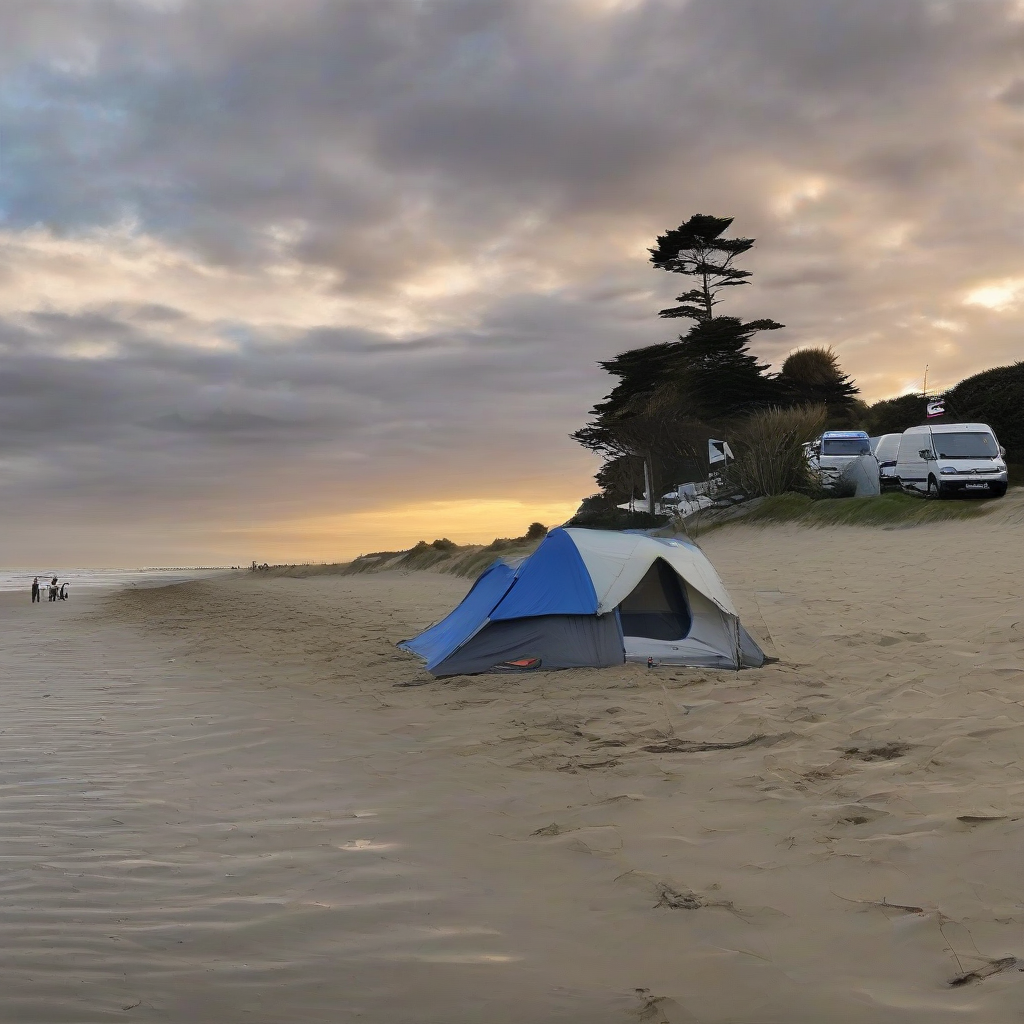
CHRISTCHURCH – The Waimakariri District Council has voted to ban whitebaiters from camping at Kairaki Beach, north of Christchurch, following reports of antisocial and threatening behavior.
The decision reverses a previous season’s policy where exemptions were granted to whitebaiters. The council will now strictly enforce a no-camping rule for the area under the Northern Pegasus Bay Bylaw, which governs activities along the district’s coastline, including Kairaki Beach.
The move comes as officials attempt to balance the commercial appeal of the whitebait season with public safety, staff welfare and the protection of the fragile dune and estuary environment.
Enforcement and Safety Concerns
The ban was recommended by the Northern Pegasus Bay Advisory Group and received support from the police after an uptick in complaints from local residents and other beach users. Council senior biodiversity ranger Mike Kwant reported that while most of the roughly dozen campers present at the mouth last season were “quite reasonable,” there were several instances of threatening behavior towards council staff and other members of the public.
Kwant attributed these tensions to the financial incentives associated with the catch, noting that whitebait can fetch high prices during peak season.
“We understand there is an opportunity to make money from whitebait, so people can get a bit greedy and grumpy,” Kwant said.
Mayor Dan Gordon emphasized that the safety of council staff is a paramount concern in the decision to remove the camping exemption, and that allowing a carve‑out for one user group undermined the intent of the bylaw.
“It is unfortunate that we’ve got this situation that rules are not abided by and respected, but the Northern Pegasus Bay Bylaw has come up a number of times and I think everyone should have the opportunity to be able to go down there,” Gordon said, adding that clear, consistently applied rules were needed to reduce conflict on the beach.
Camping Restrictions and Alternatives
Under the Northern Pegasus Bay bylaw, overnight and freedom camping is strictly prohibited on the beach and the sand dunes across the bylaw area, which stretches along the coast from Kairaki northwards. The prohibition is framed as a way to protect sensitive coastal ecosystems, reduce fire risk and ensure equitable access for day visitors.
To accommodate those wishing to fish the area, Mayor Gordon encouraged the use of the Kairaki Beach Motor Camp, located adjacent to the restricted zone and operating under conventional campground rules.
“There’s a camping ground right next door, so pay your fee. It’s more comfortable with ablutions and you can get up early and go down to the mouth if you want to,” Gordon said.
Council officials also identified other viable locations for whitebaiting that have not experienced similar behavioral issues, specifically the Ashley Rakahuri River mouth, where a permit system controls vehicle access to the river mouth during the season.
Regulatory Oversight and Customary Rights
The management of the Kairaki Beach area involves a coordinated effort between multiple local and national agencies, reflecting the overlap of recreation, conservation and customary use.
- Waimakariri District Council: Responsible for site monitoring in conjunction with Environment Canterbury rangers, and for enforcing local bylaws along Northern Pegasus Bay.
- Department of Conservation (DOC): Responsible for the enforcement of catch limits and the regulation of fishing gear under national whitebait and freshwater fisheries regulations.
- Police: Provide support for bylaw enforcement and respond to antisocial behavior, particularly where incidents escalate beyond council powers.
Council biodiversity team leader Dr. Bex Dollery stated that the council is currently in negotiations with Te Ngāi Tūāhuriri Rūnanga. These discussions are intended to ensure that customary fishing rights and mahinga kai practices are respected despite the new camping restrictions, and that mana whenua are closely involved in decisions affecting the river mouth and estuary.
The whitebait season is observed during the following window in the district:
- Start Date: September 1
- End Date: October 30
The three primary agencies continue to meet regularly with police and Te Ngāi Tūāhuriri Rūnanga to coordinate the ongoing management of northern Pegasus Bay, including vehicle access controls, enforcement priorities and communication with beach users. Council officials say the Kairaki decision will be reviewed in the context of wider coastal management work, including education campaigns on responsible whitebaiting and alternative camping options along the Canterbury coast.
Worth a look
