
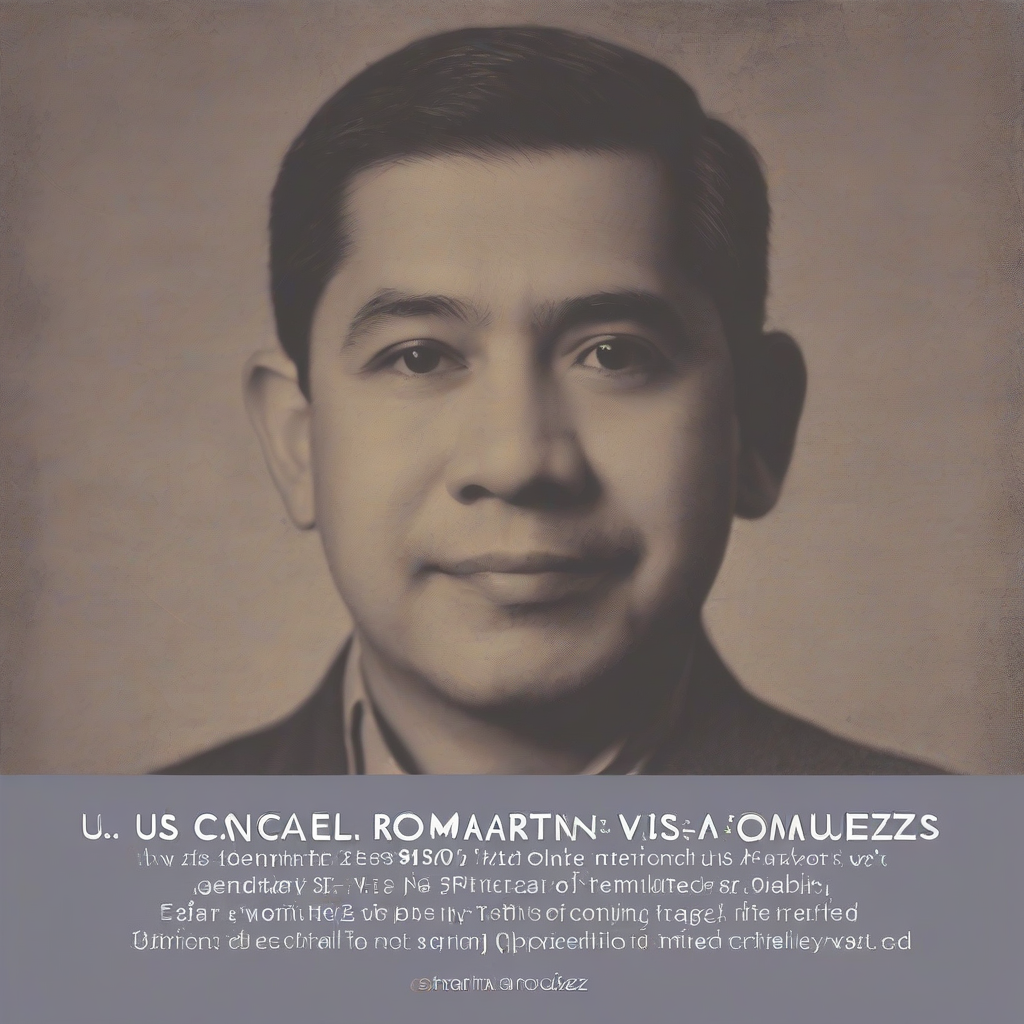
MANILA – The United States government has canceled the diplomatic and tourist and business visas of Martin Romualdez, the Leyte Representative and former House speaker, according to confirmation from the Philippines’ envoy to Washington on June 5.
The move comes as the former speaker faces a series of severe corruption allegations and legal restrictions on his travel within the Philippines.
Ambassador Jose Manuel Romualdez, who is a cousin of Representative Romualdez and a cousin of President Ferdinand Marcos Jr. through former first lady Imelda Marcos, confirmed the cancellation.
“All I can say is it’s confirmed. I don’t have any details,” Ambassador Romualdez said in a message, adding that the information was confirmed to him “only now.”
Ombudsman Investigation and Corruption Allegations
The visa cancellations coincide with ongoing legal challenges facing the Leyte representative. The Office of the Ombudsman, led by Jesus Crispin “Boying” Remulla, has filed complaints against Romualdez involving several high-level crimes.
The specific charges currently before the Ombudsman include:
- Plunder
- Graft
- Money laundering
- Direct and indirect bribery
The Ombudsman has characterized Romualdez as the “purported mastermind” of a corruption scheme involving alleged ghost flood control projects, a controversy that has put additional scrutiny on public works spending and the use of discretionary funds. Romualdez has publicly denied the accusations and has accused his critics of attempting to make him a political “scapegoat,” insisting that investigators “follow the evidence” and respect due process.
Travel Restrictions and Court Rulings
Beyond the loss of US visa privileges, Romualdez is currently under strict travel restrictions imposed by the Philippine judiciary.
The Sandiganbayan, the special appellate court that has jurisdiction over graft and corruption cases involving public officials, recently rejected a request from the representative to lift his precautionary hold departure order (PHDO). A PHDO is a legal mechanism used to prevent individuals under investigation from leaving the country to ensure they remain available for trial.
PHDOs are issued by courts under the Supreme Court’s Rule on Precautionary Hold Departure Orders, which allows judges to restrict the travel of a respondent when prosecutors show probable cause and when there are indications that the person may attempt to flee. In practice, such orders are transmitted to immigration authorities and the Department of Foreign Affairs, effectively barring the subject from departing through any Philippine port of exit.
The Sandiganbayan’s ruling means that, at least for now, Romualdez is barred from traveling both by a domestic court order and by the loss of multiple categories of US visas – a rare convergence of internal judicial measures and external diplomatic action for a sitting member of the House of Representatives.
Diplomatic and Regulatory Responses
Both the US embassy in Manila and the Philippine Department of Foreign Affairs (DFA) have declined to provide specific details regarding the revocation.
The US embassy spokesperson stated that the mission cannot comment on individual visa cases due to confidentiality laws. The DFA referred all inquiries regarding the matter to the US embassy.
Under US immigration law, visas are not permanent entitlements and can be revoked at any time. Consular officers and other authorized officials may cancel or revoke a nonimmigrant visa under Section 221(i) of the Immigration and Nationality Act and its implementing rules on visa revocation in Title 22 of the US Code of Federal Regulations, even after the visa has been issued and placed in a passport.
According to official guidelines provided by US diplomatic missions, grounds for revocation may include:
- Arrest or conviction of a crime
- Behavior inconsistent with the visa type
- Overstaying in the United States
- Determination that the individual is a threat to public safety or national security
The complaints against Representative Romualdez remain at the preliminary investigation level, and he has not yet been indicted or formally charged in a court of law. Any eventual filing of cases before the Sandiganbayan – or a decision by the Ombudsman to dismiss the complaints – would determine whether the current combination of travel restrictions, both domestic and foreign, becomes a long-term constraint on one of the country’s most prominent political figures.
Related reading
- Urban Infrastructure Resilience: How European and Asian Megacities Are Adapting to Extreme Climate Oscillations in 2026
- UN General Assembly 2026 Framework on Autonomous Systems: International Diplomacy Faces Algorithmic Governance
- Bubble curtains and seasonal restrictions can mitigate wind farm noise (archyde.com)
