
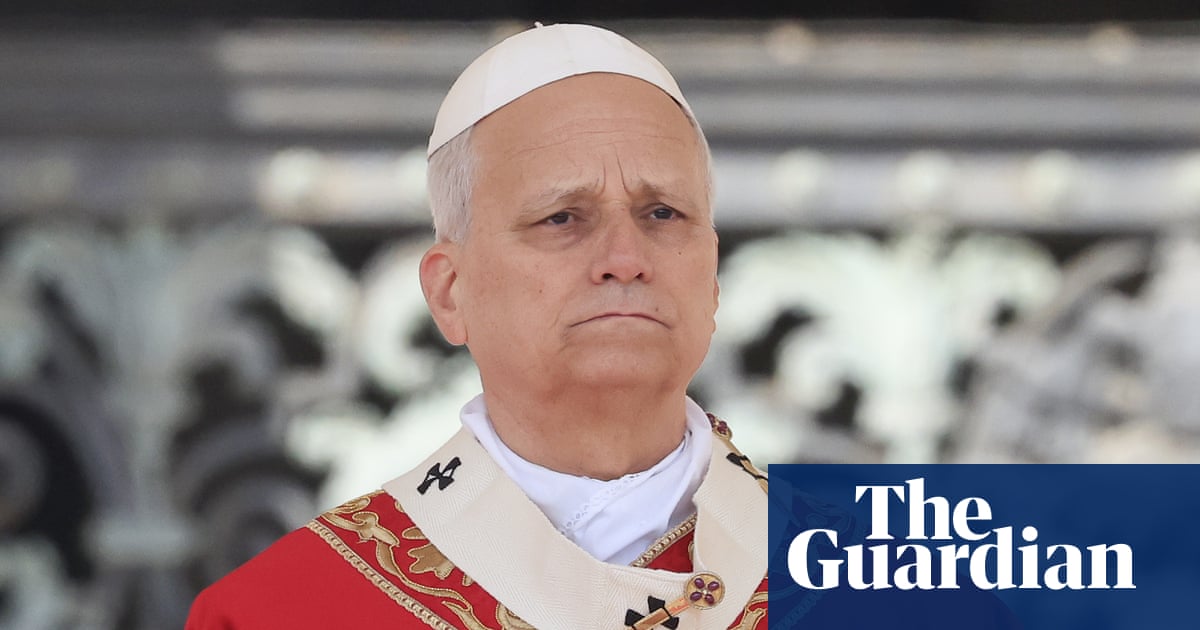
VATICAN CITY – Pope Leo declared on March 29, 2026, that God “does not listen to the prayers of those who wage war,” denouncing attempts to invoke Jesus to justify conflict during a Palm Sunday Mass in St Peter’s Square. The remarks came as thousands of U.S. troops arrived in the Middle East and days after U.S. defense secretary Pete Hegseth publicly prayed for “overwhelming violence” against America’s enemies.
The intervention placed the Vatican’s moral authority into a moment of rising military tension involving Iran, Israel and the United States. While the pontiff named no leader or government, his language was sharper than usual and followed Hegseth’s prayer and disclosures that the Pentagon was preparing for “weeks” of ground operations, according to U.S. officials who briefed the Washington Post.
“This is our God: Jesus, king of peace, who rejects war, whom no one can use to justify war,” the pope told tens of thousands of worshippers. “He does not listen to the prayers of those who wage war, but rejects them.” Quoting scripture, he added: “‘Even though you make many prayers, I will not listen: your hands are full of blood.’”
Papal message centers on peace and the limits of religious justification for war
During his homily, Leo referenced the Gospel account of a disciple drawing a sword as Jesus was arrested, saying Jesus neither armed himself nor fought and instead “revealed the gentle face of God, who always rejects violence.” The Vatican framed his words as a direct challenge to efforts by political and military leaders to wrap contemporary campaigns in religious language. In recent months, he has repeatedly urged an immediate ceasefire and called for a ban on airstrikes amid destruction across Lebanon, Israel and Gulf states, warning that some Christians in the region may be unable to celebrate Easter.
The Holy See’s position carries particular weight because, as a sovereign entity recognized under international law, it maintains diplomatic relations with more than 180 states and holds permanent observer status at the United Nations. Vatican officials have signaled that Leo’s Palm Sunday appeal will inform the Holy See’s engagement in upcoming discussions on the conduct of hostilities under the Geneva Conventions governing the laws of war, especially in relation to civilian protection and proportionality in urban combat.
Key points from the day:
- March 29, 2026: Palm Sunday Mass in St Peter’s Square; Leo condemns the use of Jesus to justify war and warns that, theologically, God rejects the prayers of those waging it.
- March 29, 2026 (morning): Israeli police prevent Cardinal Pierbattista Pizzaballa from entering the Church of the Holy Sepulchre in Jerusalem to conduct Mass, hours before the Vatican liturgy.
- Late March 2026: U.S. officials brief on preparations for weeks of ground operations; thousands of U.S. troops arrive in the Middle East amid escalating clashes with Iranian-backed forces.
- March 26, 2026: At a Christian worship service in Washington, Hegseth prays for “overwhelming violence” against America’s enemies, framing impending military action in explicitly religious terms.
U.S. defense chief’s prayer draws scrutiny
Hegseth’s insertion of his Christian faith into Pentagon actions drew particular attention inside Washington and among U.S. allies already uneasy about the conflict’s religious overtones. At a worship service for military and civilian personnel in Washington, he said: “Let every round find its mark against the enemies of righteousness and our great nation. Give them wisdom in every decision, endurance for the trial ahead, unbreakable unity, and overwhelming violence of action against those who deserve no mercy.”
The remarks appeared to sit uneasily alongside long-standing U.S. commitments to civilian control of the military and religious neutrality in public institutions, including the Pentagon’s own equal-opportunity and chaplaincy rules. Senior officials noted Hegseth’s church affiliation with the Communion of Reformed Evangelical Churches; its founder has publicly identified as a Christian nationalist. The attention to those affiliations and words formed the immediate backdrop to Leo’s Palm Sunday remarks, which stopped short of naming the defense secretary but clearly targeted the fusing of faith language and war planning.
Access dispute in Jerusalem triggers diplomatic pushback
On March 29, Israeli police stopped Cardinal Pizzaballa-described as an archbishop with Catholic jurisdiction across Israel and the Palestinian territories-from entering the Church of the Holy Sepulchre, a site revered by Christians in Jerusalem’s Old City and shared by multiple denominations under a status quo arrangement dating back to Ottoman times. The move, justified by police as a crowd-control measure, touched directly on competing claims over access to holy places and the obligations of the Israeli authorities under the UN-recognised framework governing Jerusalem’s holy sites and religious freedoms.
The decision drew criticism from multiple capitals:
- U.S. ambassador Mike Huckabee called it “an unfortunate overreach” and said Washington would seek clarifications from Israeli authorities.
- Italy’s prime minister Giorgia Meloni said it was “an offence not only to the faithful but to any community that respects religious freedom,” tying the incident to broader concerns about Christian access to traditional pilgrimage routes.
- France’s president Emmanuel Macron said “the free exercise of worship in Jerusalem must be guaranteed for all religions,” framing it as a test of Israel’s international commitments.
Israeli prime minister Benjamin Netanyahu said there was no “malicious intent,” attributing the decision to safety concerns and promising a review of policing arrangements with church leaders.
Military build-up and rhetoric from Tehran
U.S. officials have prepared for weeks of ground operations, according to briefings reported to the Washington Post, amid the arrival of additional American forces and renewed debate in Congress over the scope of existing war authorisations. Military planners have warned that any large-scale incursion would increase risks to civilians and strain already fragile ceasefire arrangements along Israel’s borders.
In Tehran, Iranian parliament speaker Mohammad Bagher Ghalibaf said his country’s forces were waiting for U.S. troops to “set them on fire,” language that mirrored the absolutist tone heard in Washington pulpits and on Israeli talk shows. Leaders on all sides have used religious language to justify actions, a trend Leo rejected in his homily as he appealed for a ceasefire, an end to airstrikes and renewed diplomatic talks that would “put human lives ahead of sacred slogans.”
The Vatican liturgy marked the start of Holy Week for Christians in 2026, commemorating Jesus’s arrival in Jerusalem before his crucifixion and resurrection. For the Holy See, the timing allowed Leo to connect his theological warning on the misuse of Christ’s name with a concrete diplomatic agenda: defending access to Christian holy sites, urging compliance with international humanitarian law and pressing governments to separate religious rhetoric from battlefield decisions.
Netanyahu said Israel would try to partly open the church in the coming days, in coordination with Christian leaders and municipal authorities, but offered no immediate timetable for restoring full access.
Related reading
