
ISTANBUL – Iran said it is ready for negotiations with the United States, as the two sides prepare to send senior envoys to Istanbul for high‑stakes discussions on Tehran’s nuclear program amid a sharp military buildup in the region.
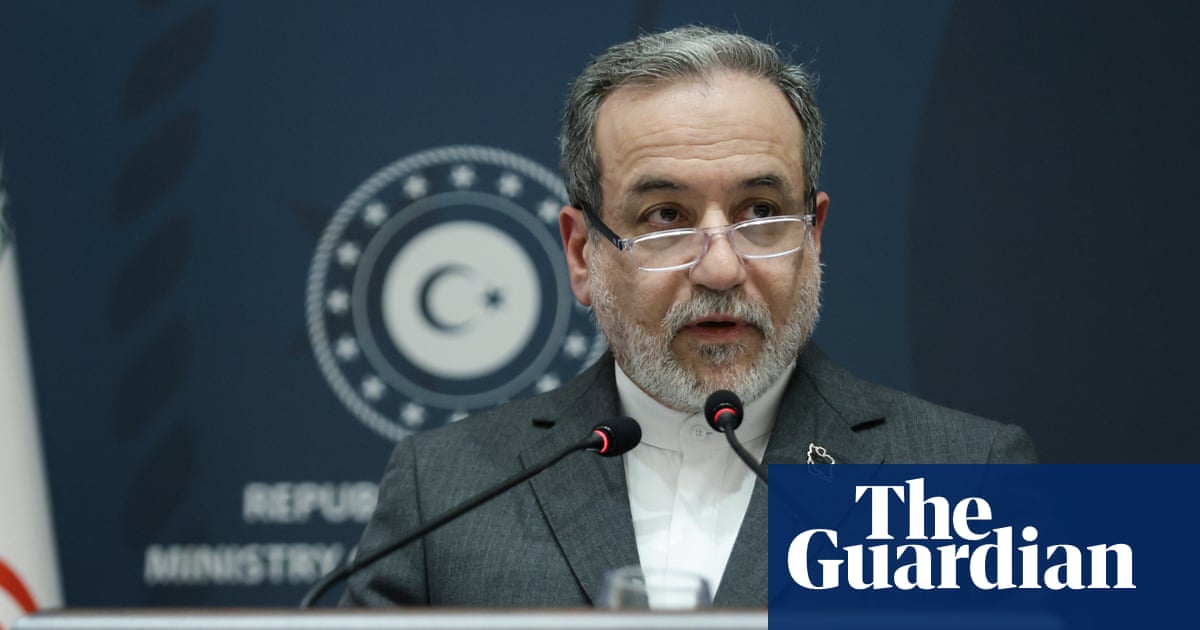
Iranian foreign minister Abbas Araghchi said the country “has always been ready” for diplomacy if conducted with “mutual respect,” while U.S. President Donald Trump said on January 31, 2026 that Iranians were “seriously talking to us,” signaling that a channel for talks has opened as tensions rise.
Iran’s semi‑official Fars news agency reported that President Masoud Pezeshkian has ordered the start of nuclear talks with the United States. Trump’s envoy, Steve Witkoff, is expected to arrive in the region for talks in Israel with Prime Minister Benjamin Netanyahu, according to the same reporting.
Signals from Tehran and Washington
“[Iran’s enemies] are talking about diplomacy today, even though Iran has always been ready for this option, provided there is mutual respect and consideration of interests.” – Abbas Araghchi, speaking during a visit to the shrine of Ayatollah Ruhollah Khomeini
The overtures come more than a decade after Iran first accepted limits on its nuclear activities under the 2015 nuclear deal with world powers, formally known as the Joint Comprehensive Plan of Action, from which Washington later withdrew. That agreement remains the basic reference point for what both sides consider acceptable levels of enrichment, stockpiles, and international oversight.
A spokesperson for Tehran’s foreign ministry said “several points have been addressed” and that officials are “examining and finalising the details of each stage in the diplomatic process,” which they hope to conclude “in the coming days.” Iranian officials have stressed that any renewed talks must deliver tangible economic relief after years of U.S. sanctions that have deepened inflation and unemployment.
Axios, citing U.S. administration officials, said Witkoff and Araghchi would meet in Istanbul alongside representatives of several Arab and Muslim countries to discuss a possible nuclear deal. Reuters reported that delegations would attend from Qatar, Saudi Arabia, the United Arab Emirates, and Egypt, giving key regional energy producers and security partners an on‑the‑record stake in any outcome.
According to the same accounts, the planned encounter would be the first such contact since a previous round that preceded U.S. and Israeli strikes on Iranian nuclear and ballistic missile sites during a 12‑day war. During that conflict, Iran launched hundreds of ballistic missiles at Israeli cities and towns, many of which were intercepted, underscoring the risks that failed diplomacy could once again spill into open conflict.
Military posture and warnings
Trump has said he dispatched a “massive armada” of U.S. warships and aircraft following Iran’s crackdown on protesters. The deployment includes the aircraft carrier USS Abraham Lincoln, guided‑missile destroyers, and dozens of warplanes capable of striking leadership, military targets, or nuclear infrastructure, in what U.S. officials describe as a posture designed both to deter further Iranian escalation and to give the White House options if talks stall.
Iran has threatened to attack Israel, including Tel Aviv, if the United States launches strikes. Netanyahu said Israel was ready “for every scenario” and warned that anyone who attacks the country would face “unbearable consequences.”
Saudi and Israeli officials held talks at the Pentagon to discuss potential U.S. strikes and the risk of an Iranian counterattack that could broaden the conflict, highlighting how any decision by Washington to use force would immediately test regional air defences, energy infrastructure and the security commitments that underpin U.S. alliances in the Middle East.
What a new negotiating track would need to address
Trump has indicated he wants Iran to negotiate a new deal to cease production of highly enriched uranium that could be used for a nuclear weapon and to dismantle its ballistic missile program. New satellite imagery indicated Iran built new roofing over damaged buildings at the Isfahan and Natanz sites after strikes by the United States and Israel, a move analysts say is intended to protect sensitive equipment from further attacks and outside inspection.
If talks proceed, they would intersect with long‑standing issues that structured earlier nuclear diplomacy and continue to shape international non‑proliferation efforts:
– The scope and pace of uranium enrichment and stockpiles, including whether Iran will cap enrichment well below weapons‑grade levels.
– Access, monitoring, and verification by international inspectors from the International Atomic Energy Agency, whose reports feed into U.N. Security Council deliberations.
– Limits on ballistic missile development, including ranges and payloads that neighbours fear could carry nuclear warheads.
– Sequencing of sanctions relief and nuclear steps, a central question for both Iran’s struggling economy and U.S. and European banking and energy regulations.
– Regional security concerns raised by neighboring states, including Iranian support for allied armed groups and cross‑border missile and drone attacks.
Diplomats say the central policy challenge for all parties will be reconciling these technical issues with domestic political calendars in Tehran, Washington and key European capitals, where leaders face pressure not to appear to concede on security.
Why Istanbul and who is at the table
Istanbul has previously hosted Iranian nuclear contacts, providing a neutral venue with access for regional participants and the infrastructure needed for secure shuttle diplomacy. This round, Axios said the meeting would include U.S. and Iranian envoys alongside delegations from Qatar, Saudi Arabia, the United Arab Emirates, and Egypt, according to Reuters, effectively bringing some of Washington’s closest security partners and key OPEC members into the room.
Known participants and roles, as stated:
– Abbas Araghchi – Iran’s foreign minister and lead negotiator, according to Iranian reports.
– Steve Witkoff – U.S. envoy tasked with opening the channel with Tehran.
– Delegations – Qatar, Saudi Arabia, UAE, Egypt (reported) expected to raise regional security and energy‑market concerns.
– Benjamin Netanyahu – Israeli prime minister meeting Witkoff in Israel (reported) to coordinate positions ahead of or alongside the Istanbul contacts.
For Ankara, hosting the talks allows Turkey to reprise its role as a mediator between Iran and the West, while signalling to NATO allies that it can still facilitate diplomacy even as it manages its own complex relations with both Washington and Moscow.
Domestic pressure inside Iran
Reuters reported that the Iranian government is “increasingly worried” that a limited U.S. strike could reignite protests and potentially lead to a revolution, citing six current and former Iranian officials who said protesters were increasingly ready to confront security services.
Iranian protesters have called for an independent inquiry into the number of people killed in unrest triggered by currency devaluation and high inflation. Iranian authorities have overseen publication of names of the deceased and say 3,117 people – including members of the security services – died as a result of the protests. Activists say the number exceeds 30,000.
Those competing tallies underscore how the nuclear talks are inseparable from Iran’s internal governance crisis: any deal that delivers sanctions relief could ease economic pressure, but leaders in Tehran risk further unrest if they are seen to compromise on national sovereignty without securing concrete, visible gains for ordinary citizens.
The nuclear file: established baselines
– The 2015 nuclear agreement set limits on enrichment levels and stockpiles and expanded international monitoring at facilities including Natanz and Isfahan. It was endorsed by a U.N. Security Council resolution that remains the formal international framework governing Iran’s nuclear activities, even as the deal has frayed.
– Natanz is Iran’s primary enrichment site; Isfahan hosts key nuclear‑related facilities, including conversion plants and research infrastructure.
– The diplomatic issues now referenced by both sides – enrichment, missiles, and inspections – are core elements that have framed negotiations for more than a decade and continue to shape Western sanctions regimes, export‑control lists and defence‑planning documents.
Key facts now established
– Iran says it is ready for negotiations with the United States.
– Tehran’s foreign ministry says details of a multi‑stage diplomatic process are being finalized.
– U.S. and Iranian envoys are expected to meet in Istanbul, with additional regional delegations reported.
– The United States has moved significant naval and air assets to the region.
– Iranian protesters and activists sharply dispute the protest death toll; the government has published names and cites 3,117 deaths, while activists claim more than 30,000.
– Israel says it is prepared for multiple scenarios and warns of “unbearable consequences” for attackers.
No date has been announced for Iran-U.S. talks; Tehran’s foreign ministry says stages of the process are being finalized. For now, leaders on all sides are calibrating their military postures and domestic messages in parallel, knowing that what is agreed – or not agreed – in Istanbul will feed directly into national security doctrine, sanctions policy and the broader debate over how to contain nuclear risks in the Middle East.
Related reading
